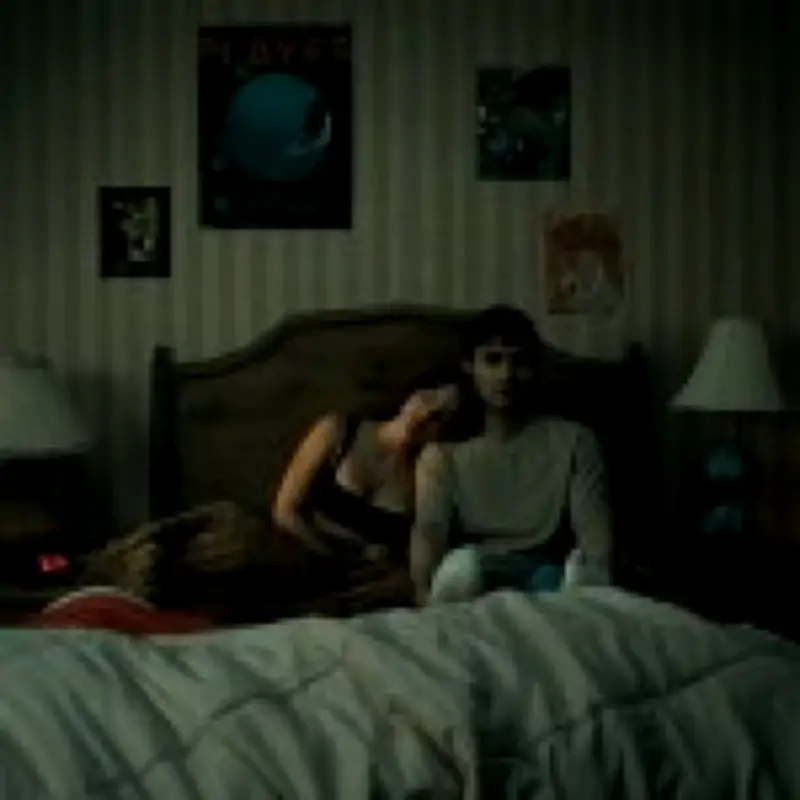
For decades, horror movies warned teenagers that having sex would get them killed. Now, increasingly, horror seems frightened not of the consequences of intimacy and lust, but of intimacy and lust themselves. That might sound flippant, but look at some of the most talked-about horror films of recent years and a pattern begins to emerge. The monsters are still there, obviously, but they are increasingly standing in for something less tangible than death. They are about anxiety, alienation, bodily autonomy, surveillance, loneliness, and the terrifying possibility of being properly known by another person.
This week, the low-budget horror hit Obsession officially passed the latest Star Wars movie at the US box office, after making more than $165 million domestically. Its success has been especially striking because it has not followed the usual blockbuster pattern of a big opening followed by rapid decline. Instead, it has kept growing, pulling in remarkable weekday numbers nearly a month into its run.
This feels significant not just because horror has once again proved it can beat bloated franchise filmmaking with a fraction of the budget, but because Obsession is part of a much larger cultural moment. From Companion to Fresh, Blink Twice, I Saw the TV Glow, The Substance, and Backrooms, some of the most exciting films of recent years are using horror to articulate what contemporary life actually feels like. At a moment when politics feels absurd, technology feels invasive, institutions feel unstable, and reality itself often seems to shift beneath our feet, realism can feel strangely inadequate. How do you depict a world in which people spend hours a day staring into algorithmically curated realities, watch wars unfold in real time, fear climate collapse, and live with a constant background hum of uncertainty? The literal truth no longer feels truthful enough, and horror is the only genre that has always understood that.

Historical Context of Horror
In the 1950s, nuclear dread produced atomic monsters. Invasion of the Body Snatchers captured Cold War paranoia and the fear that your neighbours might secretly be the enemy. The Exorcist and The Omen reflected anxieties around religion, children, and moral collapse. The slashers of the 1980s punished teenagers for sex and rebellion at the height of conservative backlash. After 9/11, horror became more brutal, more nihilistic, and more obsessed with invasion, torture, and violence without meaning. Every generation gets the horror it deserves, and even the horror it needs to help it process the boogeyman of the day.
Gen Z's Horror: The Fear of Connection
Gen Z’s horror, it seems, is about connection. Fresh turned modern dating into a literal meat market, while Companion takes the fantasy of the perfect partner and makes it monstrous. Blink Twice transforms luxury, desire, and trust into a nightmare of power and control. The Substance, beneath all its glorious body-horror grotesquery, is fundamentally about being seen, judged, consumed, and discarded. And then there is Obsession, which feels especially revealing. Its premise, involving a young man using a cursed object to secure the affection of his crush, plays directly into one of the strangest fantasies of modern romance: what if you could have love without uncertainty?
At first, that sounds comforting. Isn’t it everyone’s fantasy, at some level, to be loved absolutely, unconditionally, and without risk of abandonment? But Obsession understands that removing the risk from intimacy also removes something essential from it. Love only means anything because the other person is free to leave, and the horror comes from trying to insure yourself against vulnerability and discovering that what remains is not connection, but control. That question feels brutally relevant in the age of dating apps, ghosting, situationships, screenshots, surveillance, and chronic loneliness.

Expert Insights on Gen Z and Intimacy
Chartered Child and Educational Psychologist Dr. Katie Barge told Metro there is growing evidence that Gen Z approaches intimacy differently from previous generations, though she cautioned against simply saying young people are ‘afraid’ of intimacy. ‘Many studies suggest that today’s young people are more cautious about emotional vulnerability, rejection, and relational risk,’ she said. ‘At the same time, they continue to report a strong desire for meaningful connection and long-term relationships.’ That tension — wanting closeness while fearing what it might cost — is everywhere in modern horror.
Lorin Krenn, a relationship coach, put it even more sharply: ‘Gen Z is the most psychologically literate generation we have ever seen. And somehow, among the loneliest.’ He argued that social media and dating apps have ‘gamified connection’, creating a generation fluent in terms like boundaries, red flags, and attachment styles, but often less able to tolerate the discomfort real closeness demands. ‘They know the vocabulary of the heart,’ he said. ‘They are just terrified of living it.’
Gen Z is not necessarily rejecting intimacy; if anything, many young people appear to be taking it more seriously. Lovehoney’s sex and relationship expert Annabelle Knight points out that Gen Z is often more intentional about dating, more conscious of consent, and more selective about who they allow into their lives. She continued: ‘A global study revealed that 80% of Gen Z respondents felt lonely in the past 12 months, compared to just 45% of Baby Boomers. Evidence that Gen Z reports higher levels of anxiety and social apprehension than previous generations at the same age. Rather than being less interested in intimacy, it appears they may just be more anxious about it. Emotional vulnerability is risky to them.’
The problem is that better emotional awareness does not always make vulnerability easier, and sometimes it makes the stakes feel even higher, because messing it up and learning through your mistakes doesn’t feel like an option. Sim Shamu, a behaviour specialist, told Metro that many young people are learning intimacy in a world where private emotional risk can feel public, searchable, and permanent. ‘Flirting, rejection, conflict, break-ups, and sexual boundaries can all feel higher-stakes when so much social life happens online or can be screenshotted, shared, compared, or judged,’ he said. In other words, the terror is not just that someone might leave you. It is that they might expose you, misunderstand you, replace you, manipulate you, or reveal that they were never who they said they were in the first place.
Culture critic Josh Allsopp described that anxiety as distinctly horror-coded. ‘Imagine meeting someone new. You hit it off, share personal details, and make a deep connection with someone. Only to find out they aren’t who they say they are — or worse — they aren’t even human. Sounds like the premise of a horror movie, right?’
Why Horror Remains Vital
That is precisely why horror feels like the most vital genre we have left. Superhero films keep recycling intellectual property while prestige dramas increasingly struggle to say anything new about the world. Horror, meanwhile, remains one of the few places where filmmakers can still take the raw emotional texture of modern life and transform it into something visceral, strange, and unforgettable. The best horror films today are not really asking what happens if a monster comes into your home; they are asking something far more frightening: what happens if somebody truly knows you? And what if they leave anyway?