
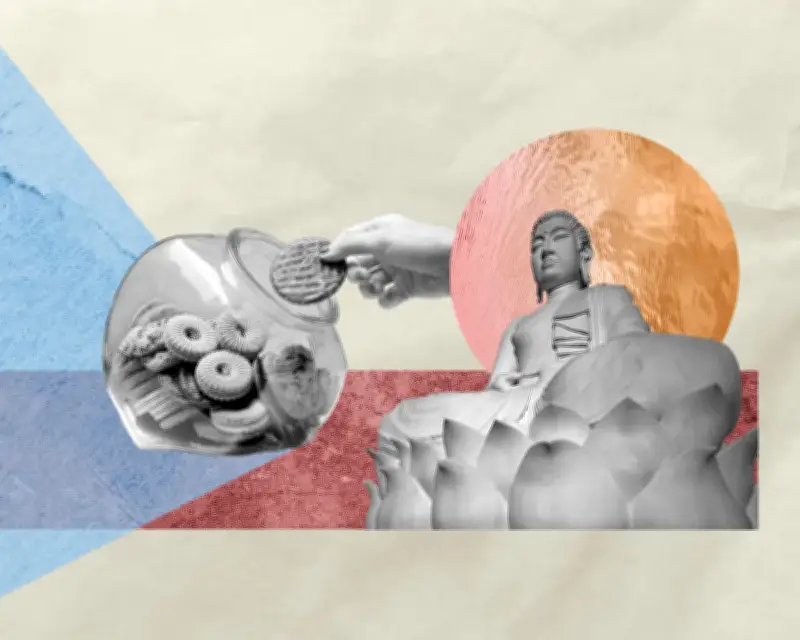
Dr Nadine Levy, a senior lecturer at the Nan Tien Institute, argues that Buddhist thought does not advocate eradicating desire but rather understanding its nature. In a recent essay, she explores how modern culture simultaneously stimulates and distrusts desire, creating a complex relationship with our wants.
Modern Culture's Contradictory Relationship with Desire
Levy observes that digital platforms and algorithms increasingly anticipate desires, sometimes before we consciously register them. She notes the cultural paradox of being sold viral food trends alongside medications that suppress appetite, asking whether we desire too much or too little.
Reflecting on her childhood, Levy recalls a designated “junk food drawer” where she could choose chips, chocolate, or biscuits. Her mother's guidance, “When you are hungry, eat,” shaped her relationship with her body, teaching her to listen to hunger rather than fear it, a lesson she acknowledges as a privilege of growing up in a food-abundant home.
Understanding Taṇhā: Craving vs. Wholesome Desire
Levy introduces the Buddhist concept of taṇhā, the Pali word for craving or thirst, describing it as a sticky, insistent wanting that is difficult to release. She explains that the problem is not the object of desire itself but the grasping at the idea and the promise it carries.
Contrastingly, Buddhism recognizes wise and wholesome desires, such as aspirations to care, grow, and practice non-harm. Practical desires like eating, resting, and connecting are also acknowledged as natural and to be responded to wisely.
Meeting Desire with Curiosity and Wisdom
The essay suggests that instead of immediately gratifying or repressing desires, we can learn to observe their different faces and patterns. Levy references poet Mary Oliver's line about letting the “soft animal of your body” love what it loves, which opens the possibility of lingering in wanting without extinguishing it.
Levy emphasizes that the body is where instinct and craving can be known directly, and she advises noticing the sensations and fantasies associated with desire. She also notes that sometimes desires are too small, masking broader aspirations for freedom, peace, or completeness.
The Life Cycle of Desire and Practical Application
Concluding, Levy states there is no war on wanting; the work is about meeting desire with curiosity, integrity, and wisdom. She describes desire as a powerful intersection of body, evolution, memory, imagination, and culture, something bigger than the individual.
Levy illustrates this with a personal anecdote about her grandmother asking, “Are you hungry or do you want a cuddle?” suggesting that both can be true, and the response can be a snack and a blanket. She coordinates the health and social wellbeing program and the graduate certificate in applied mindfulness at the Nan Tien Institute.




