
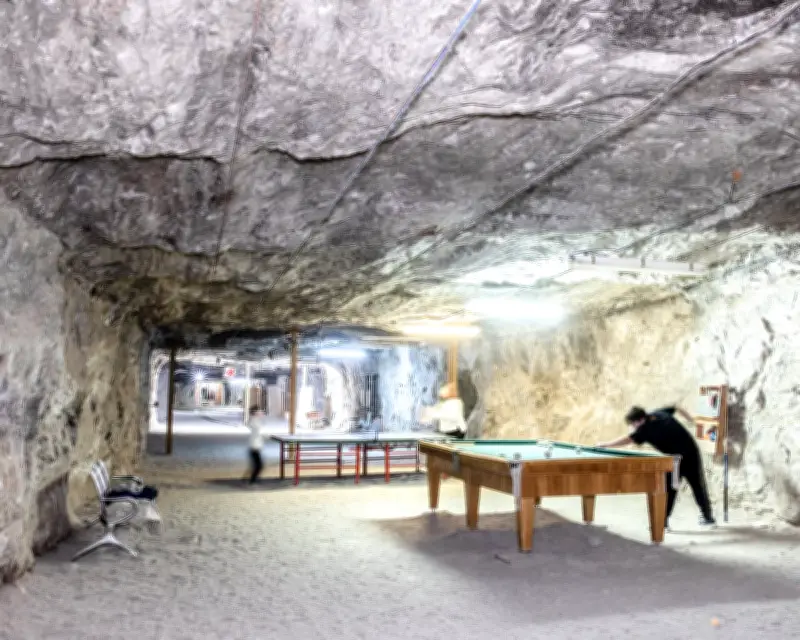
Deep beneath Yerevan, Armenia, a unique underground clinic in an active salt mine offers speleotherapy for respiratory ailments. However, the clinic's future is uncertain after the government withdrew state funding in 2019, leaving patients to pay about £20 per session.
The underground speleotherapy clinic
Located 250 metres underground, the clinic in the Avan salt mine has been operating since 1987. Patients spend six hours daily in salt-saturated, allergen-free air, hoping to alleviate conditions like asthma, bronchitis, and allergies. “I tried every possible treatment, and this is the only thing that worked,” said asthma sufferer Mikayel Torosian. “I thought it was complete rubbish before I tried it, but I am a true believer now. It saved me.”
The journey begins with an industrial lift descending into a maze of tunnels. The cavern, resembling a Cold War bunker, features narrow beds, billiards tables, and areas for breathing exercises. “It looks unusual, but after a few days, people begin to enjoy the peace,” said Dr. Anush Voskanyan, a physician at the clinic since 1989.
Health benefits and scientific basis
Dr. Voskanyan attributes the health benefits to salt-rich air, constant 19°C temperatures, and the absence of allergens, pollution, noise, and radiation. “This is the perfect climate to live in. You basically don’t age here,” she said. The idea emerged after doctors noticed salt mine workers had unusually low rates of respiratory illnesses. Researchers studied the microclimate, leading to similar clinics across the Soviet bloc.
Patients typically undergo a three-week course, with the first week for adaptation. “There have even been cases where asthma attacks stopped completely after just one course of treatment,” Voskanyan added. At its peak, thousands visited annually, often free through Armenia's healthcare system. “We used to admit 60 people at one time,” she said. “Today, there are probably five.”
Funding crisis and closure threat
The clinic's decline began in 2019 when the Armenian government cut state funding, arguing speleotherapy lacks sufficient scientific evidence. The decision came amid healthcare reforms and plans for universal health insurance. “We’re on the brink of closing down,” Voskanyan said. “We’re still operating, but just barely, and could close any day.”
Patients now pay per session, a cost of about £20. Many respiratory specialists view speleotherapy as complementary, not a replacement for conventional treatment. However, supporters cite decades of patient testimony. “If it didn’t help, I wouldn’t be coming back,” said Alvart Alihanyan, who has returned from Russia for 10 years.
A unique escape
Despite the debate, the mine offers complete silence, no Wi-Fi, and a respite from the outside world. Each morning, the lift continues its descent, carrying patients to a place where time seems to stand still.




