
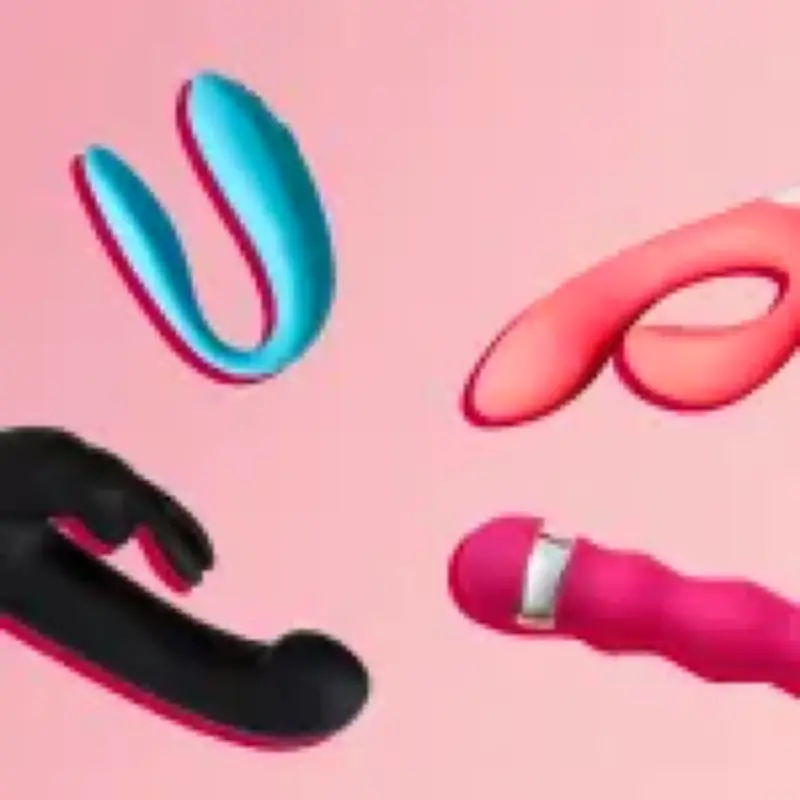
Women are speaking out against the thrust setting on vibrators, calling it 'stupid' and 'machine-like', with many suggesting it must have been designed by a man. The setting, which mimics penetrative sex through an inward and outward shaft motion, is being skipped by many users who find it aggressive and unappealing.
Social media backlash against thrust mode
Instagram user @mrs.kmita sparked a wave of responses when she wrote: 'Who put all those stupid rhythmic a** settings on these vibrators? Not a woman, I'll tell you that much.' Other women echoed her sentiment, with @sydneyleroux commenting: 'It's the mechanical version of “you like that?” and then immediately doing something different.'
@jojo_j0v joked: 'If I wanted instability and inconsistency, I would use a man instead,' while @jules_her added: 'We all use the same setting?! I thought I was unadventurous!' Another user, @savoy_oy, said: 'No, I don't want to masturbate to the beat of Mary Had a Little Lamb.'
@mrissk expressed frustration with the cycling through settings, writing: 'When you accidentally hit it, then have to cycle back through 184 settings.' For @meganlizburke, the problem is deeper, as the thrusting action is engineered to 'prepare yourself for being with a man' – a view shared by others who see it as a deliberate addition geared towards men.
Are sex toys designed by men?
Not entirely. There are woman-owned brands like Sh! Women's Store. At Lovehoney, the UK's most popular online adult toy retailer, the chief product officer is a man, Dr Mark Tobias Zegenhagen, but women like Sarah-Jane Morris, head of digital product, are also at the helm. LELO, another prominent brand, was founded by three men, as was Hot Octopuss. Both companies sell vibrators marketed to all genders, but many products target people with vulvas and vaginas.
The trend goes back to the first vibrator, invented by Joseph Mortimer Granville in the 1880s. His 'percuteur' was originally intended for muscle pain but soon found a more debauched purpose.
Sexologist and psychosexual therapist Ness Cooper explains that sexuality and gender politics have long influenced toy development. 'Very few sex toys were designed with the vaginal canal or vulva in mind,' she told Metro, noting that more functions were thought to increase the chance of pleasure. Cooper, who has worked with sex tech companies for over 20 years, has helped move the industry away from packaging featuring women in lingerie. She contests the idea that most toys are designed with men in mind, saying many in the industry are 'overwhelmed' by the number of settings or 'terrified of getting it wrong.'
Why thrust mode exists
Cooper says the thrust setting was introduced as companies wanted to move away from vibrations and make toys 'feel like sex.' She notes that 'not everyone gets off from vibrations' and that some need a thrusting or prodding sensation for pleasure. This can relate to sensory needs or pelvic floor issues, or simply because manual thrusting is tiring. 'Thrusting sex toys are big in the world of sex tech and disability,' she adds, 'as manually this is a really hard thing to keep up in the positions needed for penetration with solo play.'
Still, Cooper acknowledges that some companies don't test their products adequately, even if made by women. 'It's made in their image rather than checking with the masses,' she says, adding that 'we'll never be able to make a device that's universal.'
What women actually want
Statistics suggest three to five settings is ideal, and Cooper believes many companies are taking this on board. 'Often, sex is very time-limited and no one wants to shuffle through a large list,' she says. 'It's easier to click off a setting when there are more, but when you're mid-moment and at the really good stages of pleasure, it can be frustrating having to move through loads. It's a bit of an orgasm killer.'
The history of sex toys is long, with the oldest known example being 28,000 years old, found in a cave in Germany. In 2023, historians identified a wooden object from Hadrian's Wall as a 16cm phallus-shaped toy, likely used for pleasure. Dr Rob Collins, senior lecturer in archaeology at Newcastle University, told the BBC: 'We know that the ancient Romans and Greeks used sexual implements – this object from Vindolanda could be an example of one.' Both ends of the object were smoother, indicating regular use.
As for the future, the rhythmic thrust setting may be left behind, as evidence suggests few users find it pleasurable.




