Trainspotting's Stark Legacy: Scotland's Drug Crisis Unchanged After 30 Years
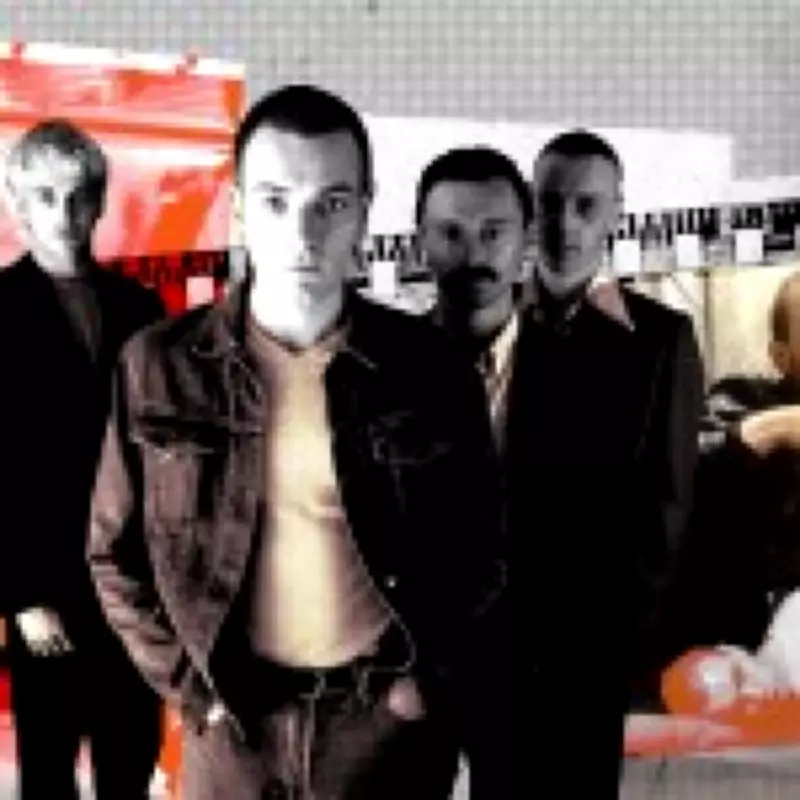
When Danny Boyle's film Trainspotting premiered on February 23, 1996, it shocked audiences with its raw portrayal of heroin addiction in Edinburgh. Fueled by a blistering soundtrack and dark humor, the movie became a box office sensation, based on Irvine Welsh's novel. It followed Ewan McGregor's character Renton and his friends as they navigated a world of drugs, drink, and petty crime, attempting to break free from heroin's grip.
The film tore apart Edinburgh's postcard image of cobbled streets and culture, revealing a city scarred by poverty, decay, and a spiraling heroin epidemic. Its release coincided with the earliest published drug death figures—244 in 1996. Thirty years later, Scotland still holds the grim title of Europe's drug death capital, a distinction maintained unbroken for the past seven years.
Soaring Death Rates and Systemic Failures
According to recent research, Scotland recorded 19.1 drug misuse deaths per 100,000 people in 2024—nearly four times higher than in 2000. Preliminary data from policing sources indicated 308 suspected drug deaths between January and March 2025. In response, police officers in Scotland now routinely carry Naloxone, a medication that can rapidly reverse opioid overdoses and save lives.

Despite these measures, experts argue that little has changed over three decades. Thomas Delaney, who runs YouthWISE and speaks nationally about drug harm, attributes the crisis to deep-seated inequality. 'If you grow up in poverty, you're 18 times more likely to use substances,' he explains. 'Scotland was historically an industrial powerhouse, but when industry left in the 1970s and 80s, it left behind inequality, as reflected in the Scottish Index of Multiple Deprivation.'
Delaney, who has personal experience with addiction, spent 15 years as a functioning addict, using cocaine and ketamine to cope with trauma. He notes that Edinburgh's drug problem is often masked by the city's wealth, but it remains as severe as in larger cities like Glasgow. 'The people dying are an aging population with long-term dependency, driven by homelessness, punitive measures, and stigma,' he adds.
Treatment Challenges and Evolving Drug Trends
Dr. Peter McCann, an addiction specialist and medical director at Castle Craig rehab clinic in Edinburgh, describes the statistics as 'depressing' and indicative of systemic failure. He criticizes the over-reliance on methadone, a treatment with known overdose risks. 'In the movie, methadone is depicted as a tool to manage addicts rather than heal them,' he says. 'Buprenorphine, used widely in the US and Europe, is ten times safer but less common here.'
Dr. McCann emphasizes that addiction must be addressed alongside broader social issues. While working with NHS patients in Wester Hailes, Edinburgh, he observed addiction intertwined with housing problems, mental health disorders, and trauma. 'Gangs exploit vulnerable individuals through cuckooing, taking over homes and subjecting them to violence,' he explains.
Fiona Spargo-Mabbs, founder of the Daniel Spargo-Mabbs Foundation, advocates for drug education after her 16-year-old son Dan died from a single ecstasy pill in 2014. 'Drug death in Scotland is heartbreaking and off the scale compared to elsewhere,' she states. She highlights the increasing diversity of drugs, such as ketamine, THC vapes, and spice, which pose new risks. 'At festivals, MDMA doses can be two to three times stronger than harmful thresholds,' she warns, noting that the dose that killed Dan was twelve times stronger than previous lethal amounts.
Accessibility and Poly-Drug Use: A Deadly Combination
Rod Anderson, director of Recovery Coaching Scotland, points out that drugs are now more accessible than ever. 'You can order drugs on Snapchat or WhatsApp easier than pizza,' he says. A recovering alcoholic, Anderson lost everything to addiction before getting sober 12 years ago. He stresses that 70% of drug deaths in Scotland involve poly-drug use, including alcohol, creating a dangerous mix akin to 'Russian roulette.'

'The drug scene has changed dramatically since the heroin of the Trainspotting generation,' Anderson notes. 'People now use heroin with crack cocaine and synthetic opioids, making the environment much more dangerous than 30 years ago.' He also criticizes jails, where drugs are often easier to obtain than in the community, failing to provide a safe haven for recovery.
In summary, Scotland's drug crisis persists due to a complex web of inequality, outdated treatments, and evolving drug trends. As Trainspotting's 30th anniversary passes, the call for comprehensive solutions—addressing social determinants and improving harm reduction—remains urgent to prevent further loss of life.