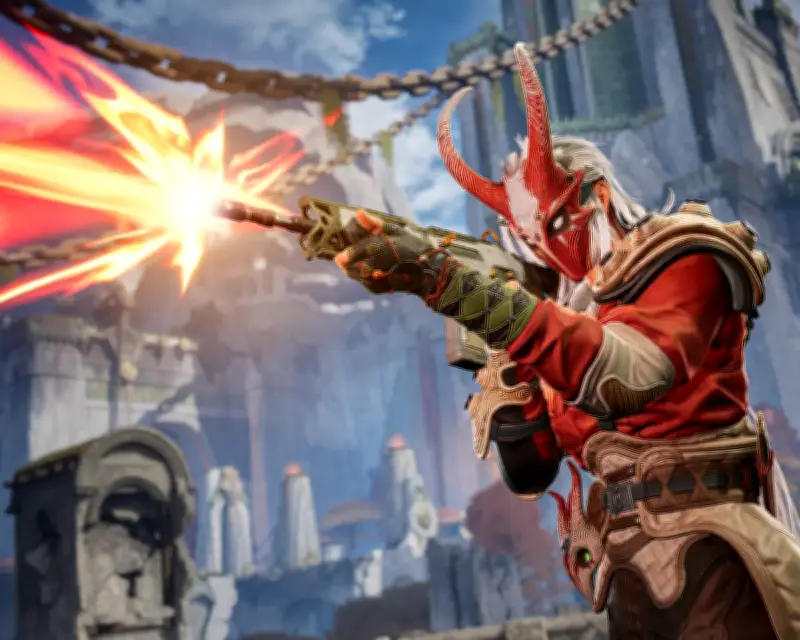
Highguard, a multiplayer shooting game that was taken offline in March. Photograph: Wildlight Entertainment, Inc.
‘They kill games, we fight back’: the activists campaigning to keep video games playable. When a company decided to shut down an online game’s servers, there wasn’t much the players who had bought that title could do – until a group called Stop Killing Games began lobbying for new consumer protection laws.
You can never be sure how long an online video game will last. Developer BioWare shut off sci-fi shooter Anthem’s servers in January, after seven years. Electronic Arts discontinued access to The Sims Mobile the same month. Wildlight Entertainment shuttered its Highguard servers in March, mere months after the game’s release. Activision Blizzard took Call of Duty: Warzone Mobile offline in April. Dozens more games have had their servers shut down in the first six months of 2026, adding to an already long list of video games that are no longer playable.
There is little that players can do when a company decides to stop supporting online play. Communities work hard to keep their favourite games online, sometimes keeping dead games running on private servers, though that may not necessarily be entirely legal. Generally, though, when a game goes offline it is dead and it’s not coming back.
But there’s a movement lobbying to stop this practice. Stop Killing Games was set up in 2024 by YouTuber Ross Scott, after Ubisoft announced it was shutting down its online-only racing game The Crew. Something about that particular instance of game-death seemed to particularly rile people: two gamers filed a lawsuit accusing Ubisoft of fraud over it.
The logo of Stop Killing Games, which campaigns for ‘end of life plans’ for online video games. Photograph: ZUMA Press, Inc./Alamy Stock Photo/Alamy Live News.
In the simplest terms, Stop Killing Games wants governments to introduce legal protections to prevent publishers shutting down video games, and advocates for “end-of-life plans” to keep them playable. Stop Killing Games’ director of US operations Jonah Goldman posits an example: if you play Call of Duty, you have the option to play multiplayer matches both online or through your own home network. If publisher Activision were to shut down the Call of Duty servers, Stop Killing Games suggests the company should allow players to buy and operate their own private online servers.
The movement has grown quickly, and Stop Killing Games has evolved into a non-governmental organisation in the US and Europe. The group has pursued “multiple legal and legislative avenues”, according to its website: a European Citizens’ Initiative petition, a lawsuit filed in conjunction with a French consumer advocacy group over Ubisoft’s The Crew, and a successful petition to get the issue debated in the UK parliament. As a result, Ubisoft CEO Yves Guillemot met with European Commissioners and the trade organisation Video Games Europe on 3 June to discuss digital policy. And on 9 June, 45 members of the European parliament sent a letter urging the commission president Ursula von der Leyen, executive vice-president Henna Virkkunen, and commissioner for consumer protection Michael McGrath to commit to legislative action.
The European Commission responded this week that “it cannot propose a legal obligation to keep video games playable after they stop being provided commercially” because of European copyright and intellectual property laws. But it stated it will work with publishers to create a “code of conduct on managing video games’ ‘end of life.’”
Ubisoft’s The Crew 2. The original game in the series was shut down in 2024, inspiring Ross Scott to found Stop Killing Games. Photograph: Ubisoft
This is a better response than expected. In an interview with the Guardian before the decision, Stop Killing Games’ strategy lead Moritz Katzner said that it had expected the Commission to simply do nothing. Instead, the group will lobby for inclusion in a forthcoming piece of legislation aiming to regulate manipulative practices online. “The Digital Fairness Act, which is a law package coming in front of the European parliament this summer, is perfect for us,” says Moritz. “We have committed promises, public commitment, that they’re going to put [our proposals] in there.”
In the US, meanwhile, Stop Killing Games helped the Protect Our Games act pass California’s Assembly vote in June; now it will head to the California senate for a second vote. If it becomes law, this bill will require publishers to give advance notice before taking a game offline, and mandate a way for players to keep accessing the game. It would apply only to purchased games – not free-to-play titles – released after January 2027.
“A constituent in my district brought this issue to my attention, highlighting a concerning gap in consumer protection for live service games,” assembly member Chris Ward told the Guardian in an emailed statement. “As technologies and markets evolve, our laws must keep pace, in this case to ensure that Californians can make use of the games they pay for.”
Goldman says the quick progress on the bill was “slightly unexpected, but very exciting.” He is optimistic about the bill’s chances of getting through the state senate. But whether it passes or fails, he expects more states to get involved. “There’s a lot of opportunity here for a lot of different states, especially those who have members who are focused on and care about consumer rights and consumer protections,” he says.
Stop Killing Games’ advancements have encouraged other states. Legislation such as that proposed in California is a major boon for the movement. That bill’s impact could be felt across the US; a California bill about transparency of digital licensing is the reason why every player purchasing a game on Steam now sees a disclosure right below the payment button: “A purchase of a digital product grants a licence for the product on Steam.”
Stop Killing Games campaign hearing in the European parliament, with Marion Walsmann MEP, centre. The commission announced it will work with game publishers on a code of conduct. Photograph: Courtesy of Stop Killing Games
The bill has met opposition from the Entertainment Software Association, a US-based trade organisation for the video games industry. In a press release in June, its president Stan Pierre-Louis wrote: “Behind every online game is an enormous, invisible infrastructure … When a game’s popularity fades, that infrastructure continues to run, for a fraction of the audience, at nearly the same cost.
In the killer world of online gaming, there are no hits any more – just survivors. Read more.
“A legal requirement to keep games playable indefinitely will put game publishers in an impossible situation … This proposal essentially keeps games alive long after their natural lifecycle, draining resources and energy from creating what comes next.” Pierre-Louis posited that companies will make fewer games if they become “permanent obligation[s].”
Game companies’ resistance to Stop Killing Games policies is a “pure business decision,” says Katzner. “They’re concerned that … people still playing their existing games aren’t going to buy a new one,” he said. “That’s the simple thought chain here. But if you buy a new car, your old provider doesn’t come and destroy the old one.”
Explore more on these topics: Online multiplayer games, Games, Consumer rights, features.