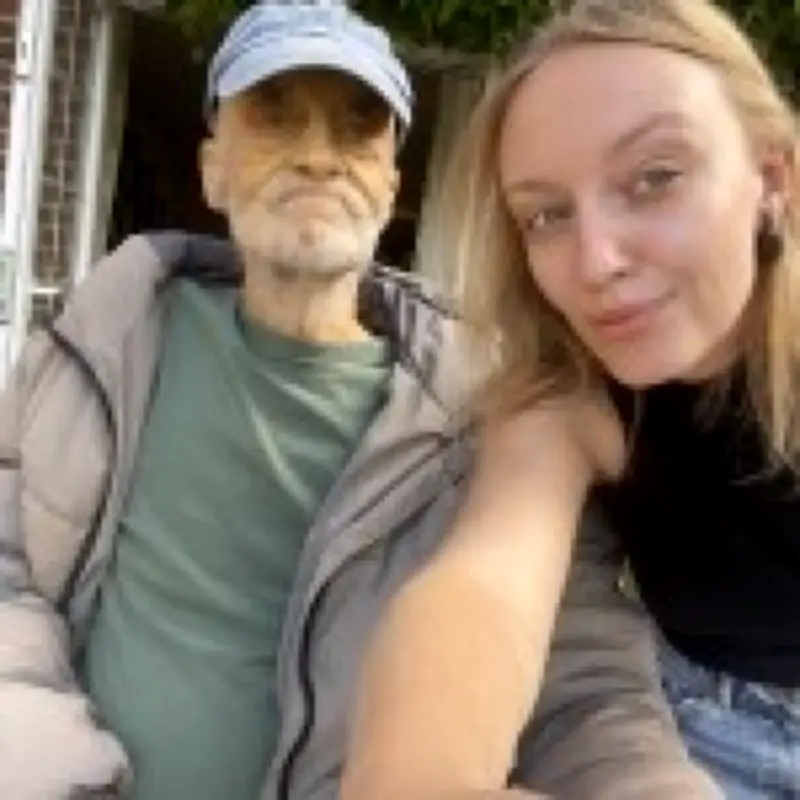
Layla Nicholson, whose father lived with schizophrenia for decades, recounts the painful and persistent question she has faced since childhood: 'Aren't you worried that you're going to turn out mad like your dad?' The question, often posed by new acquaintances, forced her to reply, 'No, I'm confident in my own mind.'
Growing Up with a Father Who Was 'Different'
Nicholson never lived with her father, as her parents separated at her birth. He was frequently in and out of hospital, including being sectioned every year from 2010 to 2024. When she was five, her mother explained that Dad was 'not very well' with schizophrenia, which helped her understand why he sometimes taped over camera lenses or believed cars were following him.
From a young age, she learned to avoid conversations about him. Friends' parents and family members would say it was 'a shame that he was like that.' At age six, he turned up unannounced at her Sports Day, unkempt, and she feared he would do something strange. At eight, a nosy mother asked when she last saw her dad; she replied 'I can't remember' to move on.

The Stigma of Being 'The Girl with the Schizo Dad'
In secondary school, Nicholson kept her father's condition secret. When she eventually told trusted friends, the information spread. One student called her 'the girl with the schizo dad.' Friends would say, 'He's a bit nutty like you then, Lay,' and she would laugh it off with 'Like father, like daughter.'
The fear of inheriting schizophrenia was compounded by others' assumptions. At 18, she became her father's carer when her sister moved to the US. For eight years, she communicated with care teams, monitored his stability, and accompanied him to appointments. The secrecy ended; there were bigger concerns than public opinion.
Dehumanizing Questions and the Cancer Contrast
Despite her role as carer, the stigma persisted. At a bar, a man laughed and asked if she had 'daddy issues.' Another asked if she was 'crazy too.' A family member warned, 'You don't want to end up like your dad.' Each time, Nicholson would anxiously check NHS symptoms pages, then talk herself down by reminding herself she is not an extension of her father's illness.
When her father was diagnosed with cancer in 2025, the tone of questions changed. People asked, 'How is Dad doing?' and 'What care is he receiving?' No one asked if she would inherit cancer. The contrast highlighted the stigma attached to mental illness versus physical illness.
Dad's Death and the Ongoing Stigma
Her father died in September 2025. The outpouring of love and compassion was touching, something rarely experienced in connection with him. But stigma remains entrenched. According to Rethink Mental Illness, 88% of people with severe mental illness have found stigma and discrimination widespread, and 94% feel they have been treated differently because of their illness.
Nicholson shares her story in hopes of fostering understanding. 'I'm not mad by proxy; nor was my dad mad at all,' she writes. 'He was just, at times, unwell – and that doesn't mean I am or will be.' She notes that her closest friends have always supported her, but her father carried the stigma for much of his life, and she will carry it until people have a better grasp of mental illness.
Her father was more than his condition, and she is not his illness. 'Do you have a story you'd like to share? Get in touch by emailing izzie.price@metro.co.uk,' she concludes.