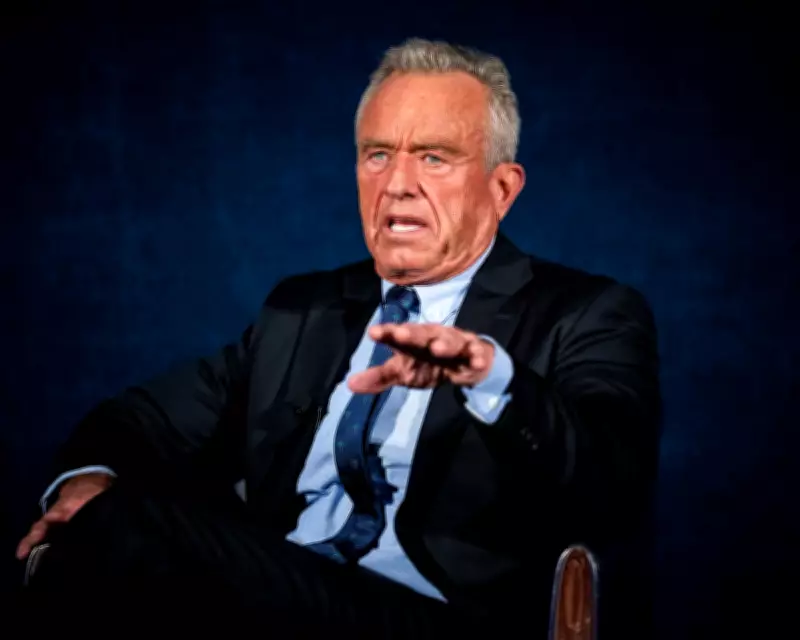
Robert F Kennedy Jr has unveiled a significant new initiative aimed at tackling two of America's most pressing social issues. The health secretary announced $100 million in fresh grants for a pilot program designed to address homelessness and substance use recovery across eight specific cities.
Building on Executive Action
This substantial funding commitment comes just one week after former President Donald Trump signed an executive order related to addiction. Kennedy made the announcement during a Substance Abuse and Mental Health Services Administration event marking "Prevention Day," positioning the program as a direct response to the ongoing national crisis.
The STREETS Program Framework
The funds will be distributed through the Safety Through Recovery, Engagement, and Evidence-based Treatment and Supports program, commonly known as STREETS. This initiative will be managed by the Substance Abuse and Mental Health Services Administration within the Department of Health and Human Services, creating an integrated approach to care.
Kennedy was particularly critical of the current system during his announcement speech. "The existing framework encourages people with severe mental illness and addiction to cycle endlessly between sidewalks, emergency room visits, jails, mental hospitals and shelters," he stated emphatically. "No one takes responsibility for the whole person. That system is neither humane nor effective."
A Comprehensive Recovery Approach
The pilot program represents a fundamental shift in how America approaches addiction and homelessness. Rather than treating these issues separately, the initiative aims to create integrated care systems that address multiple challenges simultaneously.
From Crisis to Community
The program's methodology focuses on early intervention and comprehensive support. Kennedy outlined the approach: "We find them on the street, we move them from crisis to detox treatment to housing to employment, and ultimately to reconnecting with communities and achieving self-sufficiency."
Drawing from his personal experience with heroin addiction and recovery, Kennedy offered profound insight into the nature of substance abuse. "Addiction is about isolation," he explained. "It's a disease of isolation. Addicts end up alone - they end relationships, lose jobs, and ultimately find themselves in rooms, jails, institutions, or dead. The ultimate solution is reconnecting people to community."
Addressing Systemic Challenges
The announcement comes against a backdrop of significant turbulence within America's mental health and addiction support infrastructure. Just last month, the Trump administration abruptly canceled $2 billion in Substance Abuse and Mental Health Services Administration grant funding for addiction and mental health programs.
Restoring Stability to Treatment Services
Following bipartisan backlash in Congress, those funds were reinstated within 24 hours, but the damage to provider confidence had already been done. Over the past year, approximately one third of the Substance Abuse and Mental Health Services Administration's 900 employees have been laid off, creating what Kennedy described as "an environment of uncertainty, fear and logistical challenges" for treatment providers nationwide.
Kennedy emphasized that this new program represents a crucial step toward stability. "We need to not just treat the addict and then put them back into the environment that was making them sick," he argued. "We need to give them some stability through sober housing, employment support, and community connections."
Faith-Based Partnerships and Spiritual Dimensions
A distinctive aspect of the new initiative involves strengthened partnerships with faith-based recovery organizations. The Trump administration will make these organizations eligible for addiction-related grants, recognizing their unique role in the recovery ecosystem.
Kennedy articulated the spiritual dimension of addiction recovery with particular clarity. "This is a chronic disease - it's physical, mental, and emotional - but above all, it's a spiritual disease," he stated. "We need to recognize that faith-based organizations play a critical role in helping people reestablish their connections to community."
Looking Toward Implementation
The eight communities selected for the pilot program will serve as testing grounds for this innovative approach to integrated care. While specific locations weren't detailed in the announcement, the program aims to demonstrate how coordinated intervention can break the cycle of homelessness and addiction that plagues many American cities.
As the Substance Abuse and Mental Health Services Administration begins implementing the STREETS program, healthcare advocates will be watching closely to see if this $100 million investment can create the systemic change Kennedy described as so desperately needed in America's approach to addiction and homelessness recovery.