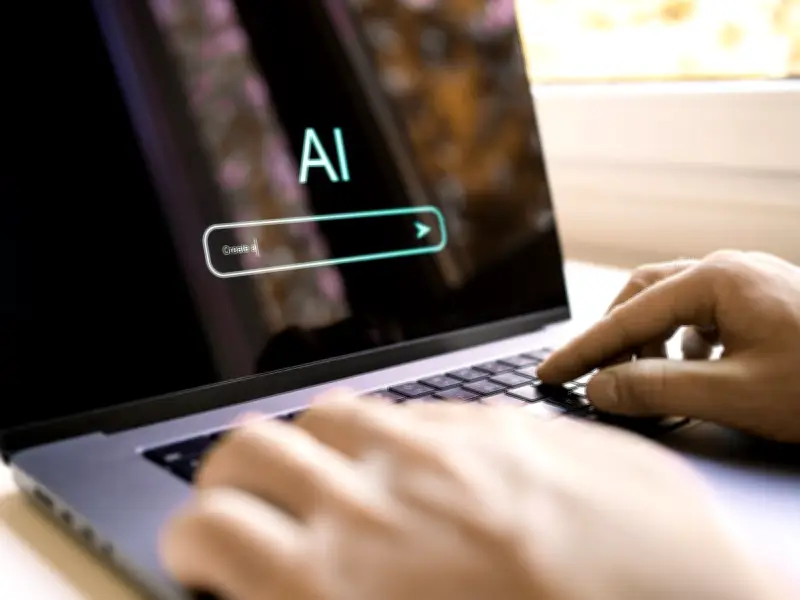
Most people will need to learn to work alongside AI to future-proof their careers, according to Dr Evy Sakellariou, Associate Professor and Gen AI Innovation lead for Kingston University's Foresight, Creativity and Future of Work Research Hub. She suggests this marks the end of 'human-led AI', with teenagers preparing to enter the workforce potentially helping their bosses keep up with AI.
New research highlights skills gap among senior staff
A study by Publicis Media UK working with Kingston University London shows younger, AI-savvy workers may be key to fixing a growing skills gap among senior staff. If employees lack the right skills for AI-enabled jobs, individual productivity could fall by 24.6%, with the cost set to almost double by 2030, pressuring companies to rethink who drives profit.
Fusion skills essential for working with AI
Dr Sakellariou says employees will need advanced fusion skills to work with AI and machines, alongside core human-centric skills. These include smart AI questioning—asking better questions for more useful outputs—contextual AI training—teaching AI how your business works—and critical human judgement, including deciding when to rely on AI and when to step in.
Industry leaders emphasize human advantage
Niel Bornman, CEO of Publicis Connected Media UK, said: "AI is changing how advertising works, that's clear, but people are still our biggest advantage. It's human creativity, collaboration and judgement that give our industry its economic value and turn technology into something useful. If we want AI to make a genuine difference, we have to invest in those people working alongside it."
Dr Sakellariou added: "We're no longer talking about human-led AI, but how people can work effectively alongside machines. To do this, all employees will need to develop these advanced fusion skills alongside core human-centric skills." She noted that sector leaders showed enthusiasm but also uncertainty about upskilling, recommending skills-first hiring, lifelong learning, and prioritising fusion skills for senior leaders and middle managers.
AI as a great equaliser in the workplace
Sonya Barlow, career expert and author of The New Rules of Networking, said: "Many see AI as a challenge, but it can be the great equaliser – everyone is starting from point zero. AI is also reshaping workplace dynamics. Younger professionals are often more native to the digital landscape, meaning they are increasingly the ones experimenting with tools, testing use cases and sharing what works. In many organisations, that is creating a shift where learning flows both ways, with junior employees helping to upskill more senior colleagues."
She added that a culture of shared learning encourages innovation, and organisations should create space to experiment with new tools and exchange best practice. The professionals who progress will be those open to exploring AI in their daily work and taking initiative to apply it practically.