In an emergency room in Washington state, Stephanie Rosell found herself at a critical crossroads. Eight months pregnant, homeless, and battling fentanyl addiction, she had arrived at Holy Family Hospital with a severe infection spreading up her legs. As withdrawal symptoms began to overwhelm her, she pleaded with medical staff to discharge her so she could get her next fix.
The Turning Point That Saved Two Lives
Instead of allowing Stephanie to leave, nurse Izzie recognised the grave danger facing both mother and unborn child. Doctors discovered Stephanie had an amniotic fluid leak, meaning neither would survive if she walked out. In a compassionate intervention, the medical team administered controlled fentanyl doses to manage withdrawal until delivery, then transitioned her to methadone for recovery.
Five days later, on 12 November 2022, Stephanie delivered a premature baby girl weighing just 4lb 8oz. When offered the chance to hold her newborn, Stephanie refused, overwhelmed by shame and feeling undeserving of motherhood. She named her daughter Izzie after the nurse who had shown her unexpected kindness.

A Revolutionary Approach to Neonatal Care
Hospital staff told Stephanie about Maddie's Place, one of only five paediatric transitional care centres in the United States specifically designed to treat mothers and drug-exposed newborns together. This innovative model, known as dyadic care, represents a radical departure from standard practice where babies diagnosed with neonatal abstinence syndrome (NAS) are typically separated from their mothers and placed in NICUs.
The statistics reveal the scale of the crisis: a baby is born in withdrawal every 18 minutes in the US, with 75-80% of these infants ending up in foster care. Yet centres like Maddie's Place are demonstrating remarkable success rates - 95% of parents who complete their programmes maintain custody of their children and remain in recovery.
Dr Lauren Jansson, a professor of paediatrics at Johns Hopkins School of Medicine, emphasises the importance of this approach: "The mother with the baby is treatment for the baby. The mother is the magic." Research confirms that when mothers bond with their infants through skin-to-skin contact and attentive care, both develop better emotional regulation and coping mechanisms.
From Despair to Recovery
Stephanie's journey to addiction began with profound trauma. Four weeks before her high school graduation, her 16-year-old brother Andrew was killed when a recycling truck struck him in a crosswalk. The family shattered, and Stephanie turned to drugs to manage her grief.
She had previously given birth to a daughter at age 20 but struggled with single parenthood and postpartum depression. When her child was diagnosed with severe kidney reflux that had been repeatedly dismissed by doctors, Stephanie reached breaking point and relinquished custody to her mother.
Her addiction progressed from methamphetamine to heroin and eventually fentanyl. During the pandemic, she supported her habit by shoplifting items for dealers. A serious car accident in Texas left her with multiple fractures and organ damage, but her parents, though they collected her from hospital, abandoned her on a drug dealer's porch upon returning to Spokane.
Six months later, she discovered she was pregnant again.
The Healing Power of Connection
At Maddie's Place, Stephanie initially kept to herself, distrustful of everyone. The facility can care for 16 infant-mother pairs simultaneously, providing private rooms, methadone treatment transportation, and specialised care for NAS symptoms like feeding difficulties and sensory issues.
The breakthrough came unexpectedly when Katie Bunch-Smith, a peer support specialist, visited with her five children. As they gathered around Stephanie admiring baby Izzie, eight-year-old Jacob declared: "When I have kids, I'm going to be the best dad ever. I'm gonna show them that they deserve to be loved."
That moment transformed Stephanie's perspective: "If this little kid could see that these babies deserve to be loved, then I could do this. I could be a mom."

The Evolution of NAS Treatment
The foundation for modern NAS treatment dates to 1975 when Dr Laura Finnegan developed the Finnegan NAS scale to assess withdrawal severity. Historically, standard practice involved medicating infants in NICUs while their mothers faced arrest or shame-driven disappearance.
The current network of paediatric transitional care centres traces its origins to Barbara Drennen, a foster mother who developed techniques for soothing drug-exposed newborns during the 1980s cocaine epidemic. Her Washington facility, Pediatric Interim Care Center, has treated over 3,000 infants.
In 2014, nurse Rhonda Edmunds established Lily's Place in Huntington, West Virginia, adding the crucial innovation of treating mothers and babies together. This dyadic model has since spread to facilities in Ohio, Arizona, and Washington.
Challenges and Funding Barriers
Despite proven success, translating this model into standard practice faces significant obstacles. The 2018 Crib Act allowed Medicaid coverage for paediatric transitional care, but only two states have adopted it. Funding remains precarious, with facilities like Brigid's Path in Ohio forced to lay off staff and close nurseries when grants expire.
Shaun Cross, CEO of Maddie's Place, argues that their model proves more cost-effective than traditional NICU care, saving approximately $44,000 per baby while delivering superior outcomes. However, hospital budgets often prioritise short-term savings over long-term benefits like reduced foster care placements and lower rates of maternal relapse.
A Future Built on Compassion
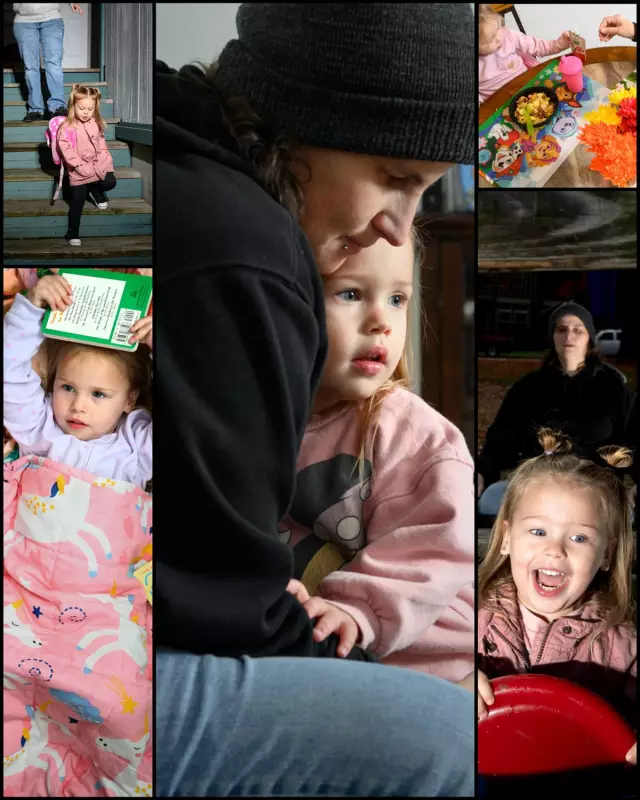
Today, Stephanie and Izzie share a home filled with laughter and Frozen singalongs. Izzie has overcome early developmental challenges and thrives as a "happy ball of love and joy."
Reflecting on what makes Maddie's Place successful, Stephanie emphasises: "The biggest misconception is that we simply hand babies back to drug addicts. That's not it. We're changing lives and encouraging them to love themselves."
Her message to those who misunderstand addiction is simple but powerful: "We're still humans. Just because we use, just because we were homeless, just because we couldn't get clean while we were pregnant, does not make us any less of a human."
The revolution in treating neonatal abstinence syndrome demonstrates that healing a baby requires healing the mother too - and that compassion, not separation, creates the foundation for recovery.