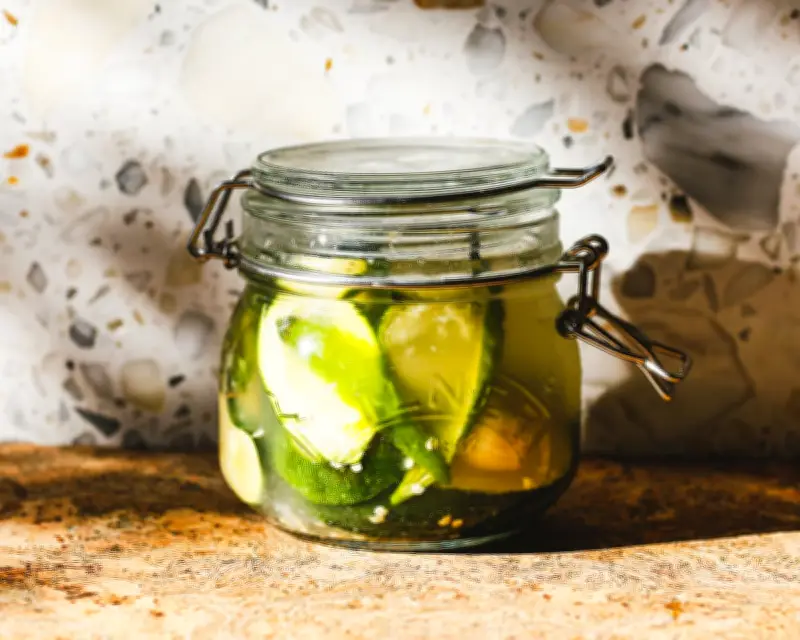
Tom Hunt shares a recipe for lacto-fermented spicy courgette pickles, inspired by Mountain Feed, a garden nursery and store in Ben Lomond, California. The blog has been a source for fermentation techniques, including this method for using excess zucchini.
Why lacto-fermented courgettes?
Lacto-fermented courgettes offer a fizzy, sour, and flavorful alternative to sweet chutneys or relishes. They work well as a condiment with burgers, cheddar sandwiches, or any savory dish. Unlike traditional pickles, these are probiotic and spicy, thanks to added chillies.
Key tips for firm courgettes
Courgettes tend to soften during fermentation. To maintain crunch, add a source of tannins such as a bay, oak, or blackberry leaf. Mountain Feed also recommends a teaspoon of green tea. Refrigerate once fermentation is active—typically after one day (two in summer, three to four in winter). Consume within two weeks. If courgettes soften, they can still be used as a probiotic stir-in for dressings, soups, or stews.
Preventing mould
Ensure courgettes are fully submerged in brine using a fermentation weight or a clean, heavy, non-porous, non-metallic object. Sterilize jars by washing in hot water, placing in a cold oven, heating to 150C (130C fan)/300F/gas 2, then turning off and leaving inside until use. Sterilize lids by boiling in water.
Ingredients
- Courgettes
- Sea salt
- Optional: sprig of herbs (dill, thyme, fennel tops), whole spice (coriander, caraway, fennel seed), chillies, 1 garlic clove, 1 bay leaf (or oak/blackberry leaf)
- Fermentation weight or folded cabbage leaf
Method
Slice courgettes into 5-10mm rounds. Place a clean jar on scales, zero, fill with sliced courgettes, then fill with water to the neck, leaving a 1-2cm air gap. Note total weight, divide by 100, multiply by two for the amount of sea salt (2% of total weight). Add salt and optional extras, plus a tannin-rich leaf (use as a cap to prevent mould). Press vegetables under water with a weight or cabbage leaf. Cover loosely with lid and ferment at room temperature out of direct sunlight for two to three days, until effervescent. Transfer to fridge to halt fermentation and keep firm. Consume within two weeks.