
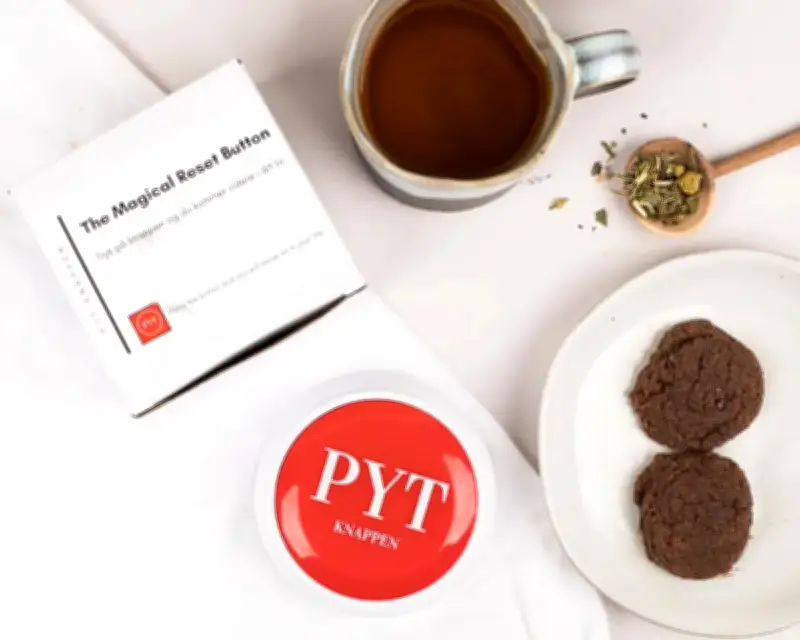
The Danish concept of 'pyt'—a cultural approach to accepting situations beyond one's control—is gaining attention as a stress-management tool, but its practical application raises questions about its effectiveness. According to Marie Helweg-Larsen, a Danish professor of psychology, 'pyt' is usually expressed as an interjection in reaction to a daily hassle, frustration or mistake, and most closely translates to English sayings like 'Don't worry about it,' 'Stuff happens' or 'Oh, well.'
What is 'pyt' and how does it work?
'Pyt' is a Danish concept that encourages individuals to stop wasting energy on things they cannot change. Unlike the more widely known 'hygge,' which focuses on coziness, 'pyt' is about cultivating healthy thoughts to deal with stress. The idea has gained enough traction that you can even buy a 'pyt button' to press when times become testing, as seen on shophyggebox.com.
Helweg-Larsen explains that 'pyt' doesn't have an exact English translation, but it serves as a mental tool to help people move on from frustrating situations. The approach is rooted in the belief that by accepting what we cannot control, we can reduce the emotional toll of daily annoyances.
Is 'pyt' realistic or just toxic positivity?
Despite its theoretical appeal, some remain skeptical. The author of the original article, Polly Hudson, questions whether simply choosing to get over something truly works in practice. She notes that most daily frustrations stem from interactions with other people, which makes 'pyt' feel like a form of forgiveness and awareness rather than a simple mental switch.
Hudson references a speech by the late author David Foster Wallace, titled 'This Is Water,' which encourages people to think differently about others, even those who drive recklessly. Wallace suggested that the driver who cuts you off might be a father rushing to the hospital with a sick child, making their hurry more legitimate than yours. This perspective aligns with 'pyt' as an acceptance of fellow human beings and an acknowledgment that we are all fallible.
Practical applications and cultural context
Hudson finds it easier to embrace 'pyt' when it's framed as compassion for ourselves and others, rather than a denial of reality. She notes that each person is the main character in their own story, often getting in the way without meaning to. This mutual understanding can make 'pyt' a practical tool for reducing stress in everyday interactions.
The concept is deeply embedded in Danish culture, where it contributes to the country's reputation as one of the happiest in the world. However, its effectiveness may depend on how it's applied. As Hudson puts it, 'One person's pyt is another's live and let live.'
While 'pyt' may not be a cure-all for stress, it offers a simple yet profound reminder to focus on what we can control and let go of what we cannot.




