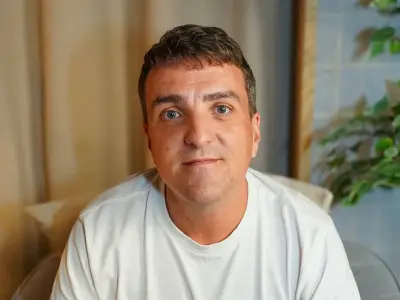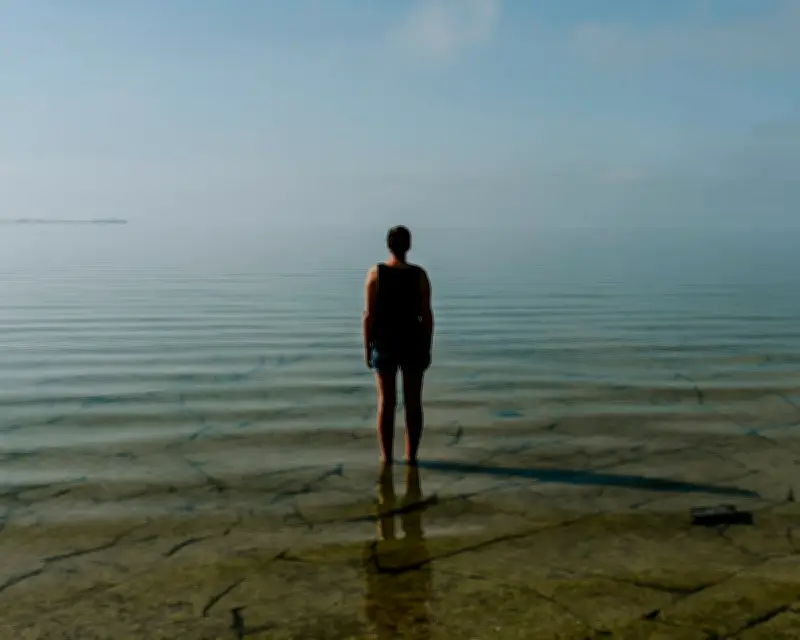
Watching the waves break across the vast, roaring ocean in front of him, Dave Phillips felt out of options standing on the cliff’s edge in Cornwall several years ago. The former British army corporal had lost a number of loved ones in quick succession, and the compounding effects of untreated post-traumatic stress disorder (PTSD) from his military tours had become all-consuming.
“I’m from a generation where we didn’t talk,” says Phillips, 67. “I tried dealing with it myself and ended up standing on a cliff edge thinking, ‘Yeah, this is the way.’” Only his late partner’s voice in his mind, saying “don’t be a twat”, stopped him from taking that step, but in that moment, he knew he needed help. Little could Phillips imagine how profound a role the ocean would play in his healing.
From cliff edge to tall ship
He walked away that day and sought professional help for PTSD, anxiety and depression. He was introduced to Turn to Starboard, a British charity helping veterans cope with trauma through sailing. Attending its sessions changed everything for him, he says. “It [the sea] takes me away from all the stresses and strains of life. It’s got the power of calmness.”
Today, Phillips is among crew facing the elements while circumnavigating the UK on two tall ships, raising money for the charity and carrying the Invictus Games flag around the country. And he is excited about life again, he says. “It [the sea] reminds you that you’re alive,” says Sally Terry, the chief executive of Turn to Starboard. “I’ve seen it awaken something in people.”
The science behind blue space
The ocean has long framed restorative practices for better health around the world, from Victorian-era doctors prescribing “sea cures” for patients to the modern-day trend of cold-water swimming. But it was a marine biologist, Wallace J Nichols, and his 2014 book Blue Mind, exploring the neurological and psychological benefits of being in, on or near water that brought the ocean’s therapeutic power firmly to the forefront. This draw to water that Nichols described is known as the theory of blue space, or blue mind, which has been applied in therapeutic practices with increasing frequency in recent years.
When Sophie Pyne, co-founder of Waves of Recovery, a surf therapy programme, attended her first conference of similar organisations in 2022, for example, she counted almost 50 other schemes. “Now there are over 100, all over the world,” she says. “It’s growing every year.” The California non-profit organisation helps people confront mental health and addiction, with waves and surfing retreats used as a form of therapy. Prior to launching Waves of Recovery, Pyne struggled with burnout and battled addiction. When she first got on a surfboard, she rediscovered something she says she had not felt for a long time: “Being alive, being free.”
Co-healing with nature
Blue-space healing usually complements broader recovery processes, with Waves of Recovery working alongside treatment centres in the area. “Nature and the ocean actually become a co-healer in the experience, and I feel that it really breaks the stigma around people seeking support,” says Pyne. “We’re all in wetsuits, we don’t have our makeup on. They [clients] get to see me more as a human walking alongside them on this journey, versus telling them what to do.”
Many organisations credit Nichols’ work as instrumental to the movement’s renewed popularity. His science-backed findings reveal that exposure to various blue spaces – including oceans, rivers and lakes – can be medicine for the brain, lowering levels of the stress hormone cortisol and improving happiness. “I think that added credibility,” says Terry of Turn to Starboard, “and organisations began to take a greater interest in it.”
Modern-day relevance
The rise in blue-space wellness may also be gathering pace in response to modern-day realities. Catherine Kelly, a geographer, has been writing about the subject for decades and advises government initiatives related to blue spaces. Speaking from her Brighton home, she has just taken her son to stand by the sea to prepare himself mentally for his first A-level exam. “Research from ecotherapy shows us that nature, but particularly water, gives us this feeling of calm that we don’t get in other spaces,” she says. “A lot of our daily lives are spent on very focused attention … often on screens, unfortunately, and that makes our brain quite tired. Yet when we go to the water, our shoulders drop, our eyes and face soften. We start breathing more slowly. We’re concentrating but we’re not concentrating … we’re in a state of drift.”
Beyond the surface: scuba and freediving therapy
The benefits of blue spaces are not just felt above the water, either. Therapeutic practices are now emerging in scuba diving and freediving, where participants can experience the added sensations of weightlessness in the water. “I tell them the goal is just to learn to freedive, and if you do that, you will do the work that helps your nervous system regulate and helps some of your brain system re-regulate,” says Dr James Jung, a California-based psychiatrist who runs Inner Depths, a freediving centre near the kelp forests off the California coast. He discovered the transformative effects of the ocean while working through mental health challenges as a former US military combat veteran. “Recovery from trauma is really getting somebody to lean into a process rather than a destination,” he says.
Research gaps and future outlook
Yet despite the growth in ocean-supported therapy and wellbeing, research into blue spaces may still be in its formative years. “The research is only starting to be funded now because everybody was focused on green space for years,” Kelly says. “If you are a policymaker trying to fund social prescribing, for example, it’s much safer to send people for a therapeutic intervention in a woodland, a garden, a park or a national park than it is to send them into the water.”
Dave Phillips, meanwhile, says that while he cannot anticipate what the future will hold, he feels “it’s rosy”. “I feel I’m different, in a good way, because I’ve gone back to me. I can remember back when all this started, all my mental health issues, I just wanted me back. And I’m here now.”
In the UK and Ireland, Samaritans can be contacted on freephone 116 123, or email jo@samaritans.org or jo@samaritans.ie. In the US, the National Suicide Prevention Lifeline is at 988 or chat for support. You can also text HOME to 741741 to connect with a crisis text line counselor. In Australia, the crisis support service Lifeline is 13 11 14. Other international helplines can be found at befrienders.org