
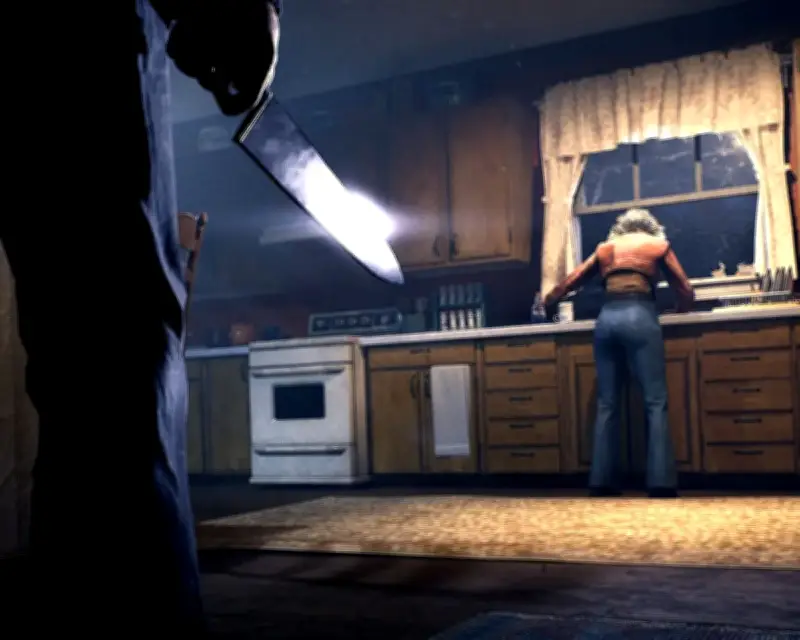
The Classification Board in Australia has refused classification for the video game Halloween: The Game, effectively banning its sale in the country, not because of its graphic violence but because players can smoke marijuana to gain a gameplay advantage. This decision has ignited a broader debate about the coherence of Australia's classification standards for video games compared to other media.
Gameplay Mechanic Leads to Ban
The game, developed by US studio Illfonic, allows players to smoke marijuana to reveal the location of the iconic horror villain Michael Myers, helping them avoid being killed. Under the Guidelines for the Classification of Computer Games 2023, games are refused classification if they contain "illicit or proscribed drug use related to incentives or rewards."
In a statement, the board explained: "Halloween: The Game contains illicit drug use that is linked to an incentive or reward, in that use of the drug provides a gameplay advantage to the player. It is on this basis that the game has been refused classification, as required under the Code and Guidelines."
The decision has sparked an outcry, with the board receiving more than 500 complaints, according to an FoI officer. Illfonic's social media accounts have been flooded with comments from irate Australians.
Criticism of Inconsistent Standards
Claire Henry, associate professor in screen at Flinders University, says the board enforced the guidelines correctly, but the controversy highlights "a mismatch between the community standards and the classification standards." This case follows other high-profile bans, including State of Decay, Wasteland 3, and Saints Row IV, all initially refused classification for incentivised drug use, though they were later released after censoring content.
Dan Golding, professor of media at Monash University, notes that two assumptions underpin game classification in Australia: "Games have always been regulated based on the assumption there is something more impactful about doing, in a game, than there is about watching, in a film," and "a second assumption is that games are for kids – or at least the regulation system exists to protect kids."
Historical Context and Ongoing Review
Ron Curry, former CEO of the Interactive Games & Entertainment Association (IGEA), fought for years to introduce an R18+ category for video games in 2013, which was previously absent. He argues that the trade-off for that category was that games were still treated as more dangerous than other media. "It still very clearly said games are different to all other media, it's more dangerous, and we need to treat it more carefully," Curry says.
Margaret Anderson, a former director of the Classification Board, spent seven years on the board and was frustrated by the focus on interactivity. She points to research showing games are predominantly played by adults. "Can we stop pretending that the way we classify games in this country, in 2026, is appropriate for adults? Because it's not," Anderson says.
A study by Marcus Carter, founder of the Sydney Games and Play Lab at the University of Sydney, found inconsistencies across mobile game classifications on Apple App Store and Google Play Store, with four different age ratings for a single game in 18 cases. Carter describes the current system as "not fit for purpose."
Government Review and Future Implications
The Australian government is reviewing classification guidelines, with proposals including a PG13 rating and adjusting MA15+ to MA16+, and considering removing the "harsher judgement of video games' interactivity." A spokesperson from the Department of Infrastructure, Transport, Regional Development, Communications, Sport and the Arts said: "The Australian Government is working to modernise the National Classification Scheme to ensure it remains aligned with community standards and helps Australians make informed decisions about what they read, watch and play. This work is ongoing."
Illfonic has shown no sign of censoring the game to secure a review, and neither Illfonic nor co-publisher Gun Interactive responded to requests for comment. The decision looms large over future releases, including the highly anticipated Grand Theft Auto VI, which is packed with mature content. Anderson's call is straightforward: "The foundational pillar of classification in Australia is that adults should be able to read, hear, see, play what they want. Can we please respect that fact?"




