In the serene farmyards of Caistor St Edmund, Norfolk, a flock of approximately 50 pigeons takes flight from a barn roof, their wings clapping loudly enough to startle nearby horses, a daily occurrence that signals both routine and potential peril. As they swirl through the sky before settling back on the corrugated metal, this group comprises a mix of feral and wood pigeons, coexisting harmoniously. Soon, this communal gathering will thin out as continental winter migrants depart, leaving resident males to establish and defend territories with their resonant, repetitive cooing in preparation for the breeding season.
The Gender Determination System
Defending territory requires precision, as pigeons must distinguish between male intruders and prospective mates. Interestingly, visual cues are insufficient for this task, even for the birds themselves. Instead, a systematic ritual unfolds: the female adopts a submissive posture with her head and back held horizontal, while the male performs an elaborate bowing dance, fanning and raising his tail. This dramatic display evokes comparisons to the Regency-era romance of Bridgerton, highlighting nature's own theatrical courtship.
Courtship and Bonding Behaviors
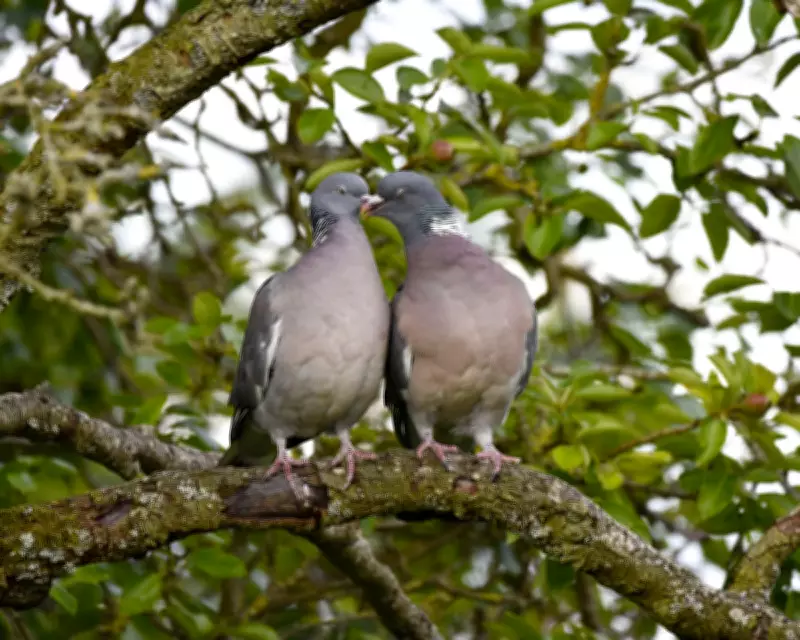
Early signs of courtship are already evident in this farmyard setting. A pair perched atop the stables engages in the next phase of bonding, which includes mutual preening and frequent "kissing" involving their necks and beaks. These intimate behaviors strengthen pair bonds and set the stage for successful mating, showcasing the complex social dynamics within pigeon communities.
Pigeons Versus Doves: A PR Disparity
Pigeons are often overlooked or labeled as vermin, while doves enjoy a more favorable reputation, despite both belonging to the same Columbidae family with minimal scientific differences. Doves are typically perceived as prettier and more delicate, whereas feral pigeons are actually the same species as the rock dove, which has urbanized adeptly, thriving on city ledges rather than its original craggy habitats in Ireland and Scotland.
Other Avian Residents
In the farmyard oak, a collared dove sits quietly, its diminutive stature contrasting with the larger pigeons. Originally from Asia, these birds have rapidly become common in the UK. Notably absent is the turtle dove, which once would have joined this pigeon collection but has not been spotted here for several years, hinting at broader ecological shifts.
As night descends, the pigeons disperse to roost in ivy-covered trees, concluding another day of intricate social rituals and survival strategies in the Norfolk countryside.