Ancient White Park Cattle Declared 'Priority' At-Risk Breed in UK Conservation Alert
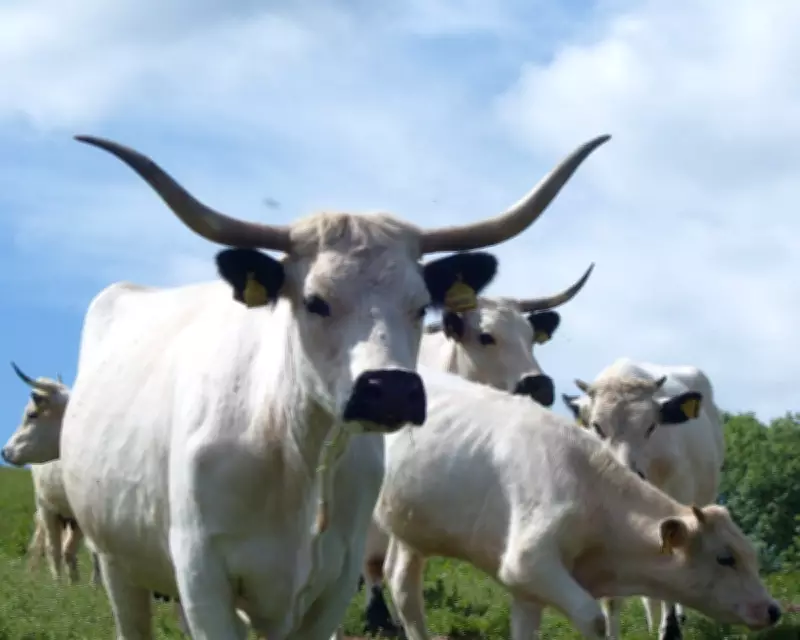
The Rare Breeds Survival Trust (RBST), a leading UK conservation charity, has issued an urgent warning about the declining population of white park cattle, moving this ancient breed to its highest-risk "priority" category in its newly published 2026 watchlist. This designation comes as new calf numbers for white park cattle plummeted to less than two-thirds of their 2022 levels last year, signaling a critical threat to their survival.
Historical Significance and Celtic Origins
White park cattle are not your typical farm animals; they represent a living link to Britain's distant past. Christopher Price, CEO of the RBST, describes them as "semi-wild animals that were partially domesticated," distinct from selectively bred commercial cattle. Their history stretches back over two millennia, with ancestors believed to have accompanied the Celts as they were pushed north and west by the Romans. These long-horned cattle thrived through the medieval period but saw their numbers dwindle as farming practices became industrialized.
Their heritage value was recognized even during the second world war when Winston Churchill sent a herd to Canada for protection. Today, however, financial incentives for farmers to maintain white park cattle are scarce, as many native breeds lose ground to larger continental varieties.

Additional Breeds Facing Critical Risk
The RBST's 2026 watchlist highlights three other native breeds that have been elevated from "at-risk" to "priority" status:
- Original population lincoln red cattle
- Boreray sheep
- Soay sheep
This shift underscores a broader crisis in the conservation of rare livestock and equines in the UK. The charity is now calling on the government to enhance support through environmental policies that recognize the ecological and cultural value of these animals.
Ecological and Culinary Value
Despite their precarious status, white park cattle hold significant ecological and culinary importance. Jan McCourt, a farmer at Northfield farm on the Rutland-Leicestershire border, praises the breed for producing "the ultimate product in beef, with a very fine and rarely seen type of marbling and a deep, unctuous flavour." This makes them not only a gastronomic treasure but also a viable option for sustainable farming.
Moreover, white park cattle are ideal for conservation grazing, a practice where hardy native livestock breeds manage habitats to enhance biodiversity. Price emphasizes that these animals are crucial for restoring meadows and pasture lands, arguing that using breeds that originally shaped these landscapes is the most effective approach.
Call for Government Action and Biodiversity Inclusion
The RBST is advocating for better inclusion of "kept" animals—pets and livestock—in biodiversity discussions. Price states, "This isn't just about giving public money to keep them. It's about having the sort of environmental policies that recognise the majesty of these animals in the landscape." The charity urges policymakers to integrate support for rare breeds into sustainable farming schemes, ensuring their grazing habitats are preserved.
A spokesperson for the Department for Environment, Food and Rural Affairs (Defra) responded, "Native and rare breeds of livestock provide genetic diversity and are an important part of our rural heritage. We will continue to support at-risk native breeds through a range of actions as part of our sustainable farming schemes, including providing funding for their grazing habitats."
Mixed Outlook for Other Native Breeds
While the situation for white park cattle is dire, the 2026 watchlist offers some hope for other native breeds. Populations of animals such as Aberdeen Angus cattle, Manx Loaghtan sheep, and Leicester Longwool sheep are showing positive trends, indicating that targeted conservation efforts can yield results.
This contrast highlights the need for focused intervention to prevent the loss of historically and ecologically significant breeds like white park cattle, ensuring they remain a part of Britain's natural and cultural legacy.