In the heart of Argentina's Gran Chaco, a sprawling semi-arid forest, local communities are embracing innovative strategies to combat rampant deforestation. Through activities like weaving, glamping, and kayak tours, small farmers and Indigenous groups are creating sustainable livelihoods that prioritize forest preservation over destructive logging and agricultural expansion.
From Timber to Tourism: A New Path for Small Farmers
Jorge Luna, a 55-year-old farmer in Chaco province, once considered cutting down the towering molle, palo santo, and algarrobo trees on his 40-hectare plot for quick cash. "It's good wood," he admits, reflecting on the temptation posed by the lucrative timber market. However, faced with the irreversible damage of deforestation, Luna chose a different route. With support from Fundación Rewilding Argentina, he now rents a campsite and guides tourists on kayak excursions along the Bermejito River, transforming his land into a hub for eco-tourism.
"At first, you didn't give the plants value. It was a lack of knowledge of what they meant. Now, every leaf that sprouts has an added value," Luna says, highlighting a shift in perspective among local landowners. This change is crucial in a region where financial hardship and unstable land tenure often drive small farmers to sell or lease their forested plots to agribusinesses.

Community-Led Conservation Efforts
Rewilding Argentina, established in 2010 by Tompkins Conservation, has been instrumental in fostering these alternatives. The organization collaborated with 15 other groups to persuade the Chaco provincial government to designate 128,000 hectares as El Impenetrable National Park in 2014. Since then, Rewilding has developed a network to boost tourism, offering glamping stays by the river and promoting local crafts. Women in the area have revived weaving traditions, producing scarves, blankets, and ponchos for visitors, while also providing home-cooked meals.
"It's a very large territory, and to preserve it we need to have residents onboard. So we promote eco-tourism among the local communities," explains Marian Labourt, a spokesperson for Rewilding. This approach aims to empower residents economically, reducing reliance on logging and agriculture that threaten the forest.
The Urgent Threat of Deforestation
Despite these efforts, deforestation in the Gran Chaco remains a critical issue. According to Greenpeace, Argentina lost nearly 7 million hectares of native forest between 1998 and 2024, with the Gran Chaco accounting for a significant portion. Satellite data from 2024 shows approximately 120,000 hectares of forest lost in northern Argentina, a 10% increase from the previous year. Primary drivers include intensive cattle ranching, genetically modified soya cultivation for export, and forest fires exacerbated by climate change.
Matías Almeida, a park ranger at El Impenetrable, warns, "We're talking about one of the biggest semi-arid forests in the world, and it is being lost at an alarming rate." The timber industry, particularly targeting quebracho and carob trees, further fuels this loss. Although Argentina enacted a forest protection law in 2007, enforcement is weak, with environmental lawyer Enrique Viale describing a "logging mafia" of politicians and businesses that circumvent regulations.
Legal Battles and Environmental Advocacy
In 2024, Viale and other lawyers filed a criminal complaint against officials and business owners in Chaco province, alleging that legal amendments stripped protected status from thousands of hectares, enabling logging. While courts temporarily suspended deforestation for three months, protections have since lapsed. Viale cautions that without intervention, the Gran Chaco could vanish within two decades. "The Chaco does not receive the same attention as the Amazon – few people even know it exists," he notes, underscoring the need for global awareness.

Sustainable Solutions and Community Empowerment
For conservation projects to succeed, they must involve local communities from the outset, says Sandra Myrna Diaz, an Argentine ecologist involved with the UN's Intergovernmental Platform on Biodiversity and Ecosystem Services. She emphasizes co-design, equitable benefit distribution, and capacity building to ensure initiatives endure beyond initial funding. "They can be a tool, as long as these conditions are met. If the idea is to do something like parachute conservation, it's obviously not going to solve anything and could be a step backwards," Diaz explains.
In Pozo La Gringa, near El Impenetrable, Mabel Figueroa exemplifies this community-driven approach. She weaves textiles using wool from her sheep, dyed with natural materials like quebracho colorado for reddish-brown hues and yerba mate for green, reviving ancestral techniques taught by her mother. Her son, Alberto Domínguez, tends to their farm and voices concerns over large landowners who clear land with bulldozers. "What protects us is nature," he asserts, highlighting the growing intensity of heat each year.
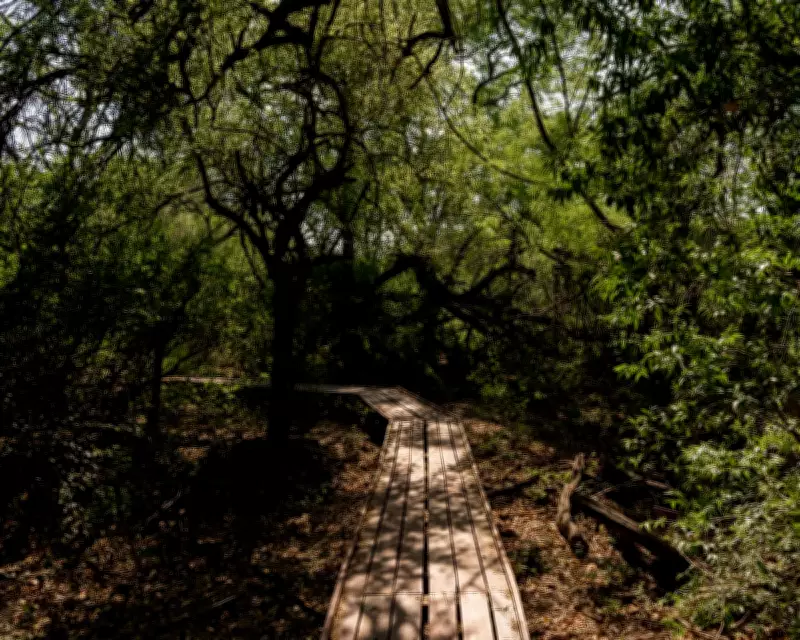
As tourism activities, including nature trails and kayak tours, expand in El Impenetrable National Park, they offer a beacon of hope. By blending traditional knowledge with modern eco-tourism, these efforts not only provide alternative incomes but also foster a deeper appreciation for the Gran Chaco's biodiversity, aiming to secure its future for generations to come.