Unesco Sites: Havens for Wildlife and Communities Amid Global Decline
While global wildlife populations have plummeted by nearly three-quarters since 1970, a new report reveals that Unesco-designated sites are bucking this trend, providing critical sanctuaries for threatened species and supporting human communities. Published on Tuesday, the study People and Nature in Unesco Sites highlights the resilience of these protected areas, which cover over 13 million square kilometers—an area larger than China and India combined.
Stability in the Face of Crisis
According to co-author Tales Carvalho Resende, "It's good news, it shows that these sites are extremely resilient in the face of a changing world." Within Unesco sites, wildlife populations have remained largely stable, offering a stark contrast to the global crash. These areas are home to about 60% of the world's species, with approximately 40% found nowhere else on Earth. They also support around 900 million people, speaking more than 1,000 languages, and generate about a tenth of global GDP.
Charismatic Megafauna Find Refuge
Many iconic species, whose numbers have dwindled due to poaching and habitat loss, have found safe havens in Unesco sites. For instance:

- About a third of the world's remaining elephants, tigers, and pandas reside in these areas.
- Roughly one in ten great apes, giraffes, lions, rhinos, and dugongs are protected within Unesco-designated zones.
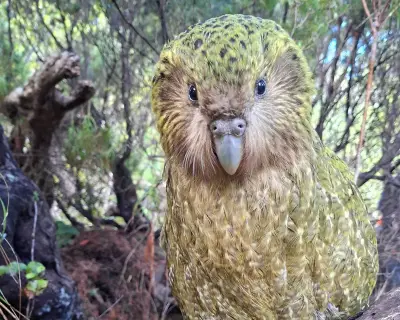
- Some of the most endangered species, such as the last 10 vaquita porpoises and 60 Javan rhinoceroses, exist solely within Unesco reserves.
Carvalho pointed to Virunga National Park in the Democratic Republic of Congo as a success story, where local communities have helped protect the critically endangered mountain gorilla.
Severe Threats Loom Large
Despite their success, Unesco sites are under immense pressure. Since 2000, more than 300,000 square kilometers of tree cover—an area larger than the Republic of the Congo—has been lost, primarily due to agricultural expansion and logging. Additionally, about 90% of Unesco sites globally face "high levels" of environmental stress, with extreme heat being a major concern.
Climate change poses a particularly dire threat. Unesco warns that one in four designated sites could reach critical tipping points by 2050, including glacier disappearance, coral reef collapse, and forests drying out and turning from carbon sinks into carbon sources. Carvalho emphasized, "Now climate change is really the key driver that is threatening the sites. They need to adapt to face the challenges that are coming. It's really worth investing in this."
Types of Unesco Designations
Unesco sites fall into three categories:
- World Heritage Sites: The highest designation, covering cultural monuments or natural areas of global significance, with governments legally bound to protect them under the 1972 World Heritage Convention.
- Biosphere Reserves: Examples of sustainable development in action, though they lack the full legal force of World Heritage Sites.
- Global Geoparks: Areas with significant geological importance, also managed by governments but with less stringent protections.
About a quarter of these sites overlap with Indigenous territories, and many are managed by local communities, underscoring the role of traditional knowledge in conservation.
Carbon Storage and Global Significance
The report also found that Unesco sites store an estimated 240 gigatons of carbon, equivalent to nearly two decades of emissions from fossil fuel burning. Khaled El-Enany, director general of Unesco, stated, "Inside these territories, communities thrive, humanity's heritage endures, and biodiversity is holding on while it collapses elsewhere. This report reveals what we stand to lose if these sites are not prioritised."
As the world grapples with biodiversity loss and climate change, the findings highlight the urgent need to safeguard Unesco-protected areas, which serve as vital refuges for both wildlife and human well-being.