Swift Parrot's Distinctive Call Recorded in Forest Before Logging Operation
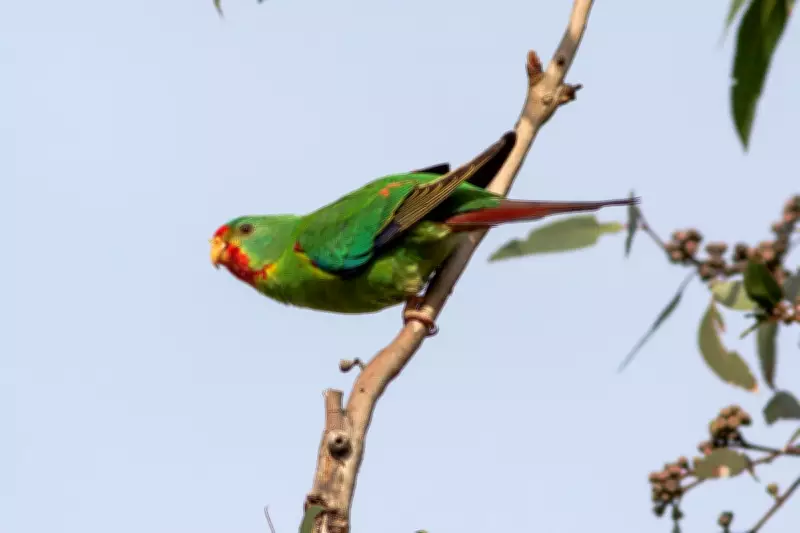
In a poignant environmental discovery, scientists have captured the birdsong of the swift parrot, a critically endangered migratory species, in a section of Tasmania's Wielangta forest that was subsequently cleared through logging activities. The recordings, made by researchers from the Bob Brown Foundation between December and January, document the presence of this rare bird in an area designated for clear-felling, raising urgent questions about habitat protection and conservation efforts.
Documenting a Disappearing Habitat
Dr. Charley Gros of the Bob Brown Foundation described the swift parrot's vocal signature as unmistakable. "It's a tiny bird but has a very loud call," he explained. "It's very sharp and quick and fast. You can't confuse it with something else." The foundation's team, along with volunteer citizen scientists, recorded 68 observations over two months in the forest area known as coupe WT003E.
These recordings were reviewed by government scientists and uploaded to an environment department website, providing concrete evidence that the forest served as foraging and nesting habitat for the species. "If they're there every day, that is their habitat," Gros emphasized. "They're not just passing through."
Logging Proceeds Despite Evidence
After receiving the recordings of the critically endangered species, the state regulator, the Forest Practices Authority, sent an ecologist to survey the area on February 10. The authority reported that "no swift parrots were observed breeding in the harvest area." However, Gros noted that the forest had already been cleared by the time the government ecologist arrived. "Of course there were no parrots by then," he stated bluntly.
Logging agency Sustainable Timber Tasmania, formerly known as Forestry Tasmania, defended its actions, stating it operated within Tasmania's strict forest practices framework. "We are committed to operating within Tasmania's strict forest practices framework and protecting environmental values through careful planning and oversight," said Suzette Weeding, the agency's general manager for conservation and land management.
Population Decline and Extinction Timeline
The swift parrot population has experienced a dramatic decline in recent years. A CSIRO-published guide in 2021 estimated the population had slumped to about 750 individuals, down from 2,000 just a decade earlier. The species spends winters in Victoria and New South Wales, migrating to Tasmania during summer months to nest in forests where blue and black gums are flowering.
Peer-reviewed studies have found the swift parrot could be extinct by the early 2030s, with forestry identified as the biggest threat to its survival. Scientific advice to the Tasmanian government has previously warned that all potential swift parrot foraging and nesting habitat on public land should be protected, regardless of whether birds are present at the time of planned logging operations.
Legal Framework and Future Protections
At the heart of this environmental dispute are fundamental questions about whether existing laws adequately protect threatened species. The Bob Brown Foundation has accused both federal and state governments of "blatantly ignoring scientific advice and allowing Forestry Tasmania to drive the species toward extinction."
A Tasmanian government spokesperson responded that the state maintains a strict "science-based forest practices system" and "does not permit deforestation of swift parrot habitat." They added that "nesting trees are retained and harvested areas are regenerated as native forest driving renewal of key eucalypt species and fresh flowering for foraging."
An Albanese government spokesperson noted that a regional forestry agreement between Tasmania and the federal government gives the state responsibility for forestry management, including ensuring habitat for threatened species is protected. However, they highlighted that the exemption for state-run forestry from national environment law will end in 2027. After that date, logging operations may require approval from Canberra where they have a significant impact on threatened species.
Retail Pressure and Certification Concerns
Environmental campaigners are now focusing pressure on retailers, particularly Bunnings, urging them to stop selling timber from contentious areas. The Wilderness Society is lobbying the hardware chain to cease taking wood from a mill that sources logs from the WT003E coupe where the swift parrot recordings were made.
Alice Hardinge, the Wilderness Society's Tasmanian campaigns manager, stated: "Bunnings customers don't want to be sold timber that destroys unique forests and pushes the swift parrot to extinction." The organization argues that the global Programme for the Endorsement of Forest Certification, which has been awarded to logs from the coupe, does not truly represent sustainable forestry practices.
A Bunnings spokesperson responded that the company conducted a review after receiving a complaint and was satisfied there was "no evidence to indicate non-compliance with Tasmanian environmental or logging laws at this site." They added: "We're committed to sourcing timber and wood products which originate from compliant and well-managed forest operations."
This case highlights the ongoing tension between economic activities and species conservation, with the fate of the swift parrot serving as a critical test case for Australia's environmental protection frameworks. As the 2027 deadline approaches for changes to national environmental law, conservationists hope stronger protections will prevent similar habitat loss for threatened species across the country.