
Stranded Humpback Whale Frees Itself After Days of Rescue Efforts in Germany
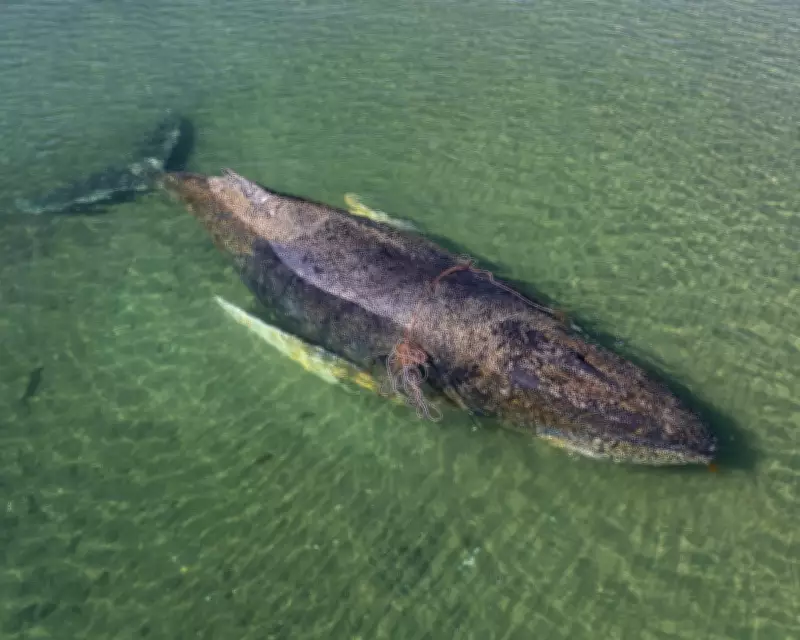
A humpback whale that was stranded on a sandbank off Niendorf, near the city of Lübeck in Germany, has successfully freed itself and swum into deeper waters after days of intensive rescue operations. The roughly 10-metre-long sea mammal was first spotted on Monday stuck in shallow water, prompting fears for its life and a coordinated effort to save it.
Intensive Rescue Operations to Guide the Whale
Rescuers employed a variety of methods over several days to assist the whale, including using boats to create waves and excavators to dig up sand. On Thursday, rescue teams began using earth-moving equipment on a pontoon to dredge a channel through the sand, aiming to provide the animal with a clear escape route. The efforts involved multiple vessels and volunteers, with two vessels from the Schleswig-Holstein state water police among those escorting the weakened animal.
Marine biologist Robert Marc Lehmann reported that overnight to Friday, the whale "gathered its forces" and "freed itself using its own strength." He announced the success on his Instagram profile, stating "Whale rescue successful," but cautioned against premature celebration, noting the animal was "very ill" and had a long journey ahead to reach its natural habitat in the Atlantic Ocean.
Health Concerns and Ongoing Challenges
Despite the breakthrough, experts expressed significant concerns about the whale's condition. The whale had been entangled in a fishing net, most of which rescuers managed to remove, but it was described as "zigzagging" in the water, raising fears it could become stranded again. Additionally, marine conservation group Sea Shepherd warned that the whale was suffering from a skin disease, further complicating its recovery.
Lehmann emphasized that the whale still faces a perilous path, needing to navigate through the straits between Germany, Denmark, and Sweden to reach the North Sea and eventually the Atlantic Ocean. State Premier Daniel Günther acknowledged the efforts of rescue volunteers on local radio, saying, "I think they were all happy that all their digging had finally paid off. Now we just have to hope that it finds its way out."
Broader Implications for Marine Conservation
This incident highlights the challenges and dedication involved in marine wildlife rescue operations. The collaborative efforts between rescuers, scientists, and authorities underscore the importance of protecting endangered species like humpback whales. As the whale continues its journey, experts will monitor its progress closely, hoping for a safe return to its natural environment.
The story serves as a reminder of the fragility of marine ecosystems and the ongoing need for conservation initiatives to safeguard wildlife in European waters and beyond.



