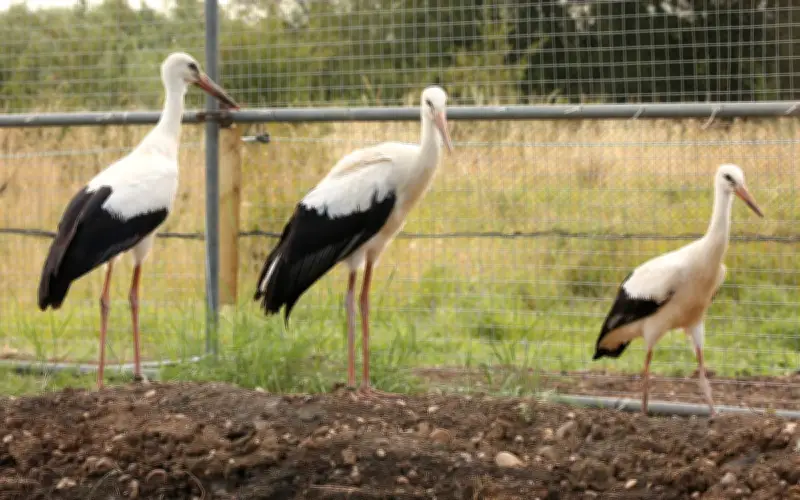
Three juvenile white storks have been released into a purpose-built enclosure at Willington Wetlands in Derbyshire, marking the first attempt to reintroduce the species to the Midlands after more than 600 years. The birds, bred at Celtic Rewilding's captive breeding facility in Staffordshire, are expected to act as a 'magnet flock' to attract wild storks migrating from Africa.
Historic Return of an Iconic Bird
Katie Last, living landscape officer for Derbyshire Wildlife Trust, described the moment as 'absolutely incredible' and a 'real milestone' after years of restoration work. White storks disappeared from the region around the 14th century due to habitat loss and hunting. Recent sightings in nearby Matlock and Ashbourne have raised hopes, but none had stayed to breed until now.
The trio—one male, one female, and one of undetermined sex—will be closely monitored in a predator-proof enclosure with an electric fence and fine netting to protect against avian flu. Over time, the trust aims to manage releases into the wild, with artificial nesting platforms installed in existing trees.
Wetland Restoration as a Foundation
The 40-hectare (100-acre) site, previously gravel pits, has been transformed into wet grassland, open pools, and reed beds, providing ideal foraging and nesting conditions. The reserve is also home to Derbyshire's first resident beavers in over 800 years, released in 2021, which have helped create a dynamic wetland habitat.
'This whole project is about more than the return of an iconic bird,' Last said. 'It's about reigniting people's sense of wonder in nature. If you can create the kind of healthy, dynamic landscape that supports white storks, you're also creating habitats that benefit countless other species.'
Community and Cultural Significance
The £309,000 project, funded by the Veolia Environmental Trust, aims to reconnect communities with nature. Storks are deeply embedded in European folklore, associated with new life and spring migration, making them ideal ambassadors for conservation. Rachel Bennett, director of wilder landscapes at Derbyshire Wildlife Trust, emphasized that success means 'thriving wetlands, more wildlife, and communities that feel connected to nature.'
Last added: 'We want this reserve to extend out and for the River Trent to be a wildlife corridor. We want landowners to work with us to create spaces for wildlife to move freely.' The trust hopes that wild storks will settle and breed, leading to a sustainable population in the Midlands.