Rare Rock Whitebeam Trees Find New Home on Precarious Quarry Ledges
In the heart of the North Pennines National Landscape, a delicate conservation mission unfolded recently as rare native rock whitebeam trees were carefully planted on the inaccessible ledges of a limestone quarry near Bowlees, Teesdale. This ambitious project represents a significant step in preserving one of the United Kingdom's most scarce tree species.
The Journey from Seed to Soil
The conservation effort began in autumn 2022 when seeds were collected from a craggy site alongside the fast-flowing River Tees. These precious seeds underwent a meticulous journey - first being carefully packed and sent to the Millennium Seed Bank managed by Kew Gardens, then germinated in the small wildflower nursery at Bowlees. This painstaking process ensured that the rock whitebeam, scientifically known as Sorbus rupicola, could be successfully re-established in its native Teesdale habitat.
Extracting the seeds proved particularly challenging, as conservationists had to separate them from the jammy, sticky fruit of the mature trees. The rock whitebeam, with its distinctive white-backed leaves and large rowan-like fruits, exists in only a handful of locations across the entire United Kingdom, making every seed collection effort critically important for the species' survival.

A Precarious Planting Mission
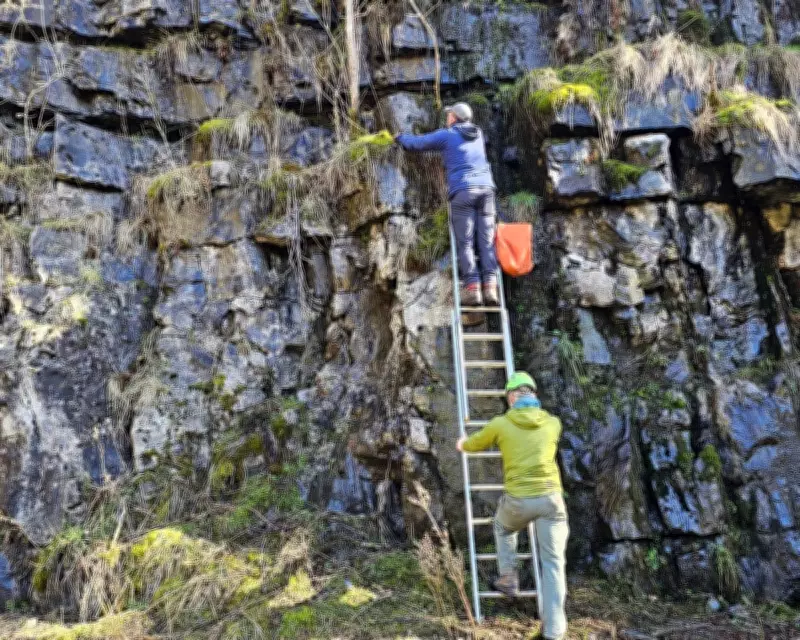
Will and Adam from the North Pennines National Landscape team carried ladders and pot-grown trees to the quarry face, identifying potential planting spots approximately five meters up the vertical limestone wall. The quarry's cascading chaffinch songs provided a spring soundtrack as they worked to find suitable locations where the young trees might successfully establish themselves.
Adam carefully worked compost from the fine reddish roots before carrying the young trees up the ladder in a bag, searching for nooks and crevices with enough soil depth to support growth. "There's even a worm up here," he called down during the planting, discovering sparse pockets of soil within settled leaf litter that offered promise for the trees' development.
Strategic Planting Locations
The conservation team employed strategic thinking in their placement decisions. Some trees were planted in wet but well-draining areas where water dripped slowly through moss among herb robert and nettles. Others found homes on sunny ledges for comparison purposes, where the thorny arch of existing dog rose plants offered natural protection from rabbits.
The inaccessible nature of these quarry ledges provides crucial protection from grazing animals like sheep and rabbits that would otherwise threaten the young trees' survival. Rock whitebeam possesses remarkable resilience, clinging to life where other tree species would struggle, sending its roots between rock crevices and surviving in harsh conditions that would defeat less hardy plants.
The Ecological Context
The planting site itself sits within a rich ecological tapestry. The Bow Lee beck runs nearby, winding through a wooded dene before dropping down Summerhill Force, where a pretty waterfall camouflages Gibson's Cave. The area teems with wildlife, from displaying peewits tumbling and diving with sweet, airy calls to the impressive sight of thirty black grouse in nearby fields.
This conservation effort represents more than just tree planting - it's about preserving genetic diversity, protecting rare native species, and maintaining the unique ecological character of the North Pennines. The rock whitebeam's ability to thrive in challenging conditions makes it a symbol of resilience, but its vulnerability to grazing requires human intervention to ensure its continued presence in the British landscape.
The successful establishment of these young trees on their precarious quarry ledges could mean the difference between survival and disappearance for this rare species in Teesdale. As the trees send their roots between rock crevices and adapt to their harsh new homes, they embody the delicate balance between natural resilience and necessary human stewardship in conservation efforts.