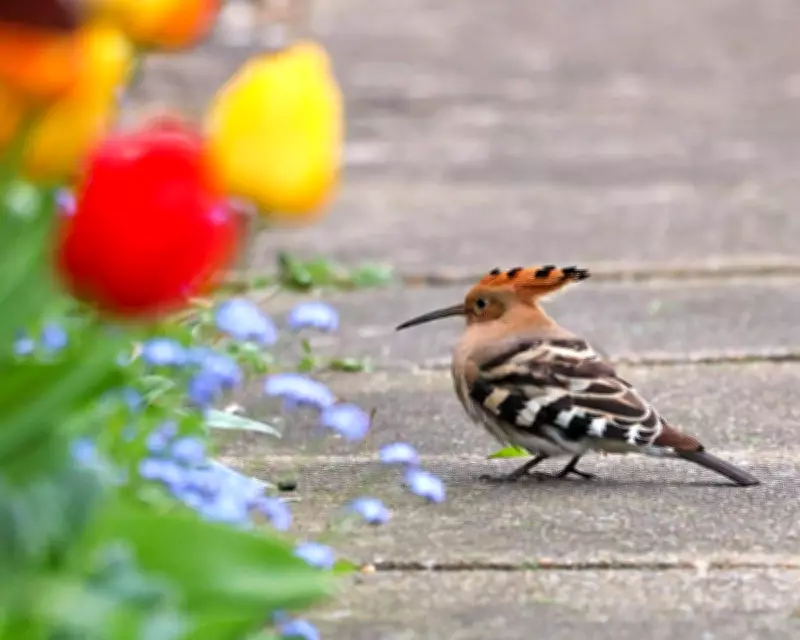
A rare hoopoe bird has made a surprising appearance in a British garden in Bridgham, Norfolk, sparking excitement among wildlife enthusiasts. This sighting echoes a historical entry from a 1926 country diary, where a similar bird was documented in Cornwall, highlighting the enduring fascination with this exotic species in the UK.
Historical Echoes of a Rare Visitor
The recent observation in Norfolk brings to mind a detailed account from April 24, 1926, when a hoopoe was spotted on a lawn in Cornwall. Described as larger than a mistle thrush, with rust pink feathers against the grass and vividly patterned wing coverts in black and white, the bird captivated onlookers. Its tall crest remained unfurled, adding to its distinctive and bizarre appearance.
Memories and Associations
In the 1926 diary, the observer recalled previous encounters with hoopoes in Belgrade and Tuscany, where the bird was seen with its crest fully fanned. The recent sighting in Norfolk allowed for a similar moment of wonder, as the bird was watched for over five minutes while it probed the turf with its long, straight beak before flying off to a nearby croft.
Rarity and Conservation Concerns
Hoopoes, scientifically known as Upupa epops, are rare visitors to England, with their appearances often recorded in southern counties. The 1926 diary noted that a hoopoe, possibly the same individual, had been seen nine miles to the south a week earlier, and multiple reports were submitted to newspapers at the time.
This rarity underscores the importance of conservation efforts. The diary expressed hope that the bird would survive and not be harmed by irresponsible actions, emphasizing its status as a lovely and bizarre creature. Today, such sightings continue to raise awareness about protecting wildlife and preserving natural habitats in the UK.
Cultural and Ecological Significance
The hoopoe's unique name and appearance carry a cloud of associations, making it a symbol of exotic beauty in British wildlife. Observations like these contribute to our understanding of bird migration patterns and the ecological health of regions like Norfolk and Cornwall.
As birdwatching remains a popular activity, such rare events remind us of the rich biodiversity that can be found in British gardens and the need to document and protect these fleeting moments for future generations.