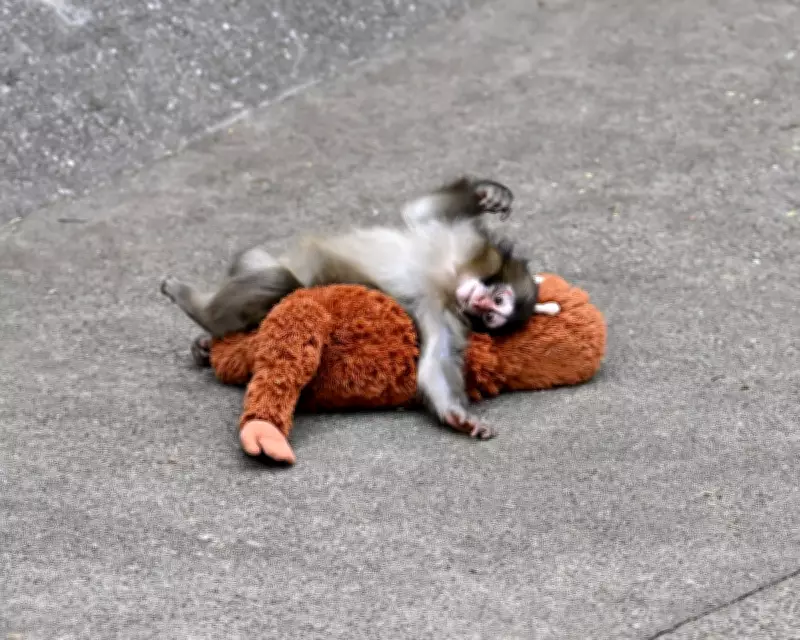
The Heartbreaking Tale of Punch: A Japanese Macaque's Struggle and Global Attention
In a poignant story that has resonated worldwide, Punch, a seven-month-old Japanese macaque at Ichikawa Zoo in Japan's Chiba prefecture, has become an internet sensation after videos revealed his difficult circumstances. Born last July, Punch faced immediate rejection from his mother, leaving him vulnerable and isolated within his troop. The zoo's intervention—providing a stuffed orangutan toy for comfort—has sparked both emotional responses and serious questions about primate behavior and animal welfare.
Understanding Maternal Abandonment in Primates
Alison Behie, a primatology expert at Australian National University, explains that while maternal abandonment is unusual among monkeys, specific conditions can trigger such behavior. "In Punch's case, their mother was a first-time mother, indicating inexperience," Behie notes. "Zookeepers also suggest Punch was born during a heatwave, which would be a high stress environment."
Behie elaborates that in threatening environments, mothers may prioritize their own survival and future reproduction over caring for an infant whose health might be compromised. This evolutionary perspective helps contextualize Punch's abandonment, though it doesn't diminish the challenges he now faces without maternal guidance.

The Stuffed Toy Solution and Social Integration Challenges
After Punch's abandonment, zookeepers experimented with various alternatives before settling on the stuffed orangutan toy. Kosuke Shikano, a zookeeper at Ichikawa, explains the reasoning: "Baby Japanese macaques immediately cling on to their mother's body after birth to build muscle strength. They also get a sense of security through holding on to something. However, because he had been abandoned, Punch had nothing to grip on to."
The toy serves multiple purposes—providing physical support, emotional comfort, and potentially aiding future integration. "We thought that looking like a monkey might help Punch integrate back into the troop later on," Shikano adds. Behie confirms this assessment, noting that "the toy Punch has may be serving as an attachment figure, especially given they are six months old so likely still need to be nursed."
Social Dynamics and Hierarchical Challenges
Videos showing Punch being dragged and chased by older macaques have raised concerns about bullying, but Behie clarifies these interactions represent normal social behavior within strict matrilineal hierarchies. Japanese macaques maintain complex social structures where higher-ranking families assert dominance over lower-ranking ones.
"Even with his mother, Punch would probably still face this aggression," Behie explains. However, she emphasizes the crucial role maternal guidance plays in development: "Without his mother, Punch may not develop the appropriate subordinate responses to show they submit to the dominance, which could have ongoing implications for the way they integrate into the group as an adult."
Global Attention and Ethical Considerations
The viral nature of Punch's story has brought unprecedented attention to Ichikawa Zoo, with visitor numbers surging as people hope to glimpse the famous monkey. Zoo officials have responded by implementing stricter barriers around the enclosure and requesting visitors maintain quiet, avoid photography equipment like stepladders and tripods, and limit prolonged viewing sessions.
Carla Litchfield, a conservation psychologist at Adelaide University, connects Punch's story to broader issues: "This story about Punch highlights the impacts of habitat loss, climate change, zoo animal welfare, and the power of social media to connect people to animals." She expresses concern that the attention might inadvertently encourage illegal trade in infant monkeys for the exotic pet trade, noting that "monkeys grow up quickly—Punch will be an adult in four years—and people no longer find them cute and manageable."

Litchfield emphasizes the fundamental needs of primates: "Monkeys belong with other monkeys. They are social beings and need to be with their own species to thrive mentally and physically." Her comments underscore the complex ethical landscape surrounding zoo animals that capture public imagination, drawing parallels to other viral animal stories like Moo Deng, the young pygmy hippo in Thailand who gained fame in 2024.
Scientific Context and Conservation Implications
Japanese macaques hold particular scientific significance due to their intelligence, making them subjects for biomedical and neuroscience research in Japan. They also face conservation challenges, including culling due to crop-raiding behavior. Punch's story brings these issues to public consciousness while demonstrating how individual animal narratives can illuminate broader ecological and ethical questions.
The ongoing attention to Punch's development—from his initial abandonment to his current reliance on the stuffed toy and interactions with his troop—continues to provide valuable insights into primate behavior, zoo management practices, and the powerful role of social media in shaping public engagement with wildlife conservation issues.