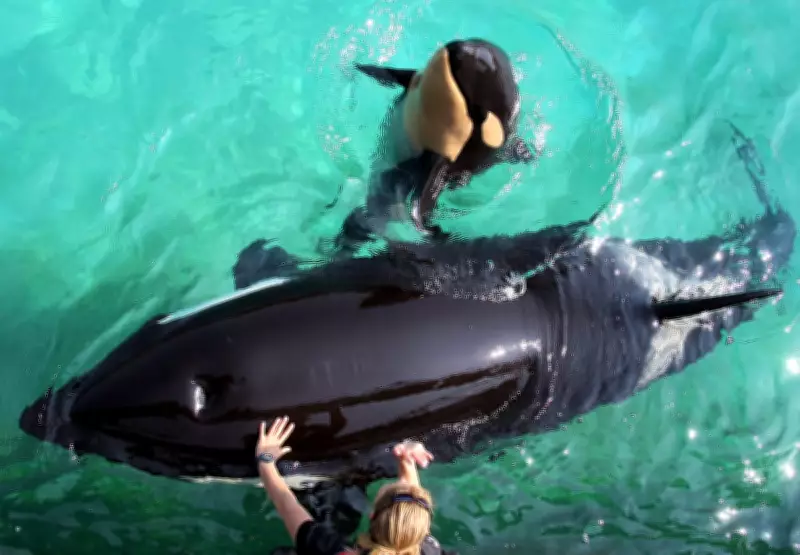
The Plight of Wikie and Keijo: Orcas Stranded in a Closed Aquarium
In the deserted pools of Marineland Antibes in south-eastern France, two orcas, Wikie and her son Keijo, float listlessly. Once performers for crowds of half a million visitors annually, they now inhabit algae-filled waters with empty stands and overgrown walkways, following the park's closure in January 2025. A court-ordered report from April 2025 notes that they often "log," or float at the surface, when alone.
Urgent Need for Rehoming Amid Legal and Ethical Debates
Since a 2021 French law banned keeping cetaceans in captivity, the fate of Wikie and Keijo has been hotly contested. A crucial meeting on Monday will bring together the French government, animal welfare groups, and Marineland Antibes to decide their future. Marineland has emphasized the urgency, stating that the deteriorating pools threaten the orcas' wellbeing and lives, with maintenance costs reaching €500,000 per orca annually.
While 12 bottlenose dolphins at the park will remain until a new facility at Beauval zoo is ready, the orcas' transfer is imperative. The debate centers on where to move them, with options ranging from a planned sanctuary in Canada to existing aquariums.
Sanctioned Sanctuary or Immediate Aquarium Transfer?
In December 2025, French minister delegate for ecological transition Mathieu Lefèvre announced plans to send the orcas to the Whale Sanctuary Project in Nova Scotia, Canada, calling it the only ethical and legal solution. This 40-hectare site aims to mimic a natural seaside habitat. Lori Marino, founder of the project, highlights that the orcas would have diving depth and stimulating environments.
However, opposition is strong. Marineland's owner and some animal welfare groups argue the sanctuary is not yet built and lacks $15 million in funding, labeling it a "hypothetical solution." They advocate for an immediate transfer to an aquarium, such as SeaWorld in Orlando, despite past legal blocks. C'est Assez!, an anti-captivity group, now supports this as a lesser evil due to the urgency.
Logistical Challenges and Environmental Concerns
Transferring orcas involves complex logistics, including sling lifts and potential air travel. A move to a sanctuary would require additional preparation, such as building muscle and blubber for ocean adaptation. Sea Shepherd France opposes the Canadian plan, citing concerns over water pollution and temperature, though Marino counters with published data showing safe conditions and notes the orcas' Icelandic heritage suits colder waters.
As disagreements persist, the orcas remain in limbo. Cetacean expert Naomi Rose points out that while internal conflicts delay progress, the captivity industry bears responsibility for their plight. The Monday meeting aims to resolve this, but for now, Wikie and Keijo wait in their silent pools.