Federal Government Approves Massive NT Land Clearing Without Environmental Assessment
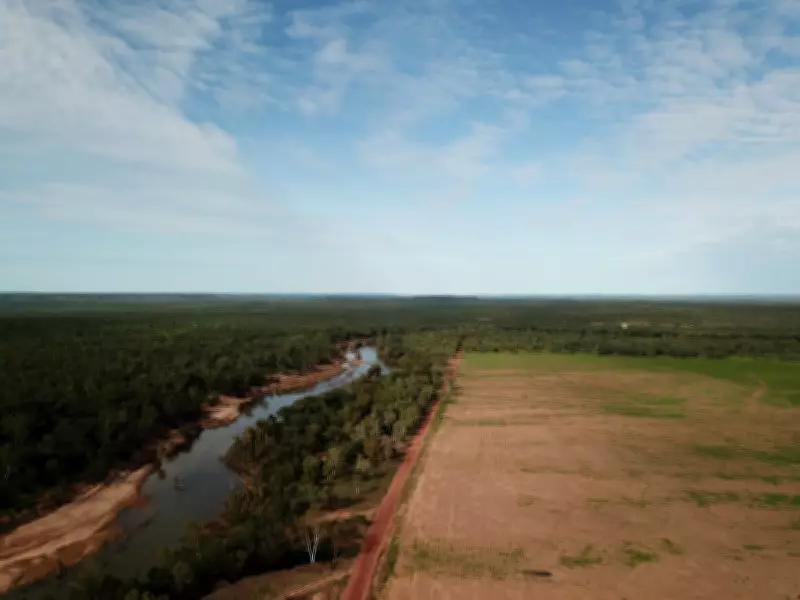
The federal government has ignited a firestorm of controversy by approving the bulldozing of nearly 3,000 hectares of tropical savanna in the Northern Territory without requiring an assessment under Australia's national environmental laws. Environment Minister Murray Watt granted the green light for Top End Pastoral Company to clear 2,723 hectares of woodland on Claravale farm and station in the Daly River region, an area equivalent to ten times the size of Sydney's central business district.
Thirteen Threatened Species at Immediate Risk
The Environment Centre of the Northern Territory (ECNT) has declared that this decision effectively sanctions the destruction of probable habitat for thirteen threatened species. Among the vulnerable wildlife affected are the ghost bat, Australia's largest predatory bat, along with Gouldian finches, freshwater sawfish, pig-nosed turtles, and red goshawks. The Daly River region serves as a critical sanctuary for these endangered animals, making the approval particularly alarming for conservationists.
ECNT Executive Director Kirsty Howey expressed profound dismay, stating, "We're absolutely gobsmacked by this decision, which makes a mockery of Labor's promise to fix our broken nature laws. If plans of this scale—to bulldoze thousands of hectares of Australia's great savanna and the homes for 13 threatened species—don't trigger federal assessment, what does?" The organization is now exploring all legal avenues regarding the application of national nature laws in the Northern Territory.
Minister's Decision Bypasses Standard Environmental Scrutiny
Minister Watt determined that the development is not a controlled action, allowing it to proceed without an evaluation under the Environment Protection and Biodiversity Conservation (EPBC) Act. This exemption means the project will not undergo formal assessment for its potential impacts on threatened species and ecosystems. The government defended the move, asserting that after careful examination, the minister concluded the project was unlikely to have a significant environmental impact.
This decision was published by the federal environment department last Wednesday, coinciding with Watt's announcement that US mining company Alcoa would receive a national interest exemption to continue clearing for bauxite mining operations in Western Australia's northern jarrah forest. The timing has raised questions about the consistency and rigor of environmental oversight across different industries.
Specific Concerns About Ghost Bat Habitat
Claravale Station is home to caves that serve as known roosting sites for a large colony of ghost bats, representing one of only six known maternity roosts for the species in the Northern Territory. Although the known roosting habitat lies outside the immediate development zone, the ECNT remains deeply concerned. Surveys have been conducted over only a small area, and advice from the NT environment department indicates the development will approach within two kilometers of these roosting sites, which support approximately 18% of the known NT ghost bat population.
Additionally, there are significant worries about the impact on foraging habitat. Scientists are still unraveling the ghost bat's foraging habits, but these animals are known to travel kilometers in search of food, meaning the clearing could disrupt essential feeding grounds.
Broader Implications for Australia's Tropical Savannas
Professor Euan Ritchie, an expert on tropical savannas from Deakin University, emphasized the irreversible consequences of such large-scale clearing. "Once Australia's tropical savannas are cleared by bulldozers and chains, at industrial scale, they will not return in our lifetime," he warned. Australians have inherited one of the largest intact and biodiverse savanna ecosystems remaining on Earth, making preservation efforts critically important.
The federal environment department spokesperson explained that not all referrals under the EPBC Act are expected to result in significant impacts on nationally protected matters or require further assessment. By refining the project design, the proponent has avoided clearing key areas of habitat and reduced potential impacts. The spokesperson added that the developer's referral and the minister's careful consideration demonstrate how reforms to the EPBC Act ensure agricultural land clearing complies with the same rules and standards as other industries.
Development Details and Pastoral Company's Plans
Top End Pastoral Company has proposed a three-stage development covering more than 7,000 hectares across its properties. The plans referred to the federal government pertained to the second stage, originally encompassing about 4,585 hectares. Last week's decision revised the total clearable area down to 2,723 hectares to avoid some wildlife corridors and habitat. The company has already undertaken clearing under a separate permit from the NT government for stage one, which covers approximately 1,200 hectares.
A spokesperson for the federal environment department noted that the minister's decision considered the combined impact of all proposed clearing stages, including the clearing already completed as part of stage one. Factors taken into account included the design of the proposed clearing areas, the extent of clearing within the total development envelope, the availability of intact habitat across the broader project area, and measures proposed by Top End Pastoral Company to avoid and mitigate impacts on habitat.
Top End Pastoral Company has declined to comment on the approval or its implications. The situation highlights ongoing concerns that pastoral land-clearing has rarely been assessed under national laws, prompting calls for stricter enforcement and transparency in environmental governance.