Norway's Pioneering Interspecies Council Reimagines Governance
In the mountain village of Oppdal, Norway, a remarkable experiment in democracy is unfolding. Humans are gathering not as themselves, but as representatives for the region's flora and fauna—from spiders and Norwegian spruces to northern bats and river systems—to participate in what is known as an interspecies council. This innovative practice seeks to give nature a formal voice in decisions that affect its future.
A Ceremonial Gathering for All Beings
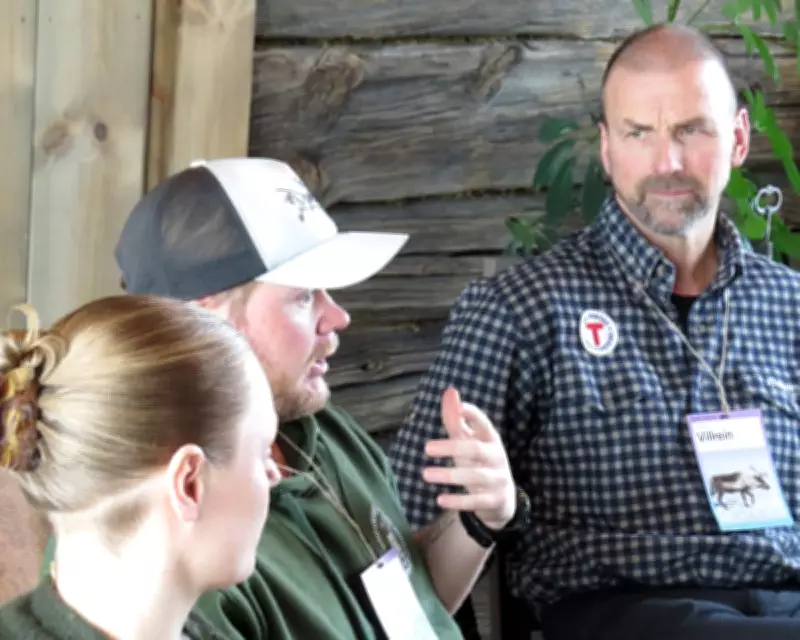
The concept originates from the Council of All Beings, developed by environmentalists John Seed and Joanna Macy in the 1980s. Scientist and activist Phoebe Tickell, a mentee of Macy's, has evolved this into a structured "decision-making methodology that expands who has voice and representation in governance beyond humans alone." In Oppdal, 38 local participants, all new to the process, recently convened at the Bjerkeløkkja conference center, with floor-to-ceiling windows framing the conifer forests and snow-dusted foothills of the Drivdalen valley.
Participants were randomly assigned or chosen based on expertise to represent specific multispecies stakeholders. The day began with briefings and icebreakers, where about half the room stood when asked if their great-grandparents had lived in Oppdal. The invitation to embody their assigned beings led to squawks, wing flaps, and lumbering strides, setting a ceremonial tone. Ritualistic touches, such as beings bowing in introduction, added to the gravity of the proceedings.

Voices from the Natural World
The council centered on discussions about the needs, challenges, and ideas for Oppdal's future, as expressed through the representatives. A rockfoil flower wished for humans to slow down and listen "to where nature can tolerate more human activity and where it needs space." A birch tree expressed concern, stating, "I'm worried there's too of me. I thrive in open spaces, but I can take over." The River Driva lamented emotionally, "I've just been seen as a resource, and not even acknowledged for how much I've given this landscape. I hate when humans make me fit in and be smaller than I am." In a lighter moment, a fox pointed at a wader and exclaimed, "I like him!"
These exchanges are not primarily about unearthing new data. As architect Patricia Schneider-Marin, who represented a Norwegian spruce, notes, "I work a lot with numbers. We know the numbers." Instead, the aim is to cultivate interspecies empathy and dissolve the illusory divide between humans and nature. Facilitator Margrete Vognild Blokhus, representing a purple saxifrage flower, emphasizes, "To take care of nature, we have to know it and feel it and think like it."
Addressing Imperfect Representation and Human Dynamics
Thinking and feeling like another species is challenging. Schneider-Marin found representing a tree without sight, smell, hearing, or taste to be "a bit of a brain-twister," but she sees this as a healthy point that encourages deeper reflection. Tickell argues that imperfect representation is preferable to exclusion, questioning, "Is it sillier to ask someone to imaginatively inhabit the perspective of a different species for an hour, or to continue running governance systems that have driven a 70% collapse in wildlife populations in 50 years?"
The council also disrupts human relationships in positive ways. Architect Katerine Chada, who represented a spider, observed that it created an unusually "fantastic atmosphere of listening." Schneider-Marin adds that it helped "people to hear concerns without feeling offended, because they could be like: 'OK, wait, I'm a species.'" This shift in perspective aims to foster long-term empathy gains, with an evaluation tracking participants' connectedness to nature and openness to non-human perspectives from before the council to six months after.
Outputs and Future Implications
The Oppdal council produced a draft of principles for human governance, which will be published as a manifesto. Human discussions at the close of the event generated practical ideas, including holding a six-monthly interspecies council and forming a höringsgruppe, or hearing group, dedicated to listening to Oppdal's non-humans. Participants plan to reconvene in June to discuss implementation.

The core challenge, as Tickell outlines, is establishing "institutional trace": meaningful decision-making power grounded in robust methodologies, accountable protocols, and longitudinal research. She envisions a future where interspecies councils become as routine as environmental impact assessments. However, she warns that they will have failed if they "become sophisticated greenwashing or window-dressing."
Part of a Growing Global Movement
Interspecies councils are part of a burgeoning international movement advocating for nature rights and governance power. In the UK, 13 councils have recognized river rights since 2023, and a nature's rights bill is gaining support. A coalition of artists, ecologists, lawyers, scientists, urbanists, fishers, and policymakers is exploring interspecies biodiversity governance around the North Sea. Organizations are increasingly adopting "nature-centric governance" techniques, such as nature charters and appointing nature to boards.
In policy settings, these councils have been used to reimagine stewardship around London's River Roding and to generate multispecies responses to governmental consultations on land use. Oppdal's initiative represents an international expansion of this practice, set against a backdrop of environmental crisis and local debates about balancing economic development with ecological health. The village, with a population that swells from 5,000 to 30,000 in winter due to tourism, faces tensions over land allocation for farming, tourism, and conservation.
For Oppdal's participants, initial skepticism has transformed into a sense of purpose. As Vognild Blokhus puts it, they represent one of the "little seeds that we have to plant to make sure that in the end, maybe, we have a change." The future of interspecies councils will unfold not only in Oppdal but in communities worldwide, as this innovative approach to governance continues to take root and evolve.