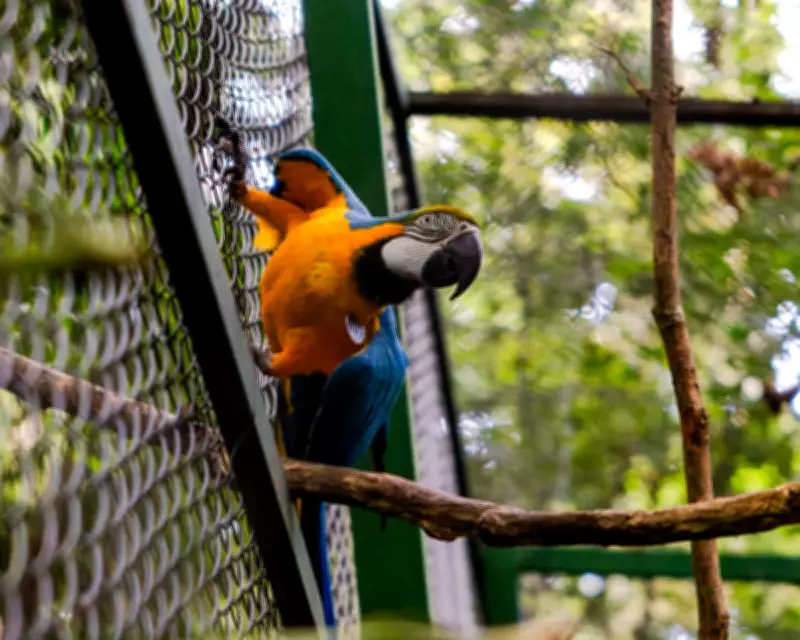
Historic Return of Blue-and-Yellow Macaws to Rio de Janeiro's Tijuca National Park
In a landmark conservation achievement, blue-and-yellow macaws are being reintroduced to Tijuca National Park in Rio de Janeiro, Brazil, after a disappearance spanning two centuries. This ambitious 'refaunation' initiative aims to restore not only these iconic birds but also other lost species, revitalizing the city's urban rainforest ecosystem.
A Dream Realized After Decades of Extinction
Images of the vibrant blue-and-yellow macaw adorn artwork and merchandise across Rio de Janeiro, yet the actual birds had vanished from the city's skies for so long that their historical presence was questioned. Early records by French explorer Jean de Léry in the 16th century and Austrian naturalist Johann Natterer in 1818 documented abundant populations, but deforestation and wildlife trafficking led to their local extinction. Experts attribute the loss to 19th-century exploitation for coffee and charcoal, which decimated the Atlantic rainforest, with Emperor Dom Pedro II's reforestation efforts in the 1860s unable to save many species.
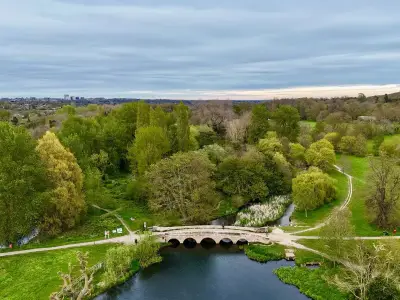
Viviane Lasmar, director of Tijuca National Park, expressed profound emotion, stating, "They are so magnificent. For me, as the head of the park, it's special. But even more so as a carioca. It's a dream come true." The park, one of the world's largest urban green spaces at nearly 4,000 hectares, now hosts flashes of blue and gold in its canopy, signaling a hopeful revival.

Refaunation: Restoring Rio's Lost Wildlife
The Refauna organization, led by executive director Marcelo Rheingantz, is spearheading the refaunation program, which estimates that two-thirds of large and medium-sized mammals once native to Tijuca have been lost. Since 2010, the project has successfully reintroduced species such as the red-rumped agouti, brown howler monkey, and yellow-footed tortoise, each playing critical ecological roles. Rheingantz notes, "It's really beautiful to be putting the forest's orchestra back together again."
Currently, four macaws—Fernanda, Selton, Fatima, and Sueli, named after Brazilian cultural icons—have been released, with plans to introduce 50 more. These birds, rescued from captivity, undergo rigorous training to adapt to the wild, including flight exercises and learning to recognize native fruits. A scheduled release in September marks a key milestone, though continuous monitoring will ensure their safety and integration.
Ecological Impact and Challenges Ahead
Vanessa Kanaan, director of Instituto Fauna Brasil, emphasizes that reintroduction is about rebuilding ecological relationships, not just spectacle. The macaws, with their powerful beaks, can crack tough seeds like the agouti fruit, aiding in seed dispersal across vast distances. This helps combat 'empty forest syndrome,' where lack of animals hinders forest regeneration. Luisa Genes, Refauna's scientific director, highlights, "They can also help regenerate other forests by taking seeds from Tijuca outside the park."
However, challenges persist, particularly from the park's 5 million annual visitors. The macaws' beauty and social nature pose risks, as they may interact with humans. Refauna's team uses deterrents like red sticks and foliage cover to discourage this, while educating the public on the dangers of feeding wildlife. Rheingantz envisions a future where macaws soar freely over Rio, symbolizing broader conservation success.
This refaunation effort not only revives a beloved species but also underscores the importance of holistic ecosystem restoration in urban environments, offering a model for global rewilding initiatives.