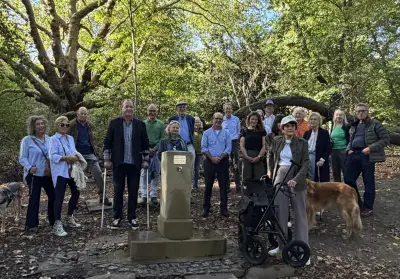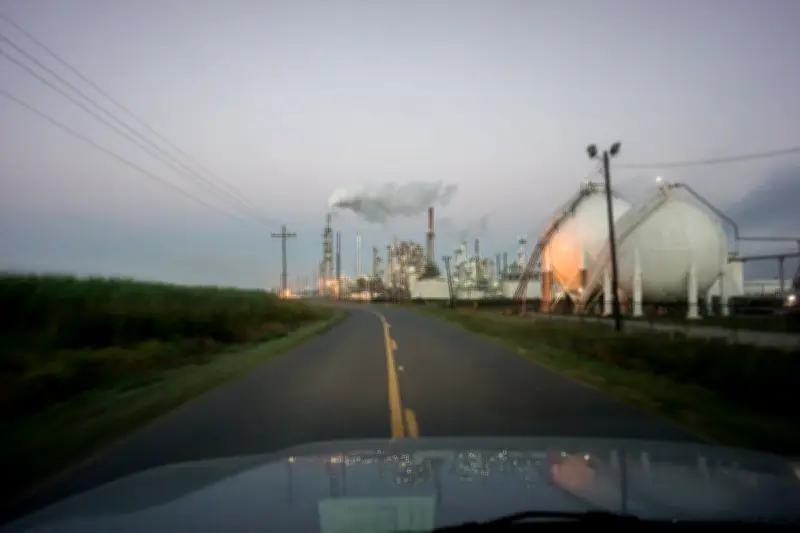
Kimbrelle Kyereh lives just a few hundred feet from massive chemical storage tanks in St Rose, Louisiana. Oily fumes drift into her home, bringing headaches, nausea, and insomnia. In 2023, after years of coping with noxious odors, she began collecting air samples for a local environmental justice group. But soon after, Louisiana passed an industry-backed law that sharply restricted how such data could be used. She stopped. "I shut my mouth like they wanted me to," Kyereh said.
Air monitors are miles away from major polluters
Along the 85-mile corridor between Baton Rouge and New Orleans—where cancer rates from toxic air pollution are among the nation's highest—public air monitors are often located miles from major industrial polluters and fail to test for the most dangerous chemicals. A Floodlight/Guardian analysis found that ten of Louisiana's heaviest air-polluting facilities operate without a single public air monitor within five miles. For example, Dow Chemical's plastics factory in Plaquemine is about eight miles from the nearest monitor, which measures only ozone, even though the plant releases carcinogens like ethylene oxide. No public monitors measure ammonia, despite CF Industries' Donaldsonville plant emitting over 7 million pounds of the hazardous chemical annually.
Three key cancer-causing chemicals are not monitored
The three chemicals that researchers say account for the large majority of total cancer risk in the area—ethylene oxide, chloroprene, and formaldehyde—are not monitored by the state at all. Industry groups have spent years fighting proposals for better monitoring and helped draft a 2024 law that restricts community air monitoring data in enforcement. Similar legislation has since been introduced in Kentucky, Ohio, and West Virginia.
A refinery leak exposed the system's limits
On August 24, 2023, a naphtha leak at Marathon's Garyville refinery illustrated the monitoring gap. More than six hours passed before the Louisiana Department of Environmental Quality began monitoring the air. The leak ignited a massive fire; two nearby schools opened anyway, and residents were not evacuated until over 15 hours later. At least 29 residents were treated at hospitals. The nearest state monitor measured only ozone, not volatile organic compounds released in the fire. Wilma Subra, an environmental chemist, said better monitoring would have prompted faster school closures and evacuations.
Community advocates push for expanded monitoring
Adrienne Katner, an associate professor at LSU, concluded in 2022 that roughly 400 high-emission facilities in Louisiana had no public air monitoring. She called the situation "a public health emergency waiting to occur." In 2023, Johns Hopkins researchers drove a mobile lab through the industrial corridor and found cancer risks exceeded EPA figures by up to 11 times in some areas. Peter DeCarlo, an atmospheric scientist, said regulators miss much of the pollution because too few monitors measure too few chemicals.
Monitoring stations have been cut
Louisiana has lost four air monitoring stations since 2020. Expenditures for the LDEQ division overseeing air monitoring fell nearly 15% between 2020 and 2026, and adjusted for inflation, spending dropped by over one-third. Nationwide, the number of operating air monitors fell by nearly half over the decade ending in 2021. Chet Wayland, former EPA air quality assessment division leader, said, "More money is desperately needed for monitoring." The EPA monitors toxic air pollutants at 26 stations nationally, but none are in Louisiana or Texas.
Industry lobbying stifles monitoring bills
Former state senator Cleo Fields repeatedly proposed bills requiring major polluters to monitor toxic emissions at property lines, but each died due to industry opposition. State senator Royce Duplessis tried again in 2024 with a similar bill, which also failed. The Louisiana Chemistry Association helped draft the Community Air Monitoring Reliability Act, which prohibits using air pollution data for enforcement unless captured by EPA-approved monitors—equipment costing tens of thousands of dollars. Critics say the law stifles community monitoring. David Cresson, LCA president, defended the law, saying it ensures data meets EPA standards.
State senator Eddie Lambert, who sponsored the act, has received over $28,000 in political contributions from petrochemical and oil industries since 2020. He told Floodlight his investments and contributions did not influence his decisions. Lambert questioned the need for more public monitors, saying, "If we already get the information from the plants, why would we want to spend our resources there?" However, a 2025 ProPublica investigation found that when the EPA required temporary monitors, 97% of facilities underreported emissions—at a Dow Chemical plant, vinyl chloride emissions were over 150 times higher than estimates.
Residents left wondering
Tish Taylor lives less than a mile from the Denka Performance Elastomer plant, which produced neoprene until federal regulators determined its chloroprene emissions posed an unacceptable cancer risk. The two closest public monitors, each about five miles away, measure only lead and ozone. Taylor said, "I just have to wonder how much" toxic material is in the air.