A Glimmer of Colour on Blacka Moor
As the clocks changed and autumn deepened, a heavy cloud blanket settled over Blacka Moor in South Yorkshire, draining the landscape of colour and creating a premature dusk that threatened to dampen spirits. The light appeared to be fading before it had truly arrived, suggesting one of those uneventful days that could leave a hole in your mood.
Yet as the afternoon progressed, something remarkable happened. The oppressive cloud cover began to thin, and colour gradually returned to the woodland, as if someone had unexpectedly turned up a dimmer switch. The yellowing leaves of birch trees suddenly sparked into vibrant life, transforming the previously drab scene.
While navigating the steep ground, the observer discovered a Russula cyanoxantha mushroom, commonly known as a charcoal burner, its cream-tinged underside glowing brightly in the unusual preternatural dusk that had settled over the moor.

The Queen of Birds Reveals Herself
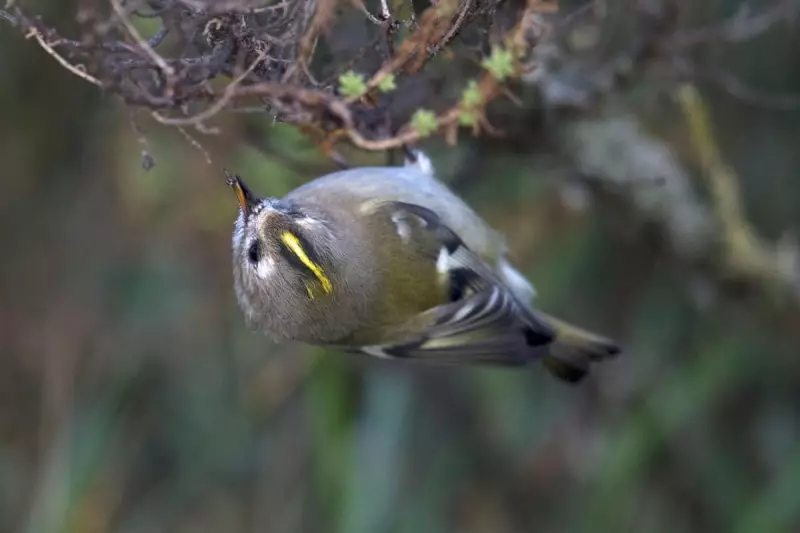
Movement among the birch branches soon captured attention, revealing Britain's smallest avian resident - the goldcrest. This diminutive bird was working its way down a branch, its presence announced by the distinctive, liquid song that belied its tiny size.
The extraordinary lighting conditions worked magic on the narrow yellow stripe crowning the bird's head, burnishing it to a brilliant lemon tone that indicated a female goldcrest - the males display a more orange-coloured crest. This streak of colour hummed with strange intensity, standing out even against the glowing yellow birch leaves, creating a strip of luminescence across the tissue-thin skull of this slight creature.
Despite weighing a mere 6 grams as an adult, the goldcrest carried itself with a mighty presence, its vibrant crown giving it an almost regal bearing in the muted autumn landscape.
The Science Behind the Spectacle
The goldcrest's stunning colouration, like that of flamingos and many other birds, comes from carotenoids consumed in their diet of tiny invertebrates and insect eggs. These chemicals serve as powerful antioxidants that boost the bird's immune function, but nature demands a trade-off between health benefits and breeding success.
Testosterone drives male goldcrests to process carotenoids into brighter orange crests that attract mates, with the colour intensity signalling superior health and foraging ability to potential partners. This display comes at an energy cost, but the payoff is significant when it comes to reproduction.
The female observed on Blacka Moor will need all the nourishment she can find come spring, when she'll typically produce 10-12 chicks in each of two broods. The second brood often begins before the first has even fledged. These chicks hatch weighing barely half a gram, naked and blind, yet miraculously reach adult weight within a fortnight.
Judging by the vibrant intensity of her lemon-coloured crown, this particular goldcrest appeared more than capable of surviving the winter ahead, her striking appearance serving as both a beautiful natural spectacle and a testament to her robust health.