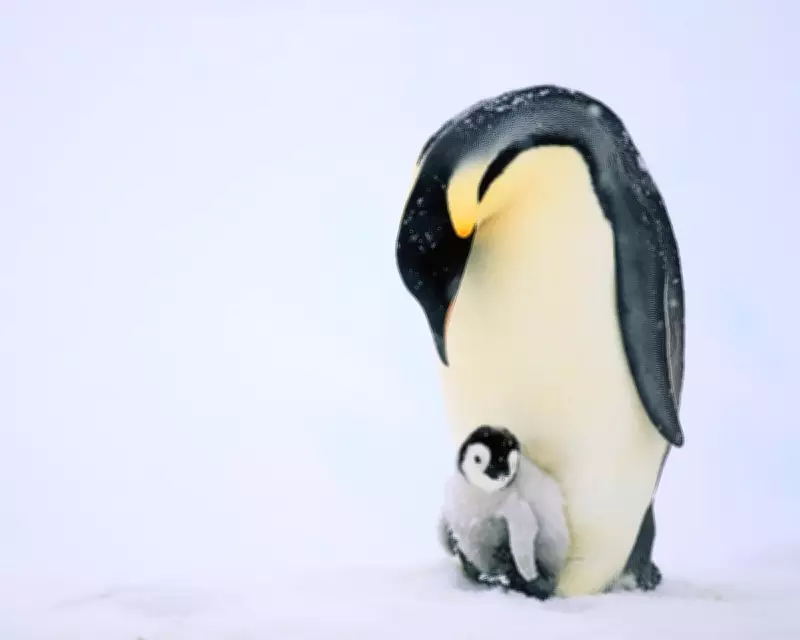
Emperor Penguins Officially Declared Endangered Species as Climate Crisis Ravages Antarctic Colonies
The iconic emperor penguin has been officially added to the International Union for Conservation of Nature's red list of endangered species, marking a devastating milestone in the climate crisis's impact on Antarctic wildlife. This declaration comes after years of catastrophic colony collapses caused by rapidly melting sea ice, resulting in mass drownings of vulnerable penguin chicks.
Sea Ice Collapse Leads to Mass Chick Drownings
Emperor penguins depend critically on stable "fast" ice—sea ice firmly attached to the Antarctic coastline—for approximately nine months each year. This frozen platform serves as the essential breeding ground where fluffy chicks hatch and develop until they grow their waterproof feathers. Adult penguins also require this stable ice during their annual moulting period when they temporarily lose their swimming capabilities.
Global heating has triggered unprecedented lows in Antarctic sea ice since 2016, creating catastrophic conditions for penguin colonies. When sea ice breaks up prematurely, entire breeding colonies can plunge into the frigid ocean waters. The consequences are particularly devastating for chicks that haven't yet developed waterproof feathers, leading to mass drownings. Even those penguins that manage to escape the water face almost certain death from hypothermia as their soaked feathers provide no insulation against the Antarctic cold.

Catastrophic Colony Collapses Documented
Scientific observations have documented multiple catastrophic colony failures in recent years. In 2022, four of the five known emperor penguin breeding sites in the Bellingshausen Sea completely collapsed, resulting in the loss of thousands of chicks. This followed an earlier colony collapse in the Weddell Sea in 2016. Researchers have described these events as both "grim" and "extraordinarily distressing," highlighting the rapid deterioration of Antarctic ecosystems.
The IUCN assessment projects that the emperor penguin population will decline by approximately 50% by the 2080s due to continued sea ice loss. Current population estimates stand at about 595,000 adult penguins, representing a concerning 10% decline between 2009 and 2018 alone. The species has now jumped two categories in conservation status—from "near threatened" to officially "endangered."
Broader Antarctic Ecosystem Crisis
The emperor penguin's plight represents just one facet of a broader ecological crisis unfolding across Antarctica. The IUCN assessment also revealed that the Antarctic fur seal population has declined by more than half since 2000, primarily due to reduced availability of krill—their primary food source. This decline has prompted the fur seal's conservation status to jump three categories from "least concern" to "endangered."
Additionally, the southern elephant seal now faces extinction risk, having been severely impacted by bird flu outbreaks since 2020. The disease has affected four of the five major subpopulations, killing over 90% of newborn pups in some colonies and pushing the species into the "vulnerable" category.
Scientists Issue Urgent Warnings
Conservation experts and scientists have issued stark warnings about the implications of these developments. "The emperor penguin's move to endangered is a stark warning: climate change is accelerating the extinction crisis before our eyes," stated Martin Harper, chief executive of BirdLife International, which coordinated the IUCN assessment. "Governments must act now to urgently decarbonise our economies."
Dr. Philip Trathan, a marine ecologist who contributed to the emperor penguin red list analysis, emphasized that "human-induced climate change poses the most significant threat" to these iconic birds. He noted that emperor penguins serve as a sentinel species, providing crucial indicators about our changing world and the effectiveness of efforts to control greenhouse gas emissions.

Calls for Immediate Action
Conservation organizations are calling for immediate, comprehensive action to address the crisis. WWF is advocating for emperor penguins to be listed as a "specially protected species" at the upcoming Antarctic treaty meeting in Japan this May, which would help mitigate additional pressures from tourism and shipping activities.
Rod Downie, interim director of science at WWF-UK, warned that "with the shocking decline in Antarctic sea ice we are currently witnessing, these icons on ice may well be heading down the slippery slope towards extinction by the end of this century—unless we act now. The fate of these magnificent birds is in our hands."
The scientific consensus remains clear: eliminating carbon dioxide emissions from fossil fuel combustion represents the only viable pathway to halt global heating and prevent further catastrophic losses in Antarctic ecosystems. As climate change continues to reshape the polar regions at an alarming pace, the emperor penguin's endangered status serves as a powerful symbol of the urgent need for global environmental action.