Cape Town's Growing Baboon Conflict Divides Residents and Authorities
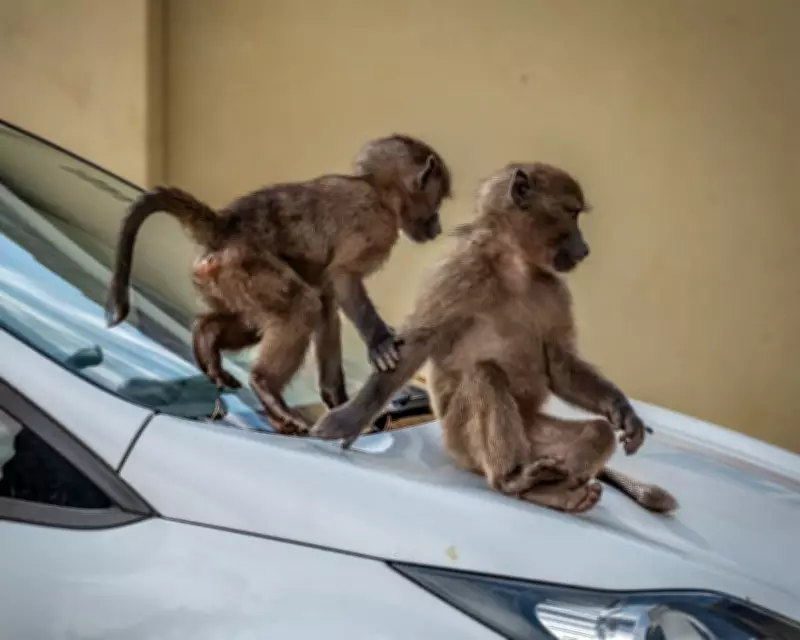
In Da Gama Park, where Cape Town's suburbs meet the slopes of Table Mountain, juvenile baboons have been observed frolicking on parked cars and navigating between garden walls and rooftops. Children from South African navy families playing in the streets display mixed reactions—some delighted, some wary, but most unfazed by the primates' presence. This scene illustrates the complex reality of human-wildlife coexistence in one of South Africa's most iconic cities.
Traumatic Encounters and Divided Opinions
Just a few miles away in Simon's Town, resident Nicola de Chaud recounts disturbing experiences with the local baboon population. The 61-year-old documentary maker, who relocated from Johannesburg five years ago, has documented baboons strewing food across her kitchen and even throwing one of her dogs across the veranda. In January, a male baboon lunged at her and remained in her house for ten tense minutes. "It has become really, really difficult and very traumatic actually," De Chaud revealed, capturing the emotional toll of these encounters.
The conflict extends beyond human-baboon interactions to divisions within the human community itself. During a 2024 protest in Kommetjie against baboon intrusions, tensions escalated to the point where both a person and a baboon were pepper-sprayed during a confrontation between pro- and anti-baboon groups. The 2025 Cape Baboon Management Action Plan describes this as a "wicked problem" with no single solution capable of satisfying all parties or definitively resolving the conflict.

Population Growth and Habitat Fragmentation
The root of the conflict lies in overlapping population growth. Cape Town's human population surged 65% from 2001 to 2022, reaching 4.8 million residents. Simultaneously, the chacma baboon population on the Cape Peninsula has increased from approximately 360 individuals across 10 troops at the turn of the century to more than 600 baboons in 17 troops by 2024. These primates, lacking natural predators in the region, increasingly forage for calorific human food as their natural low-lying habitats have been consumed by urban expansion.
This proximity has proven deadly for baboons. Human-related baboon deaths have skyrocketed from just four in 2013 to thirty-three in 2024, according to official census data. Causes include shootings, vehicle collisions, dog attacks, and electrocutions.
Contrasting Management Approaches
Animal rights activists advocate for coexistence through human responsibility. Lynda Silk, a healer and activist who educates people about living alongside nature, emphasizes accountability. "There's been no successful prosecution for a person shooting a baboon," she noted, arguing that residents should secure their properties and train their dogs rather than resort to lethal measures.
In stark contrast, American journalist Tom Cohen, who retired to Cape Town in 2019, believes peaceful urban coexistence is impossible. He describes the two troops frequenting Simon's Town as "hopelessly habituated and dependent on human food and settlements to survive." Despite his efforts to baboon-proof his home, primates smashed through a bathroom window in February 2025, destroying a microwave and leaving feces behind. "The smell lingers, I can tell you that," Cohen reported.
Government Interventions and Legal Challenges
Authorities have proposed a multi-layered approach involving fences to exclude baboons from certain areas and a new bylaw with a "zero tolerance" policy toward harming primates. However, in Simon's Town, fencing has been deemed unworkable due to topography, leading to a controversial proposal to relocate both troops to a sanctuary later this year. Euthanasia remains a last resort option, though it's anathema to animal rights advocates.
The entire management plan now faces legal challenges. Many activists oppose the sanctuary concept, preferring to maintain reliance on rangers who use paintball guns to deter baboons from residential areas. The ranger program's management was transferred to the non-profit Cape Baboon Partnership in March 2025.

Sandie MacDonald, 54, who co-leads Cape Peninsula Civil Conservation with Lynda Silk, expressed concerns about premature decisions. "What concerns us is that the decision to put them into a sanctuary, and even to cull them, was made before the new management of the baboon rangers was settled," she explained, noting that baboon incursions have decreased in many areas recently.
Scientific Perspectives and Accountability Questions
Joselyn Mormile, a Cape Baboon Partnership scientist with fifteen years of baboon research experience, acknowledges the limitations of ranger-based solutions in Simon's Town. "That's a losing battle that we are fighting every day to keep baboons and people happy there," she admitted.
Mormile's PhD research in Rooi-Els—a village about twenty miles south of Cape Town where residents opted for coexistence—revealed continued high baboon mortality rates, with eleven infant baboons killed by vehicles over four years. "I can never promote sharing space," she concluded based on her findings.
University of Cape Town professor Justin O'Riain suggests animal welfare activists bear some responsibility for the escalating conflict. He cites legal challenges that delayed crucial management decisions, potentially contributing to the formation of one of Simon's Town's two troops. "There's never accountability for the people who complain about how baboons are managed, but do not provide a viable alternative," O'Riain observed, highlighting the complexity of finding sustainable solutions.
As Cape Town continues to grow, the debate over baboon management reflects broader global challenges of urban wildlife coexistence, with no easy answers for residents, authorities, or the primates caught in between.