Bird Sound Safari Uncovers Avian Mimicry and Rare Migrations in Yorkshire Woodland
On a frosty February morning in the North York Moors, guide Richard Baines begins with an unexpected instruction: "You don't need binoculars." This auditory-focused walk through North Yorkshire woodland would reveal thrilling surprises that challenge conventional birdwatching approaches, demonstrating how prioritizing sound over sight transforms woodland experiences.
The Dawn of Ornithological Spring
Despite the winter date, Richard explains that ornithological spring is already underway. "Birds are starting to sing," he notes. "Some, like the crossbill, might already have laid eggs." As we follow a path to an open ridge, bird sounds remain conspicuously absent until Richard redirects us into a sheltered wooded valley near Pickering.
Richard's four decades exploring this landscape, documented in his memoir The Rarity Garden, inform his unique approach. "When I started to prioritize sound above sight, the trees came alive," he shares, recalling his teenage decision to learn bird songs after disappointing visual-only walks. "I have never had a bad woodland walk since."
Merlin App Reveals Avian Deception
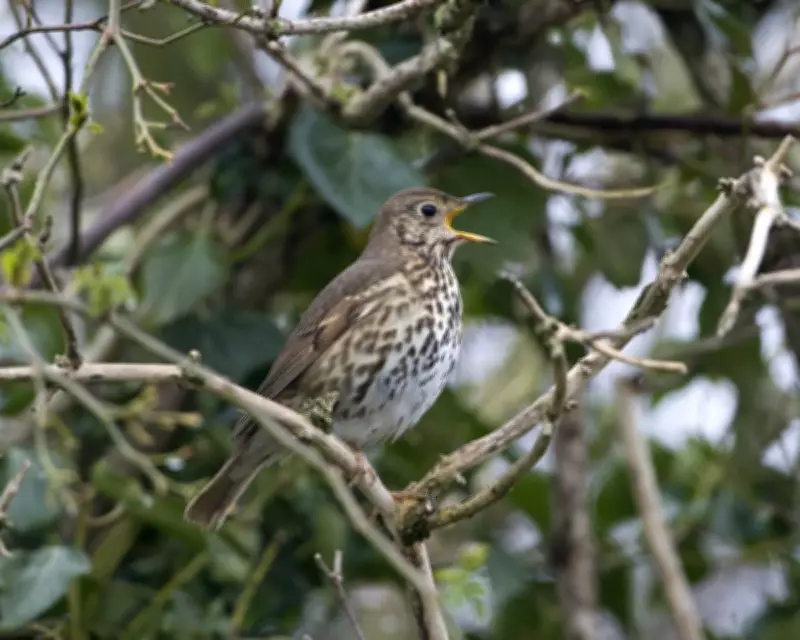
Our first significant encounter occurs when a large bird flits from trees—a male goshawk, according to Richard. Moments later, we pause before alder and hazel trees where a bird sings. Loading the Merlin bird identification app reveals three species simultaneously: song thrush, chaffinch, and blackbird. Yet all sounds emanate from the same location.
Suddenly, an unmistakable mewling cry emerges from the alder's crown. Merlin identifies it as a buzzard. Richard chuckles knowingly. "That thrush just did something incredible," I realize, witnessing a song thrush perfectly mimicking multiple species.
Technology Transforming Bird Knowledge
Richard explains how Cornell University's Merlin app, with over 10 million global users, has revolutionized bird sound identification since its 2014 launch. "It's a brilliant tool for learning birdsong, but it's also revealing lots of unexpected information," he says.
He recounts a May 2025 incident where Merlin detected a nightingale's song—a species rarely sighted north of Cambridgeshire—only to discover another mimicking song thrush. "It may have learned the song on its spring migration, maybe even in the Mediterranean," Richard speculates. "Merlin is teaching a lot, but it's also revealing gaps in our knowledge."
Multiple Mimics and Unexpected Discoveries
Further along the valley, a great tit mimics a marsh tit's song. Nearby, another song thrush performs a nuthatch imitation. When I record this, Merlin surprisingly identifies a coot—a waterbird unlikely within ten miles of our location. Replaying the recording confirms brief low quacks, astonishing even Richard. "That is a first," he admits.
Standing in icy water, I realize I may have witnessed a small addition to human knowledge—and haven't once considered taking photographs. Richard values this shift: "Being thrilled by bird sound really frees people up, especially if you've got used to the idea that success is a good photograph." He notes that participants with sight loss often demonstrate superior auditory sensitivity during these walks.
Rare Geese Migration Event
As Richard guides me through this new sonic world, we hear distant honking—pink-footed geese arriving from Iceland. Though invisible at their altitude, Richard predicts their landing spot, leading us to Ryedale's flooded fields.
Extreme cold in eastern Europe has driven thousands of geese toward the UK. We observe hundreds of pink-footed geese descending, among them black-barred chests of Russian white-fronted geese (named for their forehead markings). While Yorkshire typically hosts two dozen such geese annually, we witness several hundred—"a once in a 25-year event," according to Richard.
These birds have already flown approximately 3,000 miles from Siberian breeding grounds to the Dutch coast before crossing the North Sea. The following day, Richard calls with additional news: photographs revealed an even rarer Siberian visitor—a single tundra bean goose—among the flock.
Despite my newfound appreciation for auditory birdwatching, this discovery reinforces the camera's value. Yorkshire Coast Nature offers various nature walks, including Bird Sound Safaris starting at £40, providing unique opportunities to experience woodland environments through sound rather than sight.