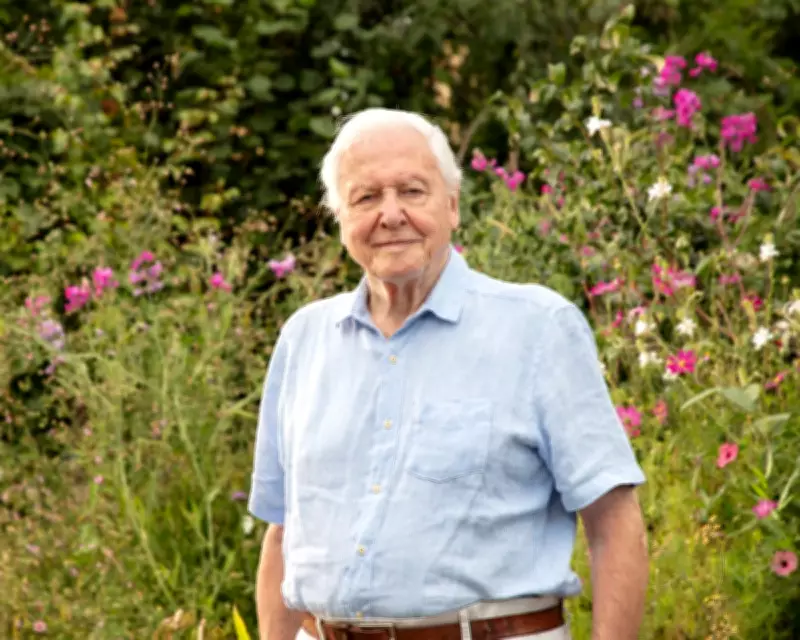
David Attenborough's Secret Garden: A Centenary Fantasy in British Backyards
As he approaches his 100th birthday, David Attenborough has spent over half a century unveiling the wonders of the Earth. For this milestone year, he scales back to stay close to home, offering a breathtaking natural history special that transforms ordinary British gardens into realms of enchantment. In Secret Garden, Attenborough whispers through purple alliums, declaring, "Across the British Isles, there are magical places. Our gardens!" This series brings the super-high-resolution cameras and patient filming techniques typically reserved for exotic locales like the Amazon or Serengeti to the humble backyards of Britain.
Unveiling the Wild World Under Our Noses
The conceit of Secret Garden is to capture the often-overlooked biodiversity thriving just beyond our doorsteps. Attenborough notes, "Many of us are completely unaware of the wild world right under our noses. Some British gardens are almost as diverse as a tropical rainforest." While most gardens fall short of such richness, the series focuses on exceptional patches, starting with a majestic mill house on an island in Oxfordshire. Owners Sara and Henry live surrounded by water and a fabulous garden, two-thirds of which they allow to run wild due to frequent flooding.
This setting provides a gorgeous fantasy of beautiful old England, teeming with cuteness and familiar wildlife. Yet, the programme delivers thrilling narratives of predation, survival, mating, and nesting that rival Attenborough's adventures in Africa or Asia. From bank voles dodging grass snakes to the dramatic pursuits of mallards, the stories unfold in a world between grassy banks, proving that excitement exists even in local ecosystems.
Thrilling Wildlife Encounters in a Domestic Setting
One highlight is the kingfisher, described by Henry as "one of the most exciting things that happens here." The series captures more than a fleeting glimpse, showing the bird waiting on a branch and swooping to the water. A special effect contrasts human vision with the kingfisher's clearer view, thanks to oils in its eyes that reduce glare. The kingfisher finds a mate, and in a stunning shot, Sara mows the lawn in the background, emphasizing how wildlife intertwines with daily life.
When Sara tosses nuts and seeds into a bird feeder, spilled morsels create a perilous temptation for a bank vole, navigating grass that may hide a grass snake. The most fearsome predator here, Oxfordshire's answer to a lion or crocodile, is the otter. Living below Sara and Henry's TV room, it targets their mallard friend, Doris. The competition among male mallards to mate with Doris leads to quacking and splashing, filmed with Henry tending herbaceous borders nearby.
Parallel Lives: Humans and Wildlife in Harmony
The series beautifully parallels human and animal activities. As Doris nurtures nine chicks in a willow-tree hollow, Henry potters with a rake and barrow. When Doris flaps down with flightless newborns taking a terrifying leap, Henry primps a shrub with loppers. Later, as Doris streaks across the lawn with her waddling pack, Henry sits inside with coffee and the Financial Times, filmed from over his shoulder. This juxtaposition highlights the closeness of wildlife to modern life.
In a tense moment, the otter appears as Doris swims with her vulnerable chicks. Without Henry's help, Doris ingeniously escapes, protecting her young with a method less fussy but no less impressive than scenes in global nature documentaries. The series also captures the mayfly's journey, from nymph to adult, risking predation by damsel flies. A haymaker shot shows hundreds of mayflies glinting in buttery light against bunting and Victoria sponges at Sara and Henry's garden party, symbolizing a perfect escape into nature.
Secret Garden aired on BBC One and is available on BBC iPlayer, offering a centenary celebration that proves magic lies just outside our doors.