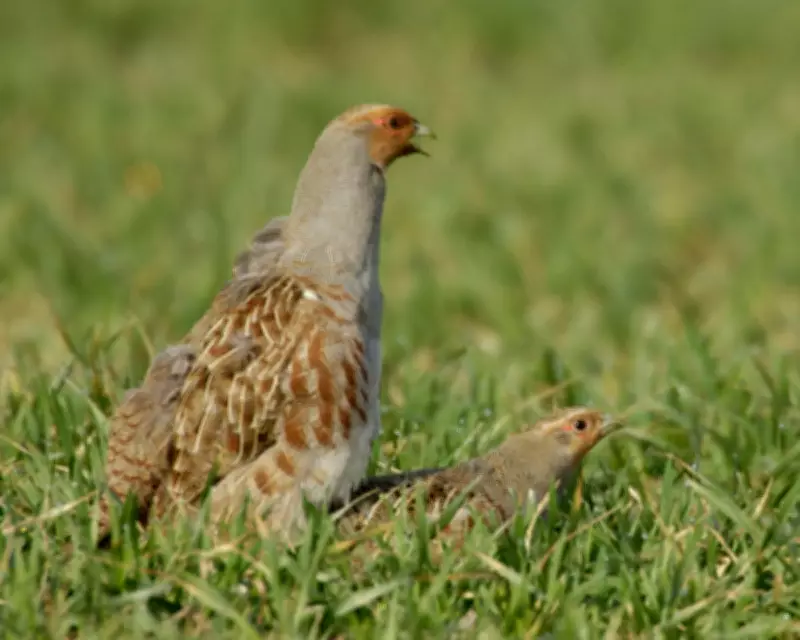
In a fascinating glimpse into the natural world of the mid-20th century, a country diary entry from 1951 provides a detailed observation of partridges engaging in their courting rituals, coinciding with Valentine's Day. This historical record offers a unique perspective on the mating behaviors of these birds, shedding light on their intricate social dynamics in the English countryside.
The Valentine's Day Observation
The diary, penned by an anonymous naturalist, captures a moment on February 14, 1951, when partridges were seen performing elaborate courtship displays. These birds, known for their ground-dwelling habits, exhibited behaviors that mirrored human traditions of romance, albeit in a purely instinctual manner. The observer noted the males strutting and calling to attract females, with the females responding through subtle movements and vocalizations.
Courtship Rituals of Partridges
Partridges, as described in the diary, engage in a series of rituals that include vocal duets, where males and females call back and forth in a coordinated manner. This communication is crucial for pair bonding, especially during the breeding season. The 1951 account highlights how these birds use their calls to establish territory and signal readiness for mating, with Valentine's Day serving as a symbolic backdrop for these activities.

Additionally, the diary details physical displays, such as males puffing up their feathers and performing short flights to impress potential mates. These actions are not just for show; they play a vital role in ensuring successful reproduction, as stronger displays often correlate with healthier individuals. The observer emphasized the precision and timing of these rituals, noting how they align with the onset of spring, when food sources become more abundant.
Historical Context and Significance
The 1951 entry is part of a broader tradition of country diaries, which have long served as valuable records of wildlife behavior and environmental changes. By focusing on partridges, this diary contributes to our understanding of avian ecology in post-war Britain, a time when agricultural practices were evolving and impacting natural habitats. The Valentine's Day timing adds a layer of cultural resonance, connecting human celebrations of love with the biological imperatives of wildlife.
This observation also underscores the importance of long-term wildlife monitoring. Comparing such historical accounts with modern studies can reveal shifts in animal behavior due to factors like climate change or habitat loss. For instance, partridge populations have faced declines in recent decades, making records like this from 1951 all the more precious for conservation efforts.
Implications for Wildlife Conservation
The detailed notes from 1951 on partridge courtship offer insights that are still relevant today. Understanding these mating rituals can aid in conservation strategies, such as creating protected areas during breeding seasons or managing land to support healthy populations. The diary reminds us of the delicate balance in ecosystems and how human activities, from farming to urban development, can influence wildlife behaviors.
Moreover, this historical account encourages a renewed appreciation for the natural world, especially on occasions like Valentine's Day. It highlights how love and courtship are universal themes, transcending species and reminding us of our connection to the environment. By preserving such diaries, we ensure that future generations can learn from these observations and continue to protect biodiversity.
In summary, the 1951 country diary entry on partridges courting on Valentine's Day is a captivating snapshot of wildlife behavior. It enriches our knowledge of avian ecology, provides a historical benchmark for conservation, and celebrates the timeless rituals of nature that echo human experiences of romance and connection.