Queensland's Proposed E-Bike Crackdown Sparks Industry Backlash
Food delivery companies are voicing strong opposition to Queensland's proposed legislative crackdown on e-bikes and e-scooters, warning that the regulations could severely disrupt their operations and negatively impact the broader delivery community. Industry leaders argue that the proposed laws would create significant barriers for delivery workers and potentially make shared e-vehicle schemes uninsurable.
Key Provisions of the Proposed Legislation
The controversial legislation, currently under parliamentary review, would introduce several strict requirements for e-bike and e-scooter users across Queensland. These include setting a minimum age limit of 16 years, mandating that all users obtain a valid driver's license, and imposing a speed limit of 10km/h on nearly all designated cycle lanes throughout the state.
The proposed changes have already generated substantial pushback from various stakeholders, including cycling advocacy groups, disability community representatives, road safety organizations, and transport engineering experts. More than 2,000 formal submissions have been presented to the parliamentary inquiry examining the legislation, highlighting widespread concern about its potential consequences.
Food Delivery Industry Expresses Grave Concerns
Major food delivery platforms have articulated specific worries about how the legislation would affect their operations and workforce. DoorDash has warned that the driver's license requirement would create what they describe as "a disproportionate and unnecessary barrier to participation in delivery work." The company contends this restriction would likely deter potential workers from joining the platform or force existing ones to exit, without delivering corresponding safety benefits.
DoorDash further cautioned that reducing the available delivery fleet would have broader ripple effects beyond individual riders, potentially leading to reduced availability of on-demand delivery services throughout Queensland communities.
Uber Eats has provided even more specific data about the potential impact, revealing that the company employs more than 30,000 delivery workers across Queensland. According to their submission, approximately 89% of these workers join the platform using international passports and are unlikely to hold any form of driver's license.
"The impact on the delivery community would be immense," Uber's submission states clearly. The company predicts the regulations would cause significant operational challenges including delivery delays, reduced service reliability, and ultimately a poorer customer experience. Uber further warns that restaurants would become increasingly frustrated with meals taking longer to be collected, particularly during peak periods, which could negatively impact customer satisfaction and undermine confidence in delivery platforms.
Shared E-Vehicle Schemes Face Existential Threat
Meanwhile, Queensland's shared e-vehicle operators have raised alarm about a specific clause in the legislation that would require share scheme operators to ensure all their clients possess a driver's license. Companies like Lime and Neuron, which operate council-backed e-bike and e-scooter schemes in several Queensland cities including Brisbane, have jointly submitted their concerns.
In their submission, the companies argue that without amendment, this requirement would impose "a harsh restriction on accessibility that would undermine the economic basis of the shared schemes." They further warn that the legislation "without amendment could see the end of services in all Queensland cities," effectively making their operations uninsurable under the proposed regulatory framework.
Government Response and Alternative Solutions
State Transport Minister Brent Mickelberg defended the legislation on Wednesday, noting that the original parliamentary inquiry into e-bikes had heard "considerable concern" about pedestrian safety on footpaths. He stated that the government would consider the committee report regarding the specific legislation before returning to parliament with their final position.
Numerous organizations have requested major amendments to the bill, including cycling groups, the Royal Automobile Club of Queensland, and multiple local councils representing Brisbane, Gold Coast, Logan, Somerset, and Noosa. Several expert groups have also joined this call for revision.
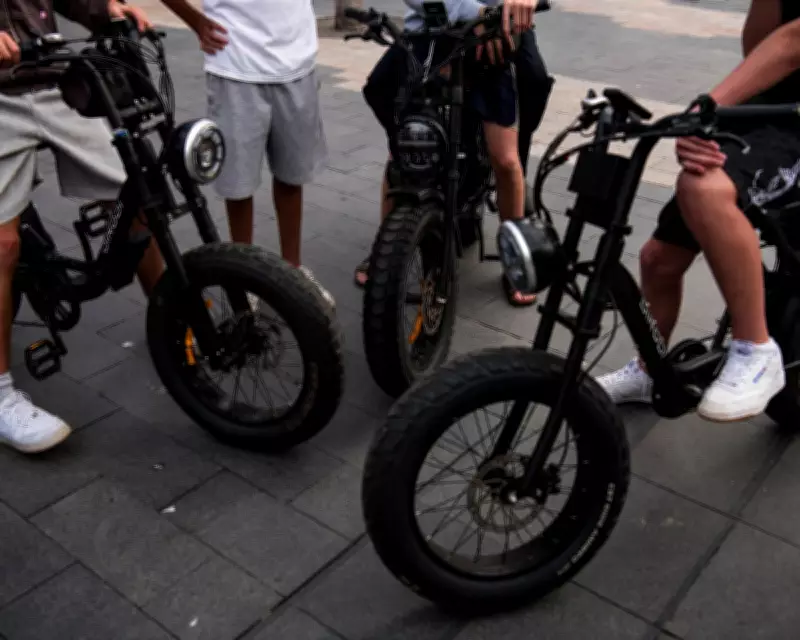
Many submissions have argued that instead of implementing restrictive new regulations, the state should focus on improving Queensland's limited protected cycle lane infrastructure and more rigorously enforcing existing rules against overpowered "e-motorbikes" that already violate current regulations.
Safety Statistics and Broader Context
The safety rationale behind the legislation appears complex when examined against available data. According to recent statistics, a single person was killed in a crash involving a legal e-bike in Queensland in 2025, when a 79-year-old woman was hit and killed by a car on Bribie Island in July.
Last year's road deaths toll reached its highest point in 16 years, with 306 lives lost. However, almost all these fatalities involved cars, trucks, and motorbikes. E-bikes and e-scooters represented the least and second least fatalities of any transport mode respectively. Current data indicates that this year's road toll is 24.2% higher than at the same time last year, according to the latest update from the Department of Transport and Main Roads.
The debate continues as stakeholders await the parliamentary committee's final recommendations and the government's subsequent response to this contentious transportation legislation.