
Great Britain has witnessed an unprecedented surge in planning approvals for clean energy projects this year, with new data revealing a near-doubling of consented capacity compared to 2024.
Record-Breaking Approvals Driven by Battery Storage and Wind
According to analysis by Cornwall Insight, the total energy capacity of new battery, wind, and solar projects that received the green light in 2025 climbed to 45 gigawatts (GW). This represents a staggering 96% increase on the previous year's figures.
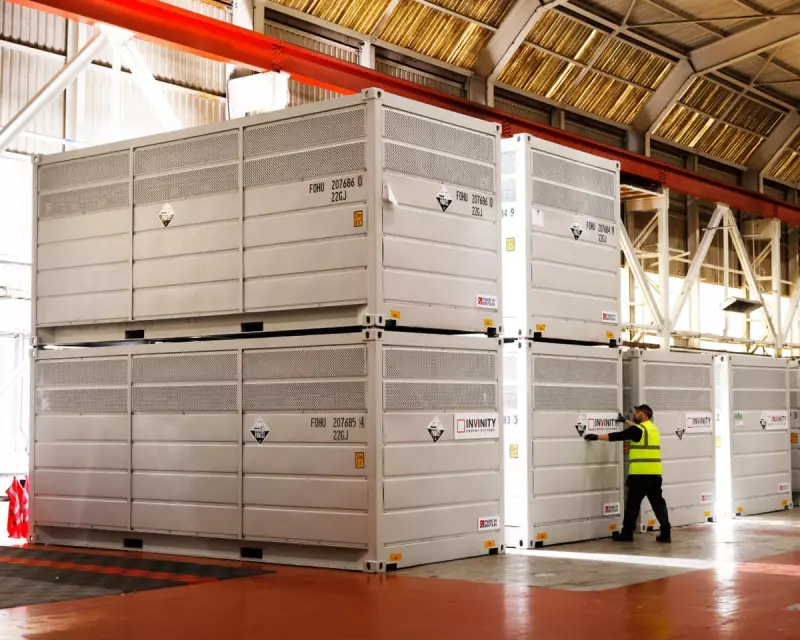
The boom was overwhelmingly fuelled by applications for battery storage facilities. Approvals for these crucial projects, which store renewable power for when it is needed, almost doubled to 28.6GW from 14.9GW in 2024. In a dramatic uplift for offshore wind, planning consents jumped more than sevenfold to 9.9GW, up from just 1.3GW last year.
Over the past five years, planning approvals for this trio of technologies have soared by more than 400%.
Government Ambition Meets Grid Reality
Energy Secretary Ed Miliband hailed the figures, stating the government was delivering on its promise for clean, homegrown power. "Every project we approve is about getting the country off the rollercoaster of fossil fuel markets, protecting households and lowering bills for good," he said.
However, analysts caution that approvals are only the first step. Robin Clarke, a senior analyst at Cornwall Insight, noted that while the surge signals real momentum, many projects could still face significant delays before they start generating electricity.
"On paper, the UK’s renewables pipeline has never looked stronger," Clarke said. "But approvals don’t generate electricity, and we urgently need to move from ambition to actual delivery. Too much capacity is still stuck in queues or waiting on grid upgrades."
He identified grid bottlenecks as one of the biggest risks to converting today's planning permissions into tomorrow's operational power.
Reforms Aim to Clear Connection Backlog
The pace of projects actually starting construction has lagged behind the approval rate, largely due to lengthy build times and connection delays. A major issue has been a congested "first come, first served" connections queue.
Recent reforms are aiming to tackle this. Britain’s energy system operator recently removed hundreds of stalled schemes from the queue, shifting to a "first ready, first needed, first connected" approach. This is designed to clear space for viable, shovel-ready projects and accelerate the national renewable energy buildout.
Clarke welcomed the grid connection reforms as a significant step but warned they are not a complete solution. "We need faster decisions, more investment in the grid, and real collaboration between government, regulators and industry," he stated.
Cornwall Insight also emphasised that the rapid expansion necessitates a large-scale reinforcement of the UK's electricity grid. The existing infrastructure was not designed for such high volumes of intermittent generation and storage, making investment in grid flexibility and transmission upgrades critical.
The 2025 approval rush may have been partly accelerated by developers seeking to secure consents ahead of tougher new grid connection rules and potential policy uncertainty surrounding upcoming local elections.



