
UK Must Double Down on Renewables as Wars Drive Up Energy Costs, Experts Say
The UK government faces mounting pressure to accelerate its clean energy transition as conflicts in the Middle East continue to destabilize global fossil fuel markets, driving up costs for British households and businesses. Climate groups, academics, and energy experts are warning that dependence on volatile energy sources leaves the economy vulnerable to international price shocks.
Fossil Fuel Price Surge Following US-Israeli Attacks on Iran
Recent US-Israeli attacks on Iran have triggered another surge in fossil fuel prices, underscoring what experts describe as the urgent need for the UK to end its reliance on unstable energy imports. This latest upheaval follows the 2022 energy crisis caused by Russia's invasion of Ukraine, which research shows cost the EU and UK a staggering $1.8 trillion between 2022 and 2025.
Bob Ward from the Grantham Research Institute at the London School of Economics emphasized the direct impact on British consumers. "The ongoing conflict in the Middle East and subsequent surge in oil and gas prices could translate into significantly higher energy bills for British households," he warned. "The UK is vulnerable to the volatility of international fossil fuel markets, and the only way to protect ourselves from these price increases is by speeding up the transition to domestic supplies of clean energy."
The High Cost of Fossil Fuel Dependence
Research published by the Transition Security Project reveals the extensive economic damage caused by the 2022 energy shock. The study found that rising costs manifested through:
- Higher household and business energy bills
- Government spending on price caps, rebates, and tax cuts to cushion consumers
- Increased dependence on US liquid natural gas imports
Kevin Cashman, author of the report, stated that the crisis "presented a fork in the road for Europe – double down on volatile fossil fuel markets, or pivot to homegrown clean energy and greater security." He criticized what he called "an irresponsible and shortsighted energy policy" that has left ordinary citizens paying the price.
Calls for Renewable Energy Acceleration
Simon Stiell, the UN's climate chief, argued that renewable energy offers a clear solution to fossil fuel instability. "There is a clear solution to this fossil fuel cost chaos – renewables are now cheaper, safer and faster-to-market, making them the obvious pathway to energy security and sovereignty," he said.
Energy Secretary Ed Miliband echoed this sentiment, describing the Middle East conflict as "yet another reminder that the only route to energy security and sovereignty for the UK is to get off our dependence on fossil fuel markets, whose prices we do not control, and onto clean homegrown power we do."
Controversy Over North Sea Oil and Gas
The debate intensifies as eight former energy ministers recently urged the government to reverse its ban on new oil and gas licenses in the North Sea and approve two new fields, Rosebank and Jackdaw. However, experts counter that such measures would fail to address core energy challenges.
Tessa Khan, executive director of Uplift, criticized what she called "political cheerleaders" for the oil and gas industry. "New fields such as Rosebank would do nothing to protect UK households from the inevitable price shocks caused by war in the Middle East," she argued. "Rosebank is an oilfield whose reserves, if developed, would be exported – like 80% of all UK oil. It contains minimal gas."
Khan emphasized that even with continued North Sea development, the UK would become almost entirely dependent on gas imports by 2050 due to declining reserves. "All this while the nation sits on some of the best wind resources in the world," she noted, calling for urgent investment in renewables and home upgrades.
The Path Forward
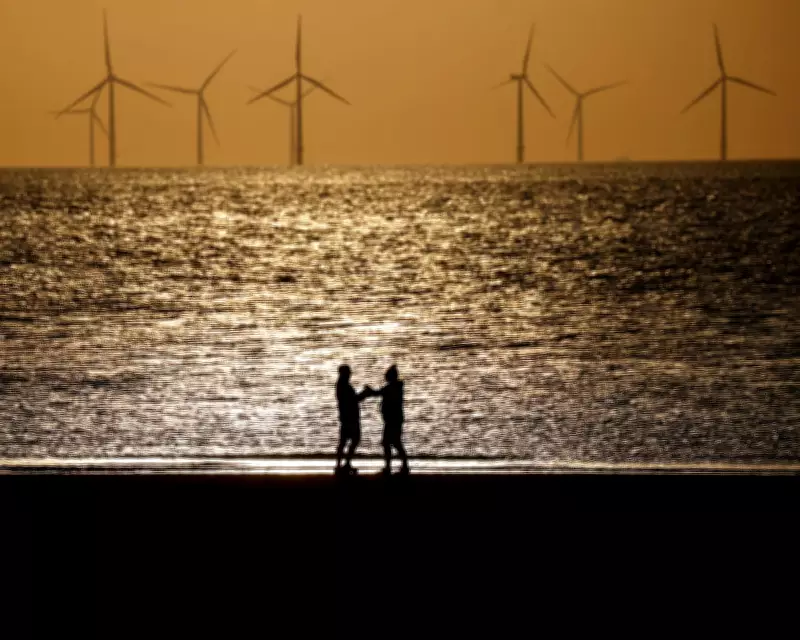
Experts unanimously agree that the solution lies in accelerating the transition to renewable energy sources. The UK's abundant wind resources, particularly demonstrated by installations like the Burbo Bank windfarm in Liverpool Bay, position the country to develop substantial domestic clean energy capacity.
Khem Rogaly, co-director at the Transition Security Project, called for a fundamental shift in energy policy. "Instead of clinging on to a broken transatlantic partnership, Europe needs to develop an independent foreign policy based on international solidarity, restraint and climate collaboration," she said.
The consensus among climate and energy experts is clear: only by doubling down on renewable energy development can the UK achieve true energy security, protect consumers from volatile international markets, and build a sustainable economic future independent of fossil fuel price shocks driven by global conflicts.



