Yorkshire Dales Windfarm Battle: Hope Moor Sparks UK Renewable Energy Clash
A fierce battle has erupted over plans for Hope Moor windfarm in North Yorkshire, where residents are opposing what could become the UK's largest onshore turbines. The proposed development, set on deep peat moorland overlooking the Yorkshire Dales National Park, has ignited a national debate as the government pushes to meet ambitious renewable energy targets.
Scale Model Highlights Towering Turbines
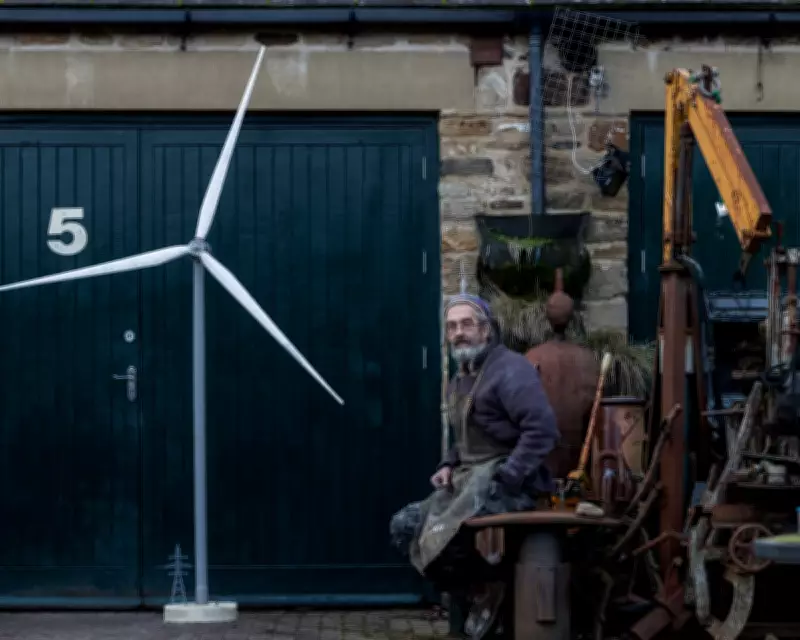
Local sculptor Michael Kusz has created a scale model to visualize the immense size of the turbines, with blade tips reaching 200 meters—equivalent to the height of Manchester's tallest skyscraper outside London. Using model railway 00 gauge, his display includes a scaled electricity pylon to emphasize the project's scale. "It's hard to visualize 200 meters," said Kusz, who lives in Reeth, North Yorkshire. "I'm absolutely horrified by this proposal, which threatens to industrialize our pristine landscape."
The windfarm, planned by Fred. Olsen Renewables, would feature 20 turbines capable of powering 81,000 homes. It represents a key component of the Labour government's renewable energy strategy, aiming to generate 95% of electricity from low-carbon sources by 2030. However, locals argue that the location on blanket bog—a priority conservation habitat with deep peat—undermines environmental goals by damaging carbon sinks.
Local Resistance and Environmental Concerns
In the village of Barningham, County Durham, opposition is growing, fueled by a coffee table book celebrating the area's wildlife, including rare species like black grouse and hen harriers. Suzy Wilson, a campaigner who moved back to the area, described the moorland as "paradise" and expressed dismay at the potential loss of natural beauty. "We live here because of this—it's priceless," she said during a walk where curlew calls echoed across the mossy terrain.
Simon Thompson, a local caravan park owner, criticized the logic of constructing turbines on peatland to reduce carbon emissions. "It's a complete joke," he stated. "Digging up peat to save carbon emissions is ridiculous. The size and location next to the Yorkshire Dales make no sense."
National Planning and Community Impact
The Hope Moor project is designated as a Nationally Significant Infrastructure Project (NSIP), meaning planning decisions bypass local councils and are handled by the national Planning Inspectorate, with Energy Secretary Ed Miliband having final approval. This approach aims to accelerate renewable projects but has sparked concerns about community input.
Locals Chris Thurgar-Dawson and Christine Gonsalves, both Labour voters, emphasized their support for green energy but opposed the scale and location. "It's off the scale," said Gonsalves. "We're motivated by nature, not money." The windfarm promises £500,000 annually to the local community for 30 years, but opponents insist financial incentives don't outweigh environmental costs.
Broader Implications for UK Renewable Energy
This conflict mirrors nationwide tensions as the government recently approved contracts for 28 new onshore windfarms, including Imerys in Cornwall—the largest in England for a decade. Hope Moor, at 100MW, would dwarf that project, highlighting a shift toward taller, more efficient turbines nearing 200 meters in height.
Kelly Wyness, senior project manager for Hope Moor, defended the proposal, stating it aims to strengthen energy security and support rural traditions. "The project offers a modern, balanced approach—combining renewable energy with active stewardship of the moors," she said. However, locals like Steve Myers, an academic researcher, worry about visibility from the Yorkshire Dales and Lake District, as well as impacts on water supplies and wildlife.
As public consultations loom, the battle over Hope Moor underscores the delicate balance between achieving renewable targets and preserving cherished landscapes, setting a precedent for similar disputes across the UK.