Cuba's Renewable Energy Push Amidst Power Cuts and US Sanctions
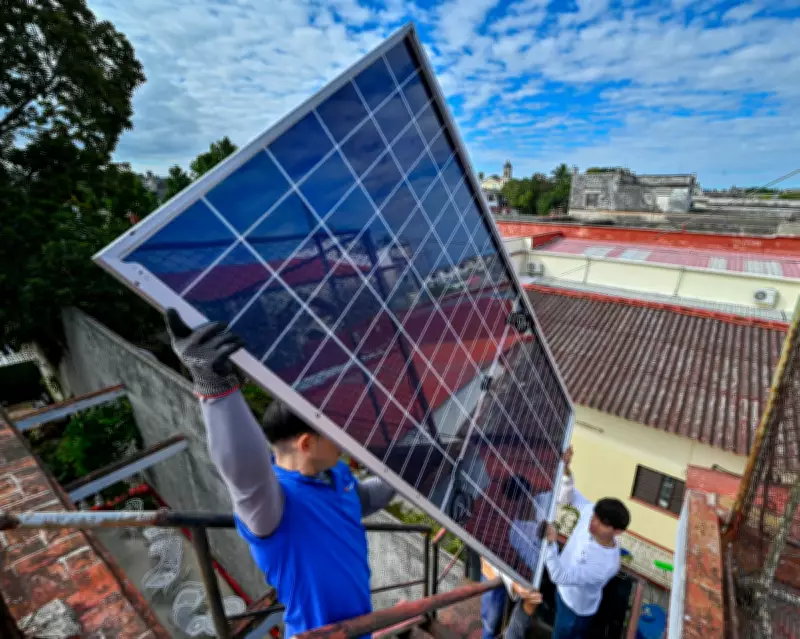
In the Guanabacoa district of Havana, installers are seen lifting photovoltaic panels onto rooftops, a scene becoming increasingly common across Cuba. Families nationwide are grappling with frequent blackouts and power shortages, exacerbated by the six-decade US economic embargo that strains the island's economy. This shift towards renewables is a critical response to a deepening energy crisis.
Hurricane Aftermath and Economic Strain
In Herradura, a village on Cuba's eastern coast, intense heat blankets sugarcane fields. Roberto, a local farmer cultivating maize and beans, relies on his horse for transport after Hurricane Melissa devastated the region late last year. The storm impacted 3.5 million people, destroying 90,000 homes and 100,000 hectares of crops. "Many of us lost everything," Roberto says, noting limited government aid for recovery. With petrol prices soaring due to dwindling oil supplies under US sanctions, his daily commute highlights the broader energy struggles.
Government Strategy and Chinese Partnerships
Cuba's government has committed to increasing renewables to 26% of total energy supply by 2035 under the UN Framework Convention on Climate Change. Deputy Prime Minister Óscar Pérez-Oliva Fraga emphasized prioritizing solar park construction, largely supported by Chinese investment. Since Venezuela halted oil shipments under US pressure, power cuts have worsened, lasting up to 24 hours in eastern areas. The National Energy Transition Strategy, published in September 2024, aims to boost domestic oil production and renewables, targeting electricity generation solely from national resources.
Renewable Projects and Infrastructure Challenges
China has become a key ally, with agreements to build seven solar parks totaling 35MW capacity. Cuba plans 92 solar parks by 2028, aiming for 2GW capacity. By October 2025, 35 parks were operational, generating 750MW and saving 111,620 tonnes of fossil fuels. Additionally, four experimental windfarms produce 11.8MW, with the Herradura project expected to add 33MW. Renewables now supply about 9% of peak daytime demand of 3,200MW, with installed capacity growing 350% in 2025.
However, experts warn of significant hurdles. Ricardo Torres, an energy economist, estimates $8bn to $10bn in investments needed over the next decade, funds Cuba lacks. Jorge Piñon notes infrastructure issues, with 16% electricity loss in transmission and insufficient battery storage for solar energy. "Cuba's transmission system looks like Italian spaghetti," Piñon says, stressing that generation alone isn't enough without modernized grids and storage solutions.
Social Disparities and Future Outlook
While solar panels offer relief for some, affordability remains a barrier. In Vertientes, farmers note panels cost around £100, unattainable for many with average monthly salaries of £10 in Camagüey province. Wealthier areas like Miramar in Havana see more installations, often funded by remittances or entrepreneurship. Recent emergency measures allow individuals to sell renewable electricity, potentially widening gaps.
At the Herradura windfarm site, civil engineer José reports turbines will be installed by March, with operations starting in June. Roberto remains hopeful but highlights ongoing challenges like irrigation access during droughts. "I'm happy living in the countryside," he says, "but many things still need to change." As Cuba navigates this energy transition, the blend of environmental urgency and economic constraints shapes a precarious path forward.