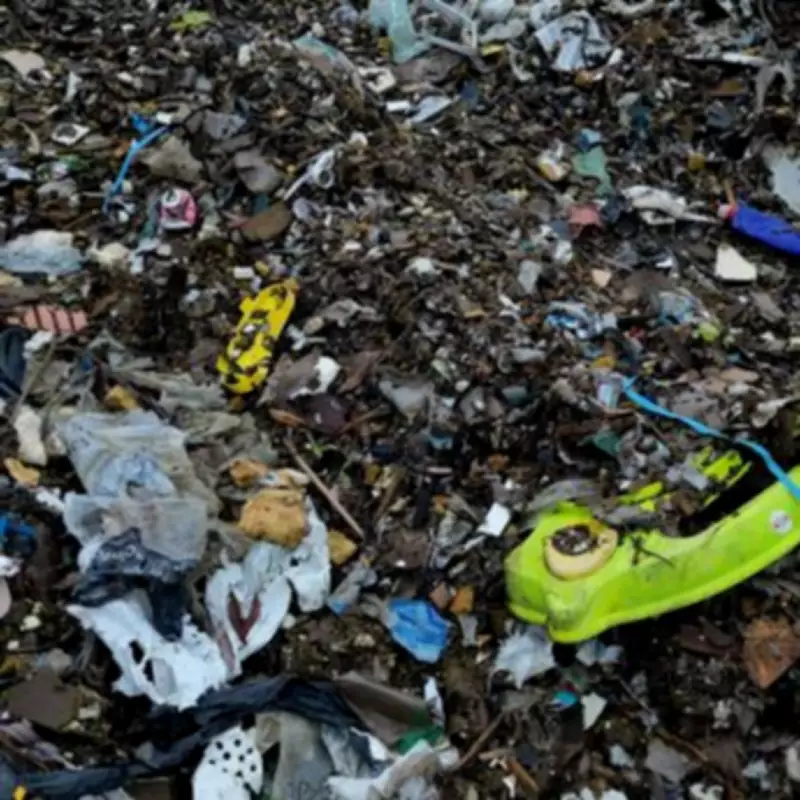
Over 1.25 million fly-tipping incidents were recorded across England in 2024/25, equating to one incident every 25 seconds, as fresh figures reveal the nation's most severely affected locations and mounting anxieties surrounding hazardous waste abandoned in public areas.
Rising Incidents Across England
Data from the Department for Environment, Food and Rural Affairs (Defra) shows incidents have increased by 9% year-on-year, intensifying strain on local authorities and scarring neighbourhoods. London has emerged as the most impacted region nationally, recording 52.9 cases per 1,000 residents.
Hazardous Fly-Tipping Hotspots
Independent research by BusinessWaste.co.uk has pinpointed locations experiencing the highest levels of hazardous fly-tipping—refuse that presents an immediate danger to public wellbeing, including asbestos, chemicals, and fuel. Haringey leads the rankings as England's hazardous fly-tipping blackspot, registering 17.62 incidents per 10,000 inhabitants. The North London authority documented 16,915 fly-tipping cases altogether, with 465 featuring dangerous substances, including 363 instances of abandoned asbestos and over 100 incidents concerning chemicals, oil, or fuel.

While Liverpool registered the greatest number of hazardous incidents nationally at 489, its substantially larger population results in a lower ranking when calculated per capita. Coming in second is Kings Lynn and West Norfolk, where dangerous waste accounted for 14.53% of all illegal dumping. The district saw 266 hazardous incidents, encompassing chemical waste, asbestos, and clinical materials. Richmond-upon-Thames secured third place, with 15.66 hazardous incidents per 10,000 residents—all 308 cases involving chemicals or fuel.
Additional authorities in the top 10 include Westmorland and Furness, Rochford, Spelthorne, and Hackney, demonstrating a blend of metropolitan and countryside locations grappling with the problem. Conversely, 12 local authorities logged no hazardous fly-tipping incidents whatsoever throughout the same timeframe. The Isles of Scilly registered zero fly-tipping cases of any description.
Expert Warnings on Dangers
Specialists caution that dangerous waste considerably heightens the stakes when compared with ordinary rubbish dumping. Mark Hall, a waste management specialist at BusinessWaste.co.uk, explained such materials can pollute soil and water, discharge harmful particles into the atmosphere, and present severe dangers to the public and council workers charged with removing them. He stated: 'As hazardous waste disposal can be more expensive and complex, this sometimes leads people to dump it illegally to cut costs or time.'
Public Attitudes and Behaviour
Beyond the environmental and health dangers, fresh polling from Waste Managed indicates the public is simultaneously contributing to and worried about the crisis. A survey of more than 2,000 individuals revealed that one in six confessed to inadvertently fly-tipping. When questioned about primary responsibility, 21.1% pointed to local residents disposing of household rubbish, making it the most frequent answer. This was narrowly followed by those employing unlicensed waste collectors, commonly known as 'man with a van' services, at 19.15%. Criminal gangs were identified by 13.9% of participants, while 12.55% held councils accountable for problems including inadequate bin provision or collection services.
The survey also disclosed that 18% of respondents have abandoned items alongside public bins hoping others would retrieve them, while a comparable proportion acknowledged using unlicensed waste carriers. Additionally, 13% stated that overflowing bins in their locality contribute to rubbish being discarded nearby.
Deprivation and Fly-Tipping
Further examination by Waste Managed indicates fly-tipping is more widespread in disadvantaged areas. Locations including Blackpool, Manchester, and Burnley feature amongst the most severely affected when comparing incident rates with deprivation statistics. Earlier research has demonstrated that merely 2% of the most disadvantaged neighbourhoods are litter-free, contrasted with 14% in the least disadvantaged areas.
Amongst the most severely impacted local authorities overall by incident rate are Camden, Croydon, and Hackney, with over 100 cases per 1,000 residents in certain areas.