Environment Agency Launches High-Tech Drone Squads to Combat Illegal Waste Dumping
The Environment Agency (EA) has announced the deployment of more than thirty specialized "drone squads" equipped with advanced laser mapping technology to address the escalating crisis of illegal waste dumps across the United Kingdom. This initiative comes amid mounting criticism of the agency's capacity to effectively pursue criminal gangs responsible for these sites, which evade millions in landfill taxes.
New Technology Meets Persistent Enforcement Challenges
Each drone squad consists of trained pilots operating drones that utilize laser technology to create highly detailed maps of suspected illegal waste sites. In addition to this aerial surveillance, the EA is rolling out new software designed to verify whether waste transport lorries possess the correct permits. Environment Secretary Emma Reynolds has emphasized the government's aggressive stance against waste criminals, highlighting an increased enforcement budget of £15.6 million for the EA.
Despite these measures, environmental organizations and local officials argue that technology alone is insufficient. James Wallace, chief executive of River Action, welcomed the new drone squads but cautioned that the EA remains chronically underfunded and understaffed. "Technology alone won't fix this," Wallace stated. "Ministers have known for years about large-scale illegal dumping, including sites run by organised criminal gangs, yet enforcement has failed to keep pace."

A Growing Scourge with Economic and Environmental Costs
Illegal waste management has become a booming criminal enterprise, with an estimated one-fifth of all waste in England being handled unlawfully—approximately 34 million tonnes annually, enough to fill four million skips. This activity costs the economy around £1 billion each year, while legitimate waste operators lose an additional £3 billion in missed business opportunities. The previous head of the Environment Agency has likened waste crime to "the new narcotics," underscoring its profitability and low-risk nature for offenders.
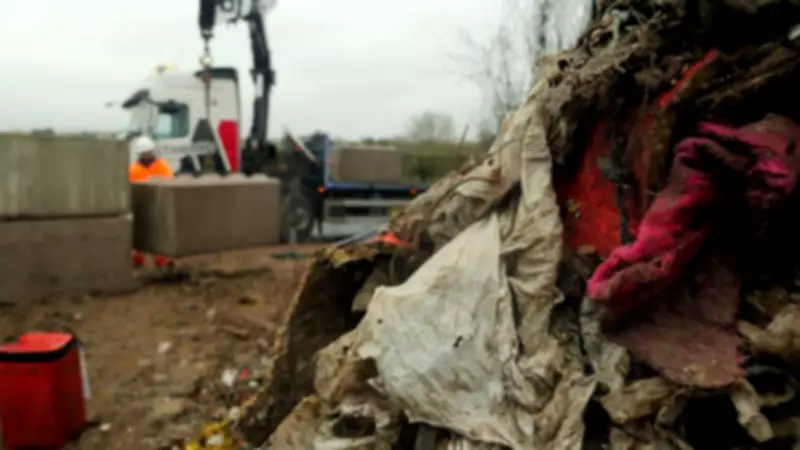
Recent incidents highlight the severity of the issue. Sky News obtained photographs showing tonnes of rubbish dumped at a site in Epping, Essex, just two weeks ago, despite an EA investigation beginning twelve months earlier. The site was subsequently blockaded by the EA following the arrests of two men, whose lorry became stuck in mud, drawing public attention. Local MP Alex Burghart criticized the agency's delayed response, stating, "It's completely disgraceful that this site should ever have been allowed to get into this condition. Something has clearly gone badly wrong in this case."
Enhanced Multi-Agency Efforts and Future Outlook
In conjunction with the drone deployment, the EA has expanded the Joint Unit for Waste Crime (JUWC) from 13 to 20 specialists. This taskforce includes representatives from the police, the National Crime Agency, and various environmental bodies. Phil Davies, head of the JUWC, affirmed their commitment: "Illegal waste dumping is appalling, and we are determined to turn the tide on this heinous crime. With organised criminals becoming ever more sophisticated, we are adopting new technologies to find and, importantly, stop them."
As the number of large-scale illegal waste sites continues to grow, the effectiveness of these high-tech measures will be closely monitored. Critics maintain that without adequate funding and personnel, enforcement efforts may struggle to curb a crime that not only drains economic resources but also poses significant environmental hazards.