For almost a year, the streets of Birmingham have borne the brunt of one of the UK's most protracted industrial disputes. What began as a bin strike in January has spiralled into a full-blown environmental and public health crisis, leaving over a million residents grappling with overflowing waste, vermin, and a profound sense of abandonment.
A City Drowning in Rubbish
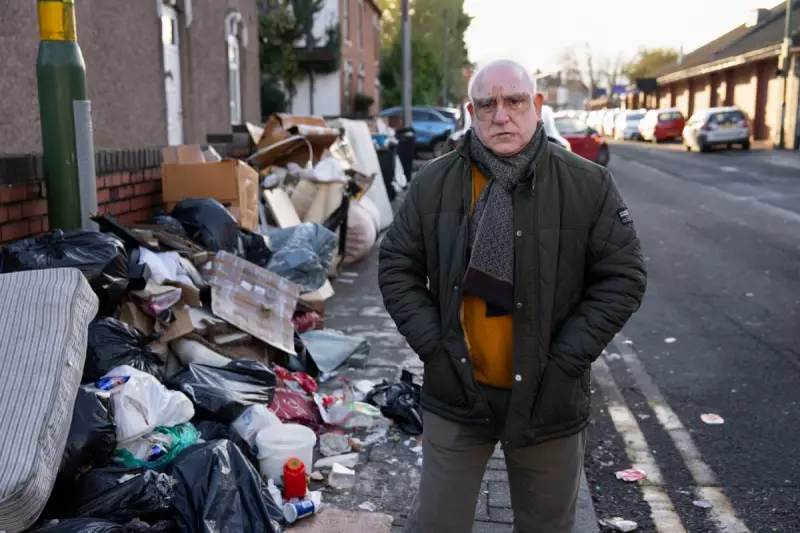
On a freezing morning in Small Heath, 80-year-old Mohammed Bashir takes up his broom against a growing mound of refuse outside his home. Having lived in the area for 64 years, he says he has never witnessed conditions this dire. "I'm sick," he states bluntly, pointing to bags, broken glass, and scorch marks from where dumped rubbish was set alight. Like many, he struggles with the council's online booking system for the local tip, a significant barrier for older, non-English speaking residents.
The situation reached a critical point in March when Birmingham City Council declared a major incident, with 17,000 tonnes of waste accumulating on streets. While a court injunction in May curtailed certain strike actions, normal bin collections have not resumed. The council relies on a reduced agency workforce, leading to sporadic general waste pickups and a complete halt to recycling collections across the entire city since early January.
Health Hazards and Environmental Collapse
The consequences are most severe in densely populated, deprived areas. Noor Ahmed, 57, cares for her husband with cancer while battling rubbish dumped at her bus stop. "I've had rats in my garden, even in my kitchen," she reveals. Community efforts have sprung up to help elderly neighbours transport waste, but the strain is immense. "We still pay our council tax... It's exhausting."
Pest controller Robert Charlton reports his busiest year in 11, working up to 12-hour days. He confirms rodent infestations of alarming scale, including one house where 23 rodents were caught. The environmental impact is staggering. With recycling paused for nearly a year, Birmingham's recycling rate has crashed to just 14%, far below the national average of 44% and the council's own 35% target. John Newson of Birmingham Friends of the Earth warns that hard-won recycling habits are being permanently undone.
A Stalemate with No End in Sight
On the picket line at the Tyseley depot, resolve remains firm. Striking workers, supported by Unite's strike fund of £70 a day, have voted to continue their mandate until May 2026. Their core demand is pay protection and the reinstatement of the 'waste and recycling collection officer' role, which the council scrapped citing equal-pay liability risks—a key factor in the authority's effective bankruptcy. The unions dispute this legal risk.
Meanwhile, residents feel voiceless. Community leader Shafaq Hussain laments the loss of transparency in negotiations. "People are just fed up – we've had maggots, we've had rats," he says, highlighting how overcrowded housing and a high density of takeaways exacerbate the problem in areas like Small Heath. Activist Basmin Khan, whose videos of fly-tipping have gone viral, says the strike has "emboldened" illegal dumpers, with vans operating under cover of darkness. She has launched a petition for more CCTV and a resolution, arguing, "We are the UK's second city. It's a disgrace."
As the strike approaches its first anniversary, Birmingham stands at an impasse. The human cost is measured in stress, health risks, and community strife, while the environmental damage deepens daily. For residents like Mohammed Bashir, the plea is simple: "I just want my area clean. That's all I want." Yet, with both sides dug in, a clean resolution for England's second city seems frustratingly distant.