
Britain's Hidden Waste Mountains: A Growing Environmental Crisis
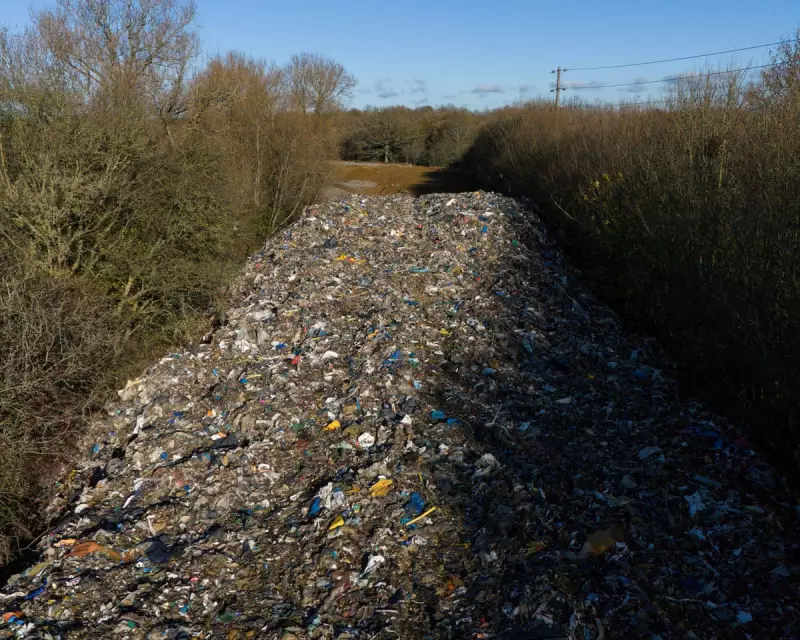
Britain is facing an unprecedented waste crime epidemic with at least 8,000 illegal waste sites containing approximately 13 million tonnes of rubbish according to groundbreaking research. The scale of this criminal dumping means the UK Treasury has lost at least £1.63 billion in avoided landfill taxes, creating both an environmental disaster and a massive financial black hole.
The Environmental and Health Consequences
Professor Kate Spencer, a landfill expert at Queen Mary University of London, expressed serious concerns about the impact of these illegal sites. "The big concern is that along with avoiding landfill tax, they are also avoiding the regulations that control what can go in landfill and ensure that people and the environment are protected," she warned.
These unregulated dumps pose multiple threats to communities and ecosystems. "There's nothing to stop any pollutants being washed into nearby rivers or soils," Professor Spencer explained. "We also know that illegal waste disposal can create a big concern for local communities in terms of smell, eyesore and littering."
The problem extends to public safety, with Professor Spencer noting: "We have illegal waste sites in Essex that regularly catch fire with the potential to harm local air quality and human health."
Systemic Failures in Enforcement
The research, based on analysis of data from satellite company Air & Space Evidence, suggests authorities are barely scratching the surface of the crisis. Despite the Environment Agency shutting down 743 illegal waste sites in England during 2024-2025, the agency's own data shows 1,143 ongoing cases of illegal dumps.
Ray Harris, director of Air & Space Evidence and emeritus professor of geography at University College London, revealed that the Environment Agency showed little interest in using their intelligence tool. "When we spoke with the Environment Agency there was much interest at the technical level, but at the management level there was no interest," he said.
Harris suggested this reluctance might stem from "a fear of finding out. If the Environment Agency finds more illegal waste sites then they feel they will have to do something about them. So, they would rather not know."
Notorious Cases Highlight Broken System
The scale of individual incidents demonstrates the severity of the problem. In Oxfordshire, a 150 metre-long mountain of rubbish was illegally dumped beside the A34 in Kidlington, containing several hundred tonnes of household and commercial waste.
Even more alarming is the case of Hoad's Wood in Kent, where criminals dumped 35,000 tonnes of rubbish in an ancient woodland, leaving taxpayers with a £15 million cleanup cost.
According to a House of Lords environment and climate change committee report, there are six sites of similar or greater size than these examples, indicating what committee chair Lady Sheehan described as a "fundamentally broken system."
The committee found "multiple failings by the Environment Agency and other agencies, from slow responses to repeated public reports through to a woeful lack of successful convictions."
Long-standing Problems and Financial Questions
Environment Agency data reveals that ongoing waste crime cases have been open for an average of four years, with 13 cases remaining unresolved for 11 years. Some of these long-running cases involve the burning of hundreds of tonnes of asbestos.
The situation has led some experts to question the effectiveness of the landfill tax system itself. Paul Brindley, a senior lecturer at the University of Sheffield, noted that "tax revenues have been falling in the past decade" and asked: "Is the landfill tax counterproductive and creating an environmental catastrophe that will only get worse?"
He pointed out that "the cost of clearing up far outweighs the money we're receiving from landfill tax and we're missing all these unknown sites."
Official Response and Public Frustration
An Environment Agency spokesperson defended their efforts, stating: "Illegal waste dumping is appalling, and we work tirelessly to protect the environment and communities from it. Investigations can be multilayered and complex as we look to bring rogue operators – often from the criminal underworld – to justice."
The agency highlighted that they're "doubling staff in our joint waste crime unit to help crack down on these miserable crimes."
However, Shlomo Dowen of UK Without Incineration Network expressed the frustration felt by many local communities: "These illegal waste sites are known to local people. They often raise the alarm to councils and the Environment Agency and when no action is taken they stop reporting it, because they lose faith in the system and give up on the expectation that the EA is capable of protecting them and the environment."
With the estimated number of illegal sites potentially reaching 13,000 at the upper end of projections, and cleanup costs mounting into the millions, Britain's waste crime problem shows no signs of disappearing without significant systemic reform and increased enforcement resources.



