Pigeon Population Explosion Sparks Urban Conflict in Norwich
On a quiet Saturday morning at Norwich market, while shutters remain down and aisles lie silent, a different scene unfolds in the nearby Memorial Gardens. Hundreds of pigeons gather, awaiting their daily feeding ritual. This growing flock, now numbering around 300 birds, has become the center of a heated controversy dividing the city.
The Feeding Ritual That Sparked a Crisis
Jenny Coupland, founder of the avian welfare group Peck Savers, arrives with a backpack full of seed. As she distributes the food, the ground becomes a sea of bobbing heads and iridescent feathers. "They're a bit jumpy today," she observes, casting wary glances at onlookers. For ten years, Coupland has fed pigeons around Norwich, but recently, she describes the situation as "a tinderbox."
The pigeons' presence has drawn increasing complaints from shoppers and traders. Eddie Graci, a local resident, voices a common sentiment: "I think they're a damned nuisance." He describes birds taking over picnic tables, stealing chips, and leaving droppings everywhere. "The Memorial Gardens are a damn mess. There's bird droppings everywhere."

Council's Extreme Measures and Legal Battles
Norwich City Council has responded with what some call extreme measures. A four-week pilot program deployed a Harris's hawk to scare pigeons away from the market area. Additionally, the council explored feeding contraceptives to the flock, though this method isn't licensed in the UK. Both approaches have faced challenges and temporary suspensions.
Councillor Carli Harper, Labour cabinet member for finance and major projects, has accused some individuals of exacerbating the problem with "industrial amounts of birdfeed." While feeding birds isn't illegal, Harper stated the council is considering legal avenues to address what she calls "irresponsible" behavior by a "selfish few who do not see reason."
A Global Issue with Local Consequences
Norwich's pigeon problem reflects a worldwide urban challenge. Cities including Rome, Venice, New York, Singapore, and London have implemented restrictions on pigeon feeding, with London's Trafalgar Square imposing £500 fines for violations. In Mumbai, a citywide feeding ban led to months of protests and clashes with police, even inspiring a failed attempt to create a "Pigeon party."
Activists have attempted to rebrand pigeons as "sky puppies" or "flying puppies" to improve their public image. Coupland needs no convincing: "Pigeons are 'just perfect'," she says, admiring their jewelled plumage and beady eyes. "If you've seen one robin, you've basically seen another one – but not with pigeons."
Health Risks: Fact Versus Fiction
Will Smith, an evolutionary biologist at the University of Nottingham who specializes in pigeons, addresses common health concerns. While pigeons can carry parasites and bacteria hazardous to humans, particularly in overcrowded conditions, Smith says the risk is "greatly overstated." Disease transmission typically requires close contact with droppings, and infections remain uncommon in the UK.
Regarding avian influenza, Smith notes pigeons show unusual resistance compared to ducks, geese, and swans. "At the moment they don't really get it," he says, though he acknowledges the virus may evolve. The real concern, according to Smith, is population management. A single pair can produce up to twelve squabs annually, leading to exponential growth in urban flocks.
The Ethical Dilemma of Population Control
Feral pigeons, descendants of domesticated rock doves, are completely dependent on human environments. "Their natural diet is McDonald's," Smith observes, explaining why simply pushing flocks elsewhere rarely works. The increase at Norwich market may stem from development work at the former Anglia Square shopping complex a mile away, displacing that flock.
Coupland argues that feeding provides essential welfare support. She and others regularly remove entangled debris from pigeons' feet and facilitate veterinary care. "They rely on us to help them, and to live," she says, warning that cutting off food would result in "hundreds of dead and dying pigeons on the street."

Proposed Solutions and Cultural Resistance
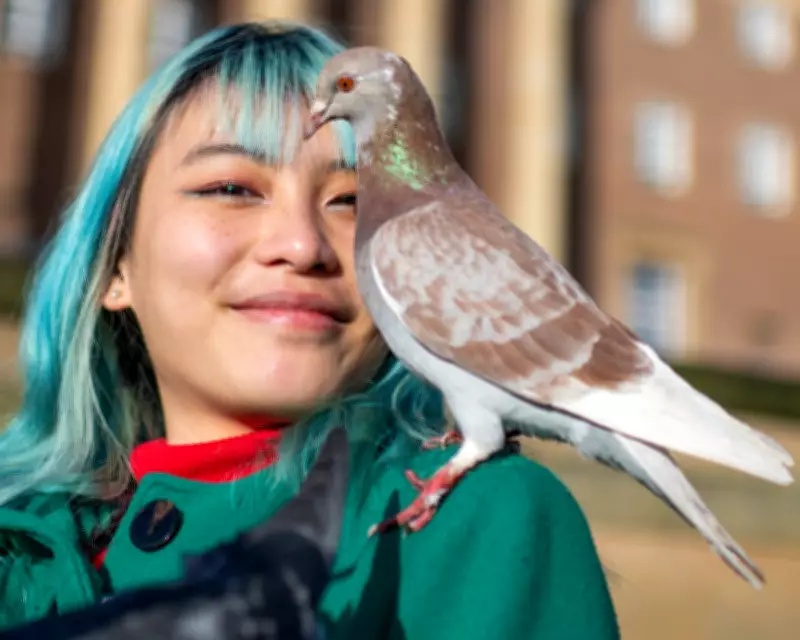
Summer Loh, a 19-year-old student from Singapore, has joined Coupland in advocating for pigeons. Having worked with birds of prey in Singapore, she now finds connection through caring for Norwich's flock. "They're just little guys," she enthuses. "They are genuinely so full of personality ... They're like dogs."
Loh and Coupland propose building a dovecote in nearby Chapelfield Gardens as a win-win solution. This would draw birds away from the market while enabling ethical population management through egg replacement techniques. Loh's Change.org petition has gathered over 4,000 signatures since December.
Smith supports the dovecote idea, noting similar successes overseas, but predicts cultural resistance in the UK. "It seems like the sort of thing that, culturally, we're not ready for," he says.
Historical Significance and Modern Neglect
Pigeons have played crucial historical roles, serving as messengers since 950 BC, informing Darwin's theory of evolution, and even delivering coded messages during World War I. "They have given so much to us culturally ... and we've kind of abandoned them," Smith laments.
Today, pigeons occupy an uneasy position—not quite pets, not quite wildlife, and lower status than both. The term "rats with wings," coined by a New York City official in 1966, continues to influence public perception. This negative reputation has made pigeons targets, with incidents including 29 pigeons found dead in Portsmouth last month, believed killed with a slingshot.
The Human Element: Community Divisions
Coupland reports experiencing verbal abuse for feeding pigeons, which she attributes to a decades-long "smear campaign." She has designed protest stickers reading "Give Seeds a Chance," "Your City Needs Coo," and "Norwich Shitty Council."
Meanwhile, some residents find the birds beneficial for mental health. "To watch them, feed them, the sound they make – it's quite calming," says Loh. Thirteen-year-old Amelie continues feeding despite the controversy: "I've always adored them," she says as birds crowd around her hand.
At the picnic tables, Andy Guy from Wymondham doubts any "cure" for the pigeons: "They're everywhere." He's more concerned about the council's planned market revamp, calling it a misuse of funds compared to basic maintenance needs.
Looking Forward: Coexistence or Conflict?
Harper declined an interview but stated the council continues exploring "humane, legal and proportionate measures" to manage pigeons while supporting traders. "Let me be absolutely clear: we are not anti-pigeon. We are pro-Norwich market."
Smith emphasizes that pigeons are survivors who will remain in urban environments. "If we want to understand what future ecosystems are going to look like, we have to learn about the things that are thriving," he says, noting that despite their global abundance, we understand "disproportionately little" about them due to scientific preference for more charismatic species.
As the debate continues, Coupland maintains a simple truth: "They're always going to be here." Whether through hawk patrols, contraceptives, dovecotes, or continued feeding, Norwich must find a way to coexist with its feathered residents in this complex urban wildlife drama.