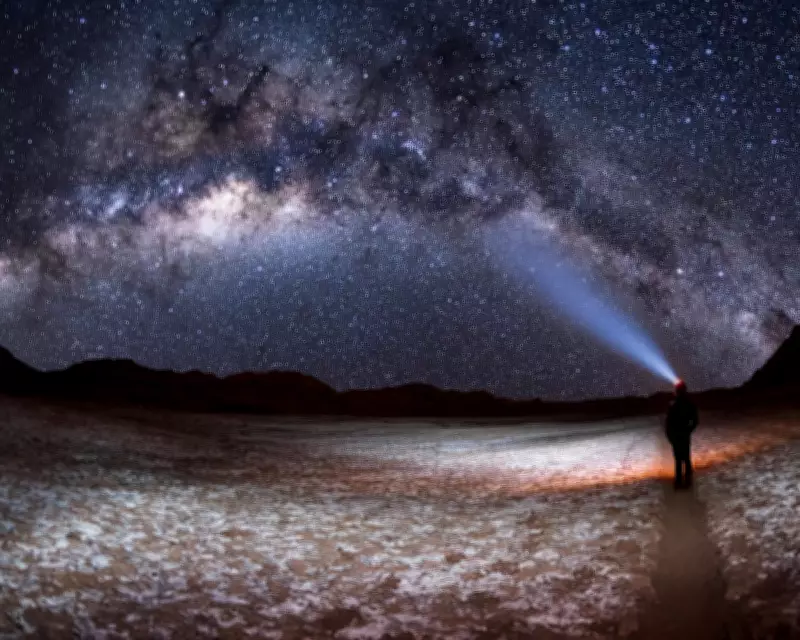
In a landmark victory for the global scientific community, a proposed $10 billion industrial project that threatened the world's clearest astronomical skies in Chile has been formally cancelled. The decision follows intense pressure from astronomers who warned that the facility's proximity to some of Earth's most powerful telescopes would have caused irreparable damage to celestial observation.
A Threat to Unparalleled Observation
The project, known as INNA, was a vast 3,000-hectare green hydrogen and ammonia production complex planned for Chile's Atacama Desert. It included designs for a port, transport infrastructure linking to the coast, and three separate solar power plants. For nearly a year, Chile's environmental evaluation service had been assessing the proposal before its ultimate withdrawal.
Astronomers had issued repeated, urgent warnings that constructing the facility so close to major observatories would severely compromise their work. The Atacama Desert region is globally renowned as the premier site for ground-based astronomy, offering atmospheric conditions unmatched anywhere else on the planet.

Scientific Concerns and Celebrations
Itziar de Gregorio, the European Southern Observatory's representative in Chile, confirmed the cancellation's positive impact. "This cancellation means that the INNA project will no longer have a negative impact on the Paranal Observatory," she stated. The ESO operates three significant telescope complexes in the area.
However, de Gregorio emphasised that the fight to protect these precious skies is far from over. "What this megaproject has brought to the table is the urgent need for clear protection measures around the sites where professional astronomy is carried out in Chile. This cancellation does not mean that the work to protect the skies is over."
The scientific objections were multifaceted and severe. Experts argued the INNA facility would have:
- Increased light pollution, obscuring the pristine darkness essential for observation.
- Generated tiny vibrations in the earth, disrupting sensitive astronomical instruments.
- Aerialised dust that could settle on and damage the precision mirrors of telescopes.
- Heightened atmospheric turbulence, blurring the clarity of the night sky.
Scientists maintained there was no compelling reason to site the industrial plant so close to these critical research hubs, given the potentially catastrophic consequences for astronomical discovery.
Corporate Withdrawal and Ongoing Tensions
Chile's environmental regulator confirmed the project's withdrawal after meetings last week with AES Andes, the company behind the proposal. AES Andes, a subsidiary of the US-based AES Corporation, operates various energy plants across Chile, Colombia, and Argentina.
In a press release, the company stated, "After detailed analysis of its portfolio of projects, [AES Andes] has decided to cease the execution of the INNA project." It added that it believed its operations were "absolutely compatible" with other activities in the region, a stance directly contested by the astronomical community.
A Nobel-Prize-Winning Observatory at Stake
The stakes of the project were extraordinarily high. The proposed INNA facility would have been situated a mere 11.6 kilometres from the Paranal Observatory, one of the world's most important astronomical sites. An open letter in December, led by 2020 Nobel Prize winner Reinhard Genzel, had implored the Chilean government to reject the project.
Paranal is home to the Very Large Telescope (VLT), perched 2,600 metres above sea level. Observations from the VLT have directly contributed to research that secured three Nobel Prizes. Furthermore, on the nearby Cerro Armazones, the Extremely Large Telescope (ELT) is currently under construction. Upon completion, the ELT will be the largest and most powerful optical telescope ever built, designed to scour distant galaxies for Earth-like exoplanets that might harbour life.
The cancellation of the INNA project therefore safeguards not only current astronomical research but also the future of humanity's quest to understand the cosmos and our place within it. It marks a critical moment in the ongoing struggle to balance industrial development with the preservation of unique scientific resources.