Green Jobs Promise Falters for Coastal Youth Despite Government Pledges
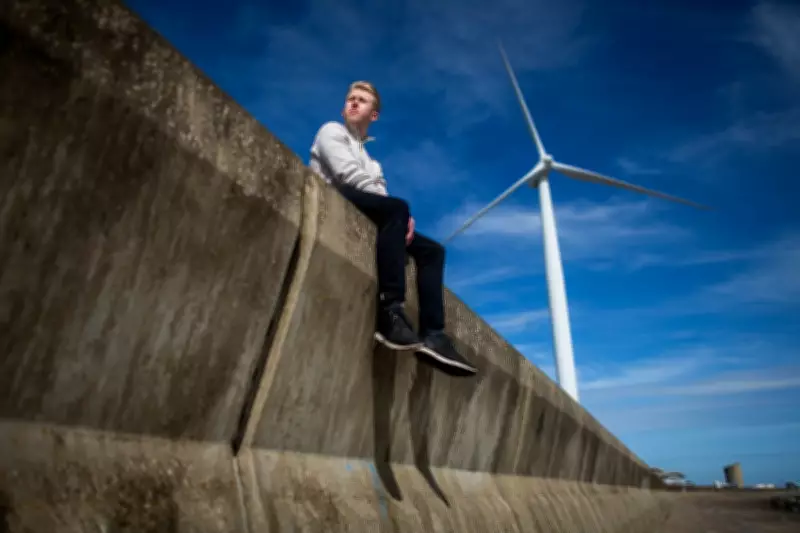
Jake Snell, a 20-year-old from Lowestoft, Suffolk, sits near the towering 'Gulliver' wind turbine at Ness Point, a symbol of the UK's green energy ambitions. Despite his high grades in maths and physics A-levels, a distinction in BTec engineering, and work experience, the promise of 'green jobs' has largely failed to materialize for him and his classmates. This disconnect highlights a growing concern in coastal communities across England and Wales, where young people face disproportionate challenges in accessing employment opportunities.
The Rhetoric Versus Reality in Coastal Towns
On paper, Snell seems like an ideal candidate for the burgeoning green energy sector. Hailing from Lowestoft, a coastal town in Suffolk near Great Yarmouth, both areas rank among the most deprived 20% in England, characterized by low employment prospects. Since secondary school, Snell aspired to join the green energy 'revolution,' a sector heavily promoted by the government for economic growth. Last year, Ed Miliband pledged that Labour would train people for an extra 400,000 green jobs by 2030, emphasizing roles in wind, nuclear, and electricity networks with higher-than-average salaries.
However, Snell's experience tells a different story. After completing his extended engineering diploma, only two out of his 14-person cohort secured apprenticeships, with just one in engineering. 'It was quite frustrating,' Snell says. 'Many of my friends, who didn't want to go to university, are now doing so out of necessity because they feel there's no other option.' This sentiment echoes across coastal regions, where educational attainment is typically lower, and public services are often stripped back.

Academic Insights on the Green Jobs Gap
Rachel Wilde, a social anthropologist at University College London, notes that the term 'green jobs' remains nebulous, with little concrete evidence of what these roles entail. 'There's a gap between policymakers promoting new economic opportunities and people on the ground discussing job prospects with young people,' she explains. Wilde points out that while high-profile roles like wind technicians are heavily advertised, these positions are oversubscribed, and most jobs in the sector are less glamorous, such as canteen workers or security guards.
Avril Keating, a professor of youth studies at UCL, adds that green jobs are supposed to revitalize deprived communities but may not be suited to local residents. 'There are many ways to work in green energy, from porters to electricians, but this diversity is often overlooked,' she says. Both academics stress the urgent need for continued careers support in coastal areas to bridge this gap.
Political Responses and Future Hopes
Polly Billington, MP for East Thanet and chair of the coastal parliamentary Labour party, agrees that more work is needed to ensure coastal communities benefit from green energy infrastructure. 'We must develop skills and jobs locally to prevent work from being outsourced to transient contractors,' she asserts. The government has announced plans for five technical excellence colleges focused on green energy training, including institutions in Colchester, London, Liverpool, Redcar, and Somerset, offering courses in nuclear, offshore wind, and solar energy.
The Department for Energy claims to have created thousands of jobs in carbon capture and offshore wind in areas like Teesside and north Wales, with average salaries exceeding £50,000. Ed Miliband reiterates, 'The clean energy economy is supporting young people in coastal communities to secure good, well-paid jobs.' Yet, for Snell, who now works in economic development for his local council, improving access to green opportunities is about more than income—it's about fostering community pride. 'People could see the impact they're having on their community,' he reflects, underscoring the broader social benefits of inclusive green job policies.