
Government Postpones Implementation of Future Homes Standard Amid Industry Pressure
The UK government has announced a significant delay in implementing new low-carbon housing regulations for England, pushing back the enforcement of the "future homes standard" (FHS) to March 2028. This postponement means that hundreds of thousands of new homes will continue to be constructed with gas heating systems, despite soaring energy costs exacerbated by global conflicts such as the war in Iran.
Key Provisions and Loopholes in the Revised Regulations
Under the updated FHS, which is scheduled for publication this Tuesday, newly built homes from 2028 onward will be required to produce 75% fewer greenhouse gas emissions compared to those constructed under the 2013 standards. However, housing experts have raised concerns about a critical loophole that permits the installation of wood-burning stoves in new properties. These stoves are highly polluting and not carbon-neutral in the short to medium term, potentially undermining the goal of achieving fully carbon-free homes.
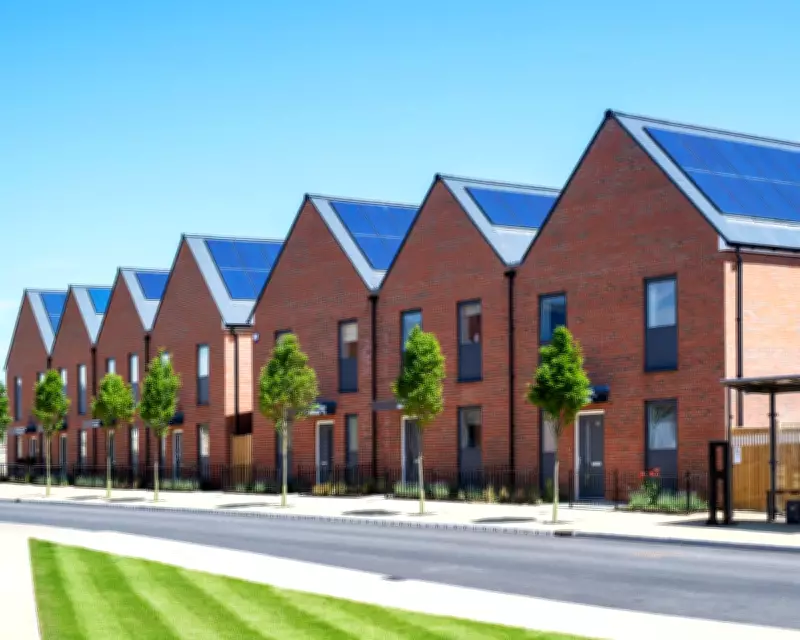
The regulations mandate that houses be equipped with solar panels covering at least 40% of the ground-floor area, though exceptions may allow builders to install less. Additionally, "plug-in" solar panels, commonly used in Germany but previously banned in Britain, will become available for purchase in the UK within months, offering flexible installation options on balconies or outdoor spaces.
Industry Backlash and Economic Implications
The delay in implementing the FHS, originally expected to take effect next year, comes after intense pressure from housebuilders. According to Jess Ralston, head of energy at the Energy and Climate Intelligence Unit thinktank, developers are likely to seek the cheapest possible compliance methods to maximize profits, potentially shifting higher energy costs onto homeowners in the long run.
Data from the MCS Foundation, a charity certifying low-carbon installations, revealed that only 4,000 out of approximately 140,000 new-build homes were equipped with electric heat pumps last year. Jan Rosenow, a professor of energy at the University of Oxford, criticized the delay, stating, "It is outrageous that people will be buying homes that are expensively heated with gas when we have perfectly good technology – heat pumps – that can be installed instead."
Historical Context and Future Outlook
The future homes standard has been over a decade in the making, initially intended to replace a zero-carbon homes commitment from the last Labour government that was scrapped by David Cameron. Despite the delays, the government estimates that households could save around £1,000 annually on energy bills once the standards are fully implemented.
Garry Felgate, chief executive of the MCS Foundation, welcomed the confirmation that most new homes in England will eventually feature solar panels and low-carbon heating systems, noting benefits for energy security and environmental progress. However, the government has yet to rule out hydrogen for home heating, despite evidence suggesting it is not economically viable, a point emphasized by Rosenow as a missed opportunity for clarity.
Housing Secretary Steve Reed defended the new standards, stating, "Building 1.5m new homes also means building high-quality homes that are cheaper to run and warmer to live in. As we make the switch to clean, homegrown energy, today’s standard is what the future of housing can and should look like."



