
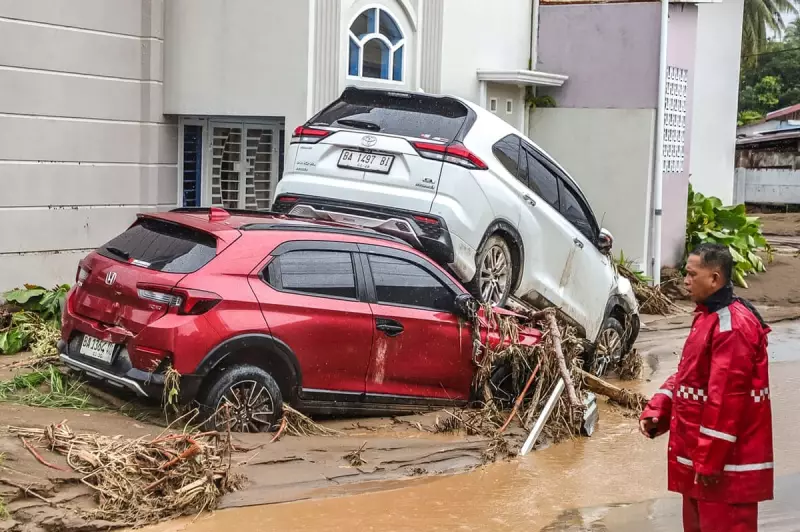
Emergency services in Indonesia are racing against time as the death toll from catastrophic flash flooding in western Sumatra has climbed to 57 people, with dozens more still missing. The disaster struck with terrifying speed over the weekend, submerging entire villages and sweeping away homes in the Pesisir Selatan region of West Sumatra province.
Widespread Destruction and Rescue Challenges
Local authorities confirmed that at least 22 individuals remain unaccounted for following the devastating floods that hit on Saturday, November 22nd. The scale of destruction is immense, with rescue teams working in extremely difficult conditions to reach isolated communities.
Heavy equipment and emergency personnel have been deployed to areas where landslides have blocked access roads, significantly hampering relief efforts. The National Disaster Management Agency reported that the flooding has affected multiple districts, destroying critical infrastructure and leaving thousands of residents displaced.
Climate Change Connection and Regional Impact
This tragedy marks the latest in a series of severe weather events to hit Indonesia during the rainy season, raising serious concerns about the intensifying impact of climate change in the region. Meteorologists have noted that rainfall intensity has dramatically increased in recent years, overwhelming traditional flood defences.
The disaster has particularly affected coastal communities in Pesisir Selatan, where the combination of heavy rains and high tides created a deadly surge of water. Emergency shelters have been established across the region to accommodate those who have lost their homes.
International Response and Recovery Efforts
International aid organisations have begun mobilising resources to support the Indonesian government's response. The focus remains on search and rescue operations, with teams working around the clock to locate missing individuals despite challenging terrain and continued rainfall.
Medical supplies, clean water, and temporary shelter have been identified as immediate priorities for the affected population. The Indonesian Red Cross has deployed multiple teams to the worst-hit areas, providing essential medical care and support to survivors.
As recovery efforts continue, questions are being raised about disaster preparedness in vulnerable regions. This catastrophic event serves as a stark reminder of the increasing frequency and severity of extreme weather events in Southeast Asia. Local officials have emphasised the need for improved early warning systems and climate-resilient infrastructure to prevent similar tragedies in the future.



