
Dutch Housing Corporations Install Rainwater-Storing Fences to Combat Flooding
In the low-lying Netherlands, where vulnerability to flooding has become increasingly apparent, housing corporations are pioneering an innovative solution: garden fences that double as rainwater storage systems. This approach aims to reduce pressure on drainage systems during heavy downpours while preserving precious water for periods of drought.
Climate Crisis Drives Innovative Adaptation
Theo and Willy Bolder, residents of Veldhoven, have become neighborhood celebrities after their social housing provider, Woonstichting 'thuis, installed the first rain fence in their community. "People are all coming round to ask what it costs," said Willy Bolder, noting the growing interest in this climate adaptation technology.
Between their rattan fence panels, a series of interconnected plastic blocks capture drainage from their roof, creating a storage capacity of up to 2,160 liters. This system addresses two critical climate challenges simultaneously: managing increasingly intense rainfall while conserving water for hotter, drier summers.
"The rain is getting heavier and heavier nowadays, and if you have a cloudburst the drainage isn't good and it comes up through the toilet," explained Willy Bolder. "There's a lot of paving, so the water can't escape." Her husband Theo added that hotter summers now threaten trees and quality of life, noting that his favorite fishing lake was completely dry last summer.
Historical Context and Growing Urgency
The Netherlands' relationship with water has been shaped by dramatic events, most notably the 1953 North Sea flood that claimed at least 1,800 lives and inspired the Delta Works sea defenses. Today, climate change presents new challenges, with the Royal Netherlands Meteorological Institute KNMI reporting that average temperatures have increased by 1°C since 2000, while cities are typically 5°C warmer than rural areas.
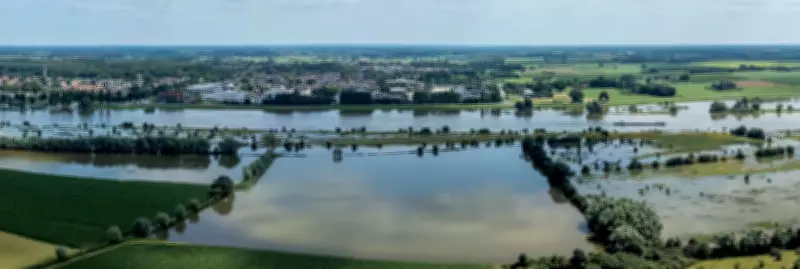
Weather extremes have become more frequent and severe, as demonstrated by the devastating 2021 floods in Limburg, where more than 15cm of rain fell within 48 hours, causing the River Geul to burst its banks. Rik Thijs, deputy mayor for public space, greenery and water in nearby Eindhoven, emphasized the need for adaptation: "Our sewage system cannot cope with the rainfall that is coming, and we cannot increase its capacity, so we need to do things differently."
From Personal Experience to Practical Solution
The rain fence concept originated with entrepreneur Harry den Hartigh, whose company SunnyRain Solutions installed the Bolders' system. His inspiration came from personal experience: "I was born in Zeeland and my parents experienced the flood disaster. My father volunteered to help, to rescue people, and it was an intense experience. The danger and the value of water are in my blood."
Den Hartigh also witnessed Zeeland's struggle with freshwater shortages for agriculture due to brackish seawater intrusion. This dual awareness of flood danger and water scarcity motivated his development of urban rainwater storage solutions that are both functional and aesthetically pleasing.
Changing Water Management Philosophy
Jannes Willems, assistant professor in urban planning at the University of Amsterdam, noted that rain fences represent a significant shift in Dutch water management philosophy. "Rainwater harvesting is a very easy fix," he explained. "We have a water system that was built to discharge water as quickly as possible. But with flood events and rain bursts, the sewers simply cannot cope."
Willems emphasized the multiple benefits of this approach: "You can better let it infiltrate the soil through green measures, bringing back natural elements in cities. And then, in times of heatwaves, that can lower temperatures." He described this as a departure from the modernist belief that nature could be completely controlled, toward a more collaborative relationship with natural systems.
Practical Benefits for Housing Corporations
For property managers like Matthijs Hulsbosch of Woonstichting 'thuis, rain fences offer both environmental and practical advantages. "Of course, for the future, it is also part of protecting your own property," he said. "Because if water cannot drain away and it gets into the building, then we have a problem. We can fix leaks, but it might be better to prevent them through these kinds of ideas – and save a great deal of money and inconvenience."
The corporation manages 11,000 homes and sees rain fences as enhancing resilience while potentially improving neighborhood relations. David Hearn, neighborhood manager for Woonstichting 'thuis, noted that while most residents welcome the initiative, some neighborhood tensions have proven challenging: "I have had tenants who hated each other so much, they weren't even prepared to accept a free fence."
Broader Implementation and Future Prospects
Municipal authorities are exploring complementary measures alongside rain fences, including plans to resurface old rivers like the Gender in Eindhoven, creating "wadi" pools that temporarily hold water during heavy rain, and incorporating green roofs into housing developments. These approaches recognize the Netherlands' particular vulnerability as a delta nation.
As climate patterns continue to shift, with more frequent extreme weather events and increasing water scarcity during summer months, such distributed water management solutions are gaining importance. The rain fence initiative demonstrates how simple, scalable technologies can contribute to urban climate adaptation while potentially strengthening community bonds and protecting property investments.



